Ten sites across South Moravia
Sites are numbered from west to east. Scroll to fly from one to the next, or pick a site on the map or in the list.
 LIFE in Salt Marshes
Česky


Restoring ten inland salt marshes of South Moravia
Part 1: terrestrial habitats


South Moravia lies hundreds of kilometres from the sea, yet a few of its meadows are salty enough for plants you would otherwise expect on a coast.
Inland salt marshes are among the rarest habitats in Czechia. They form only where three things come together – salt in the ground, a dry climate and regular disturbance – and the plants and animals living there are specialists that could not survive on an ordinary meadow.
Salty pastures were once scattered across the South Moravian lowlands, from the Znojmo area to the surroundings of Čejč. Most have since been ploughed, drained or left to overgrow, and only small fragments remain.
Source: Učit se učit, Faculty of Science, Masaryk University – Slaniska na jižní Moravě

Four stages – scroll to follow them.
The meadows sit on clays deposited in the Tertiary period, which contain soluble salts – mainly sulphates and chlorides.
Clay is almost impermeable, so groundwater stays close to the surface and slowly dissolves the salts out of the clay.
For at least part of the year, evaporation exceeds rainfall. Salty water rises through the soil, evaporates at the surface and leaves its salt behind.
Grazing animals – ideally horses – compact the soil, which helps the salty water reach the surface. They also keep the sward short, so salt-tolerant plants are not shaded out.
Simplified diagram, not to scale. Source: AOPK ČR – NPR Slanisko u Nesytu (palava.aopk.gov.cz).
Salty soil, water levels that rise and fall, and short, open vegetation maintained by grazing or mowing. Once grazing ends, reed, tall grasses and shrubs move in and the specialists vanish.
Seven years, 2023–2029, to restore more than 500 hectares of protected wetlands and salt marshes in South Moravia.
The project is re-establishing long-term care at ten wetland sites of European importance. It aims to keep the landscape open, push back invasive and expansive plants and improve conditions for protected species – above all by bringing grazing back to the sites.
The project is coordinated by Masaryk University (ENVIROP, Department of Botany and Zoology) in partnership with the South Moravian branch of the Czech Society for Ornithology, the Research Institute for Soil and Water Conservation (VÚMOP) and World from Space. The sites are cared for by the project team together with local farmers, whose animals graze there, and with help from municipalities and volunteers – so that the care can continue long after the project ends.
506ha
of wetlands restored
20ha
of inland salt meadows restored and stabilised
20%
increase in habitat heterogeneity
100ha
cleared of invasive plants
2023
Project start, management plans refined
2024
Management plans, legal and farmer agreements, first management
2025
Management under way at most sites
2026
We are hereManagement at all sites, first impact assessment
2027
Adaptive management, biofilters, new ponds
2028
Adaptive management, biofilters, water level control
2029
Project end, final impact assessment
2029+
Care continues after the project

Ten protected wetlands spread across South Moravia, from Vrbovecký rybník near Znojmo in the west to Vypálenky on the Morava river in the east.
Imagery © Esri World Imagery · border: Natural Earth
Sites are numbered from west to east. Scroll to fly from one to the next, or pick a site on the map or in the list.
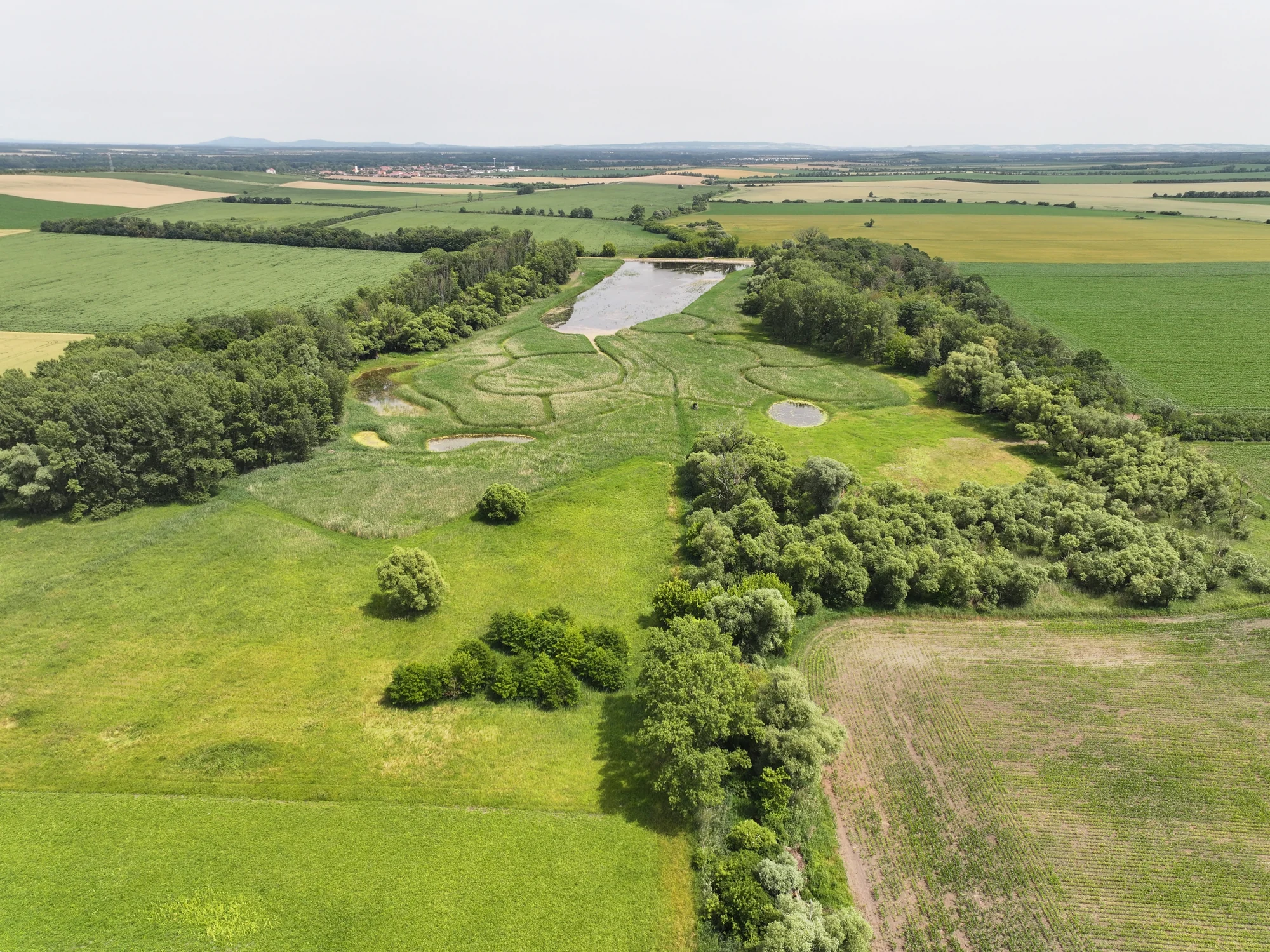
A pond by the village of Vrbovec near Znojmo, ringed by extensive reedbeds and meadows. Patches of inland salt meadow survive on its banks. Fire-bellied toads (Bombina bombina) breed here, and garganeys (Spatula querquedula) stop over on migration.
Drone photo: Antonín Zajíček
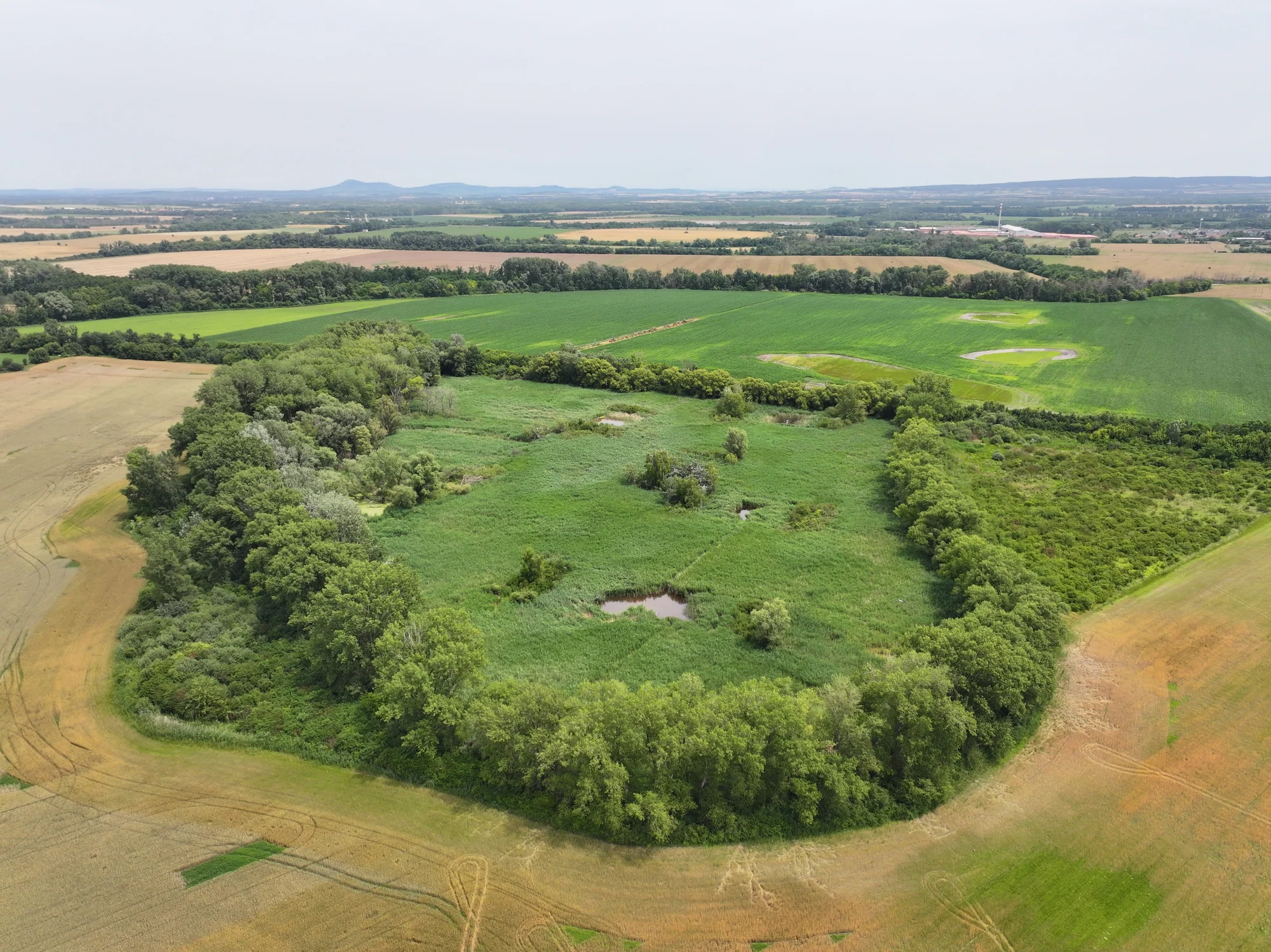
A marsh with pools among the fields near the village of Hevlín, close to the Austrian border, on the site of a former system of small fishponds. Ten amphibian species live here, among them the fire-bellied toad (Bombina bombina), and little bitterns (Ixobrychus minutus), marsh harriers (Circus aeruginosus) and water rails (Rallus aquaticus) nest in the reeds.
Drone photo: Antonín Zajíček
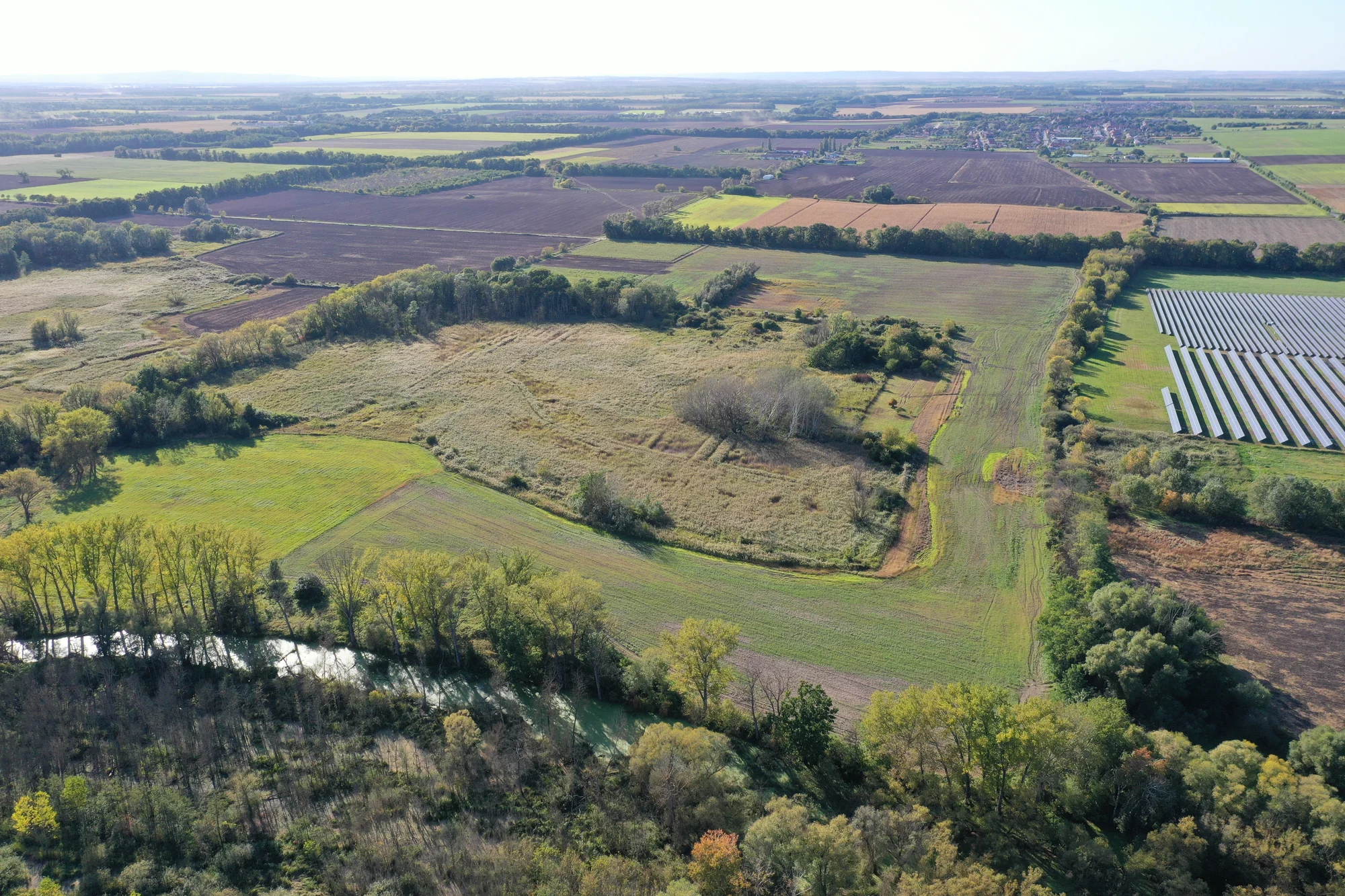
By far the largest site: ash and alder floodplain forest in the Dyje lowland, with wet meadows, reedbeds and shallow pools. Fire-bellied toads (Bombina bombina) breed here, the scarlet flat bark beetle (Cucujus cinnaberinus) lives in dead wood, and grey herons (Ardea cinerea) nest in an unusual colony far from open water.
Drone photo: Antonín Zajíček
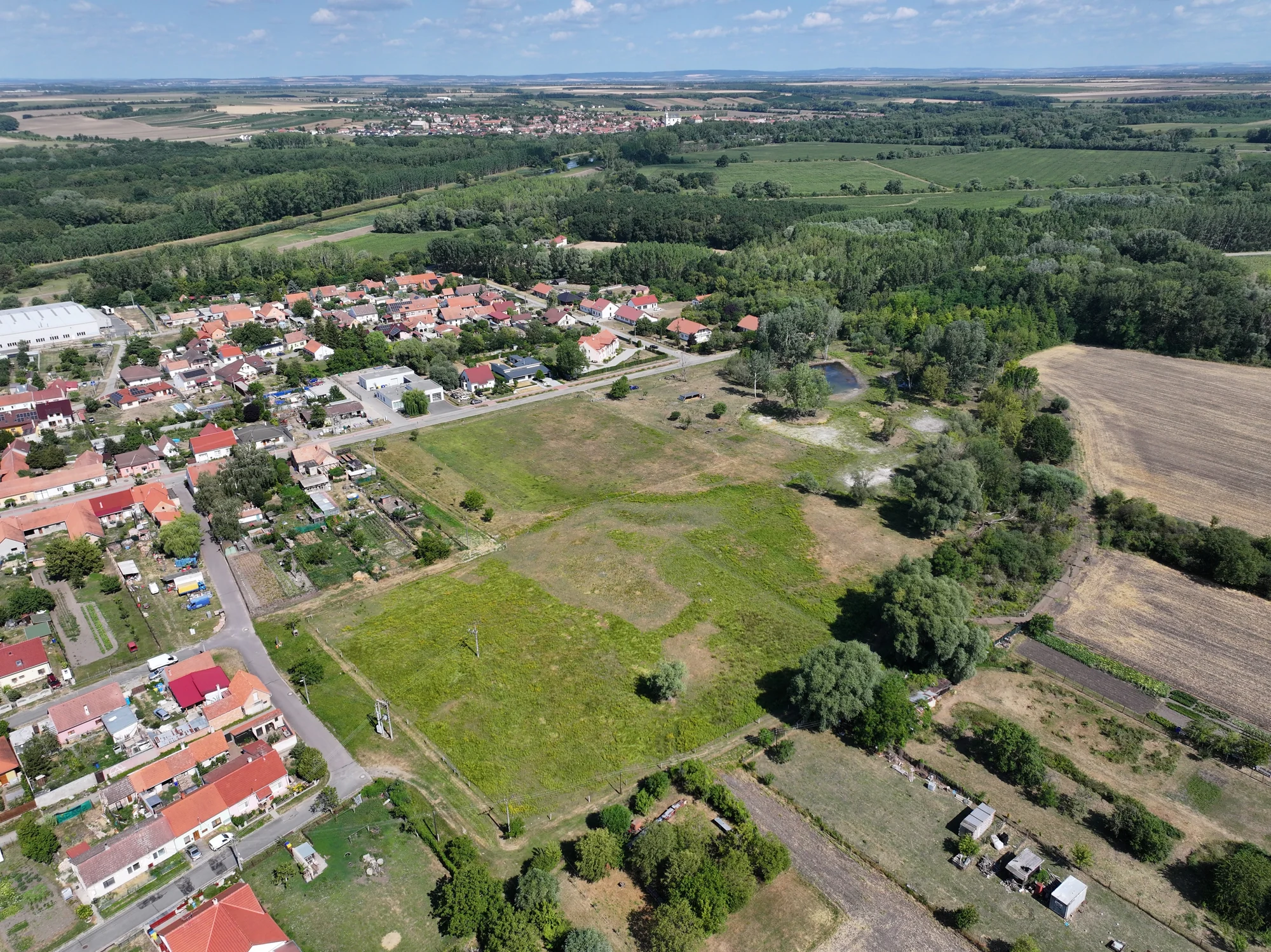
A small salt marsh on the edge of the village of Novosedly, with pools, willow scrub and old pollarded willows. It is the last Czech site with a sizeable population of the critically endangered swamp pricklegrass (Crypsis schoenoides); greater sea-spurrey (Spergularia maritima) grows here too, and European tree frogs (Hyla arborea) call from the pools.
Drone photo: Antonín Zajíček
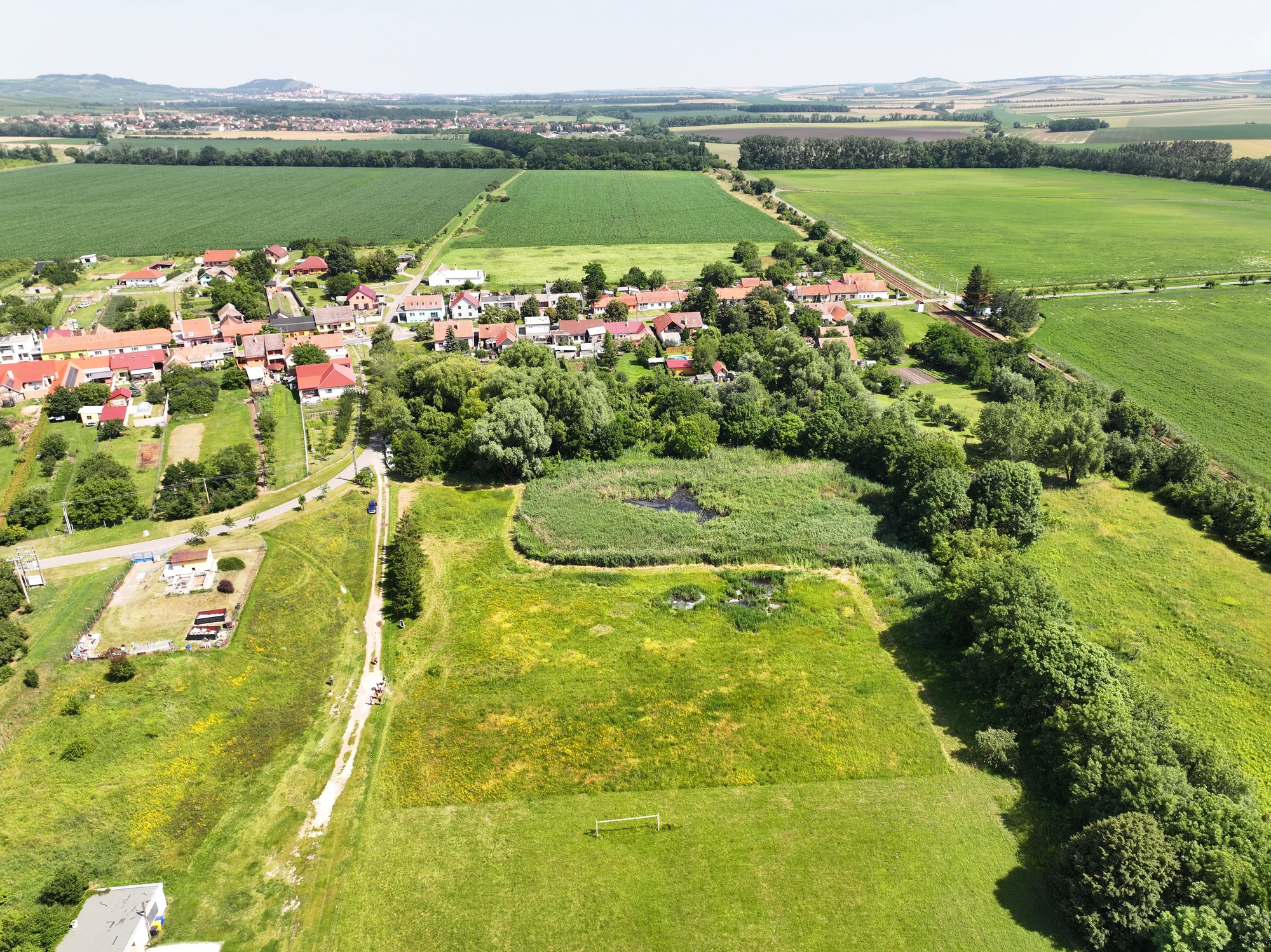
A small salt marsh in a shallow hollow by the village of Dobré Pole – one of the last two places in Czechia where the Pannonian sea aster (Tripolium pannonicum) still grows. Salt meadows with distant alkali grass (Puccinellia distans) are recovering here under grazing.
Drone photo: Antonín Zajíček
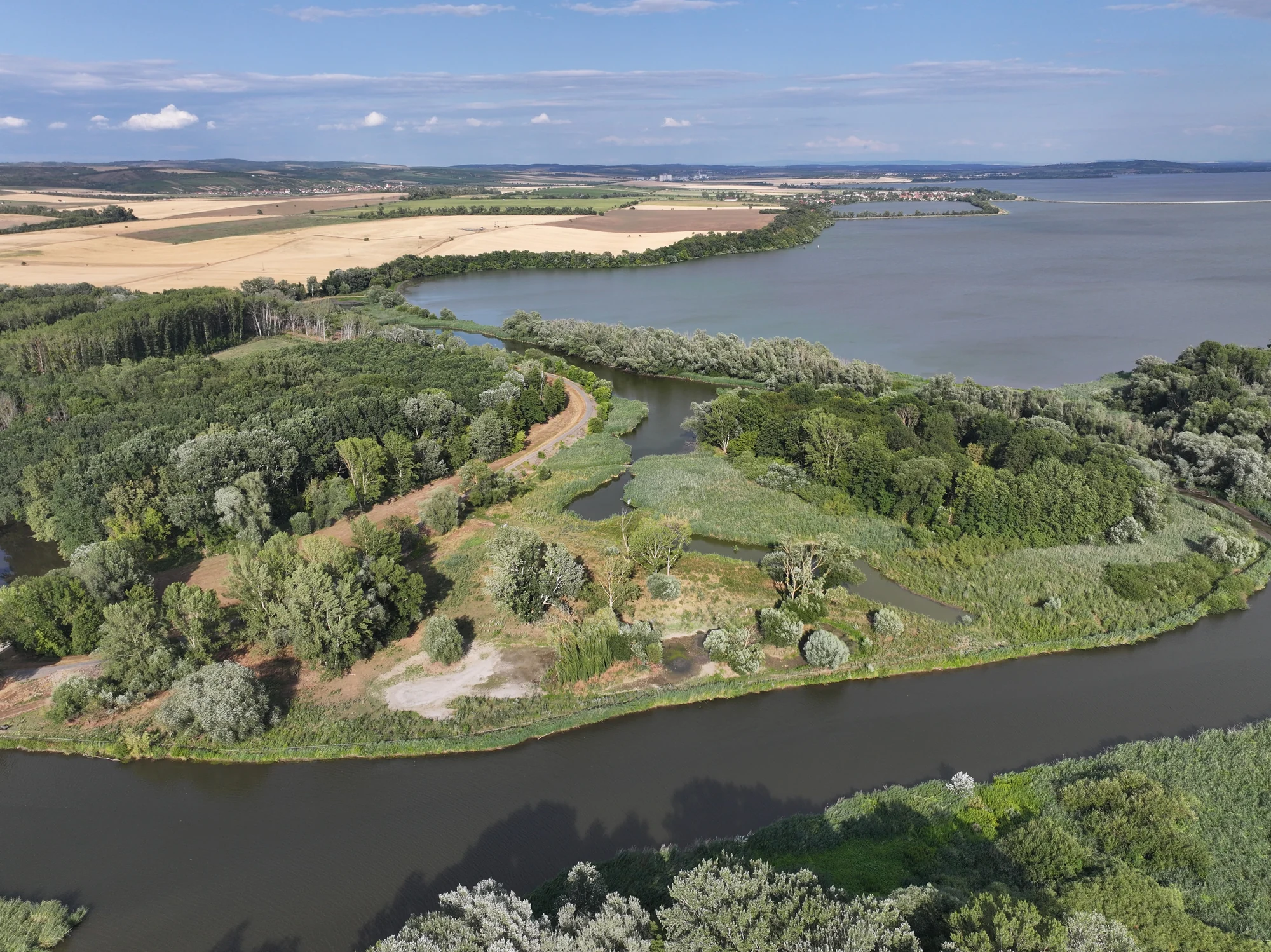
“Husí pastviště” (the goose pasture) is the project’s working name for a shore meadow on the middle Nové Mlýny reservoir, in a bird area known for tens of thousands of wintering geese, among them the greater white-fronted goose (Anser albifrons). Water buffalo are opening up the reedbeds here, uncovering salt meadow and sunlit shallow pools.
Drone photo: Antonín Zajíček
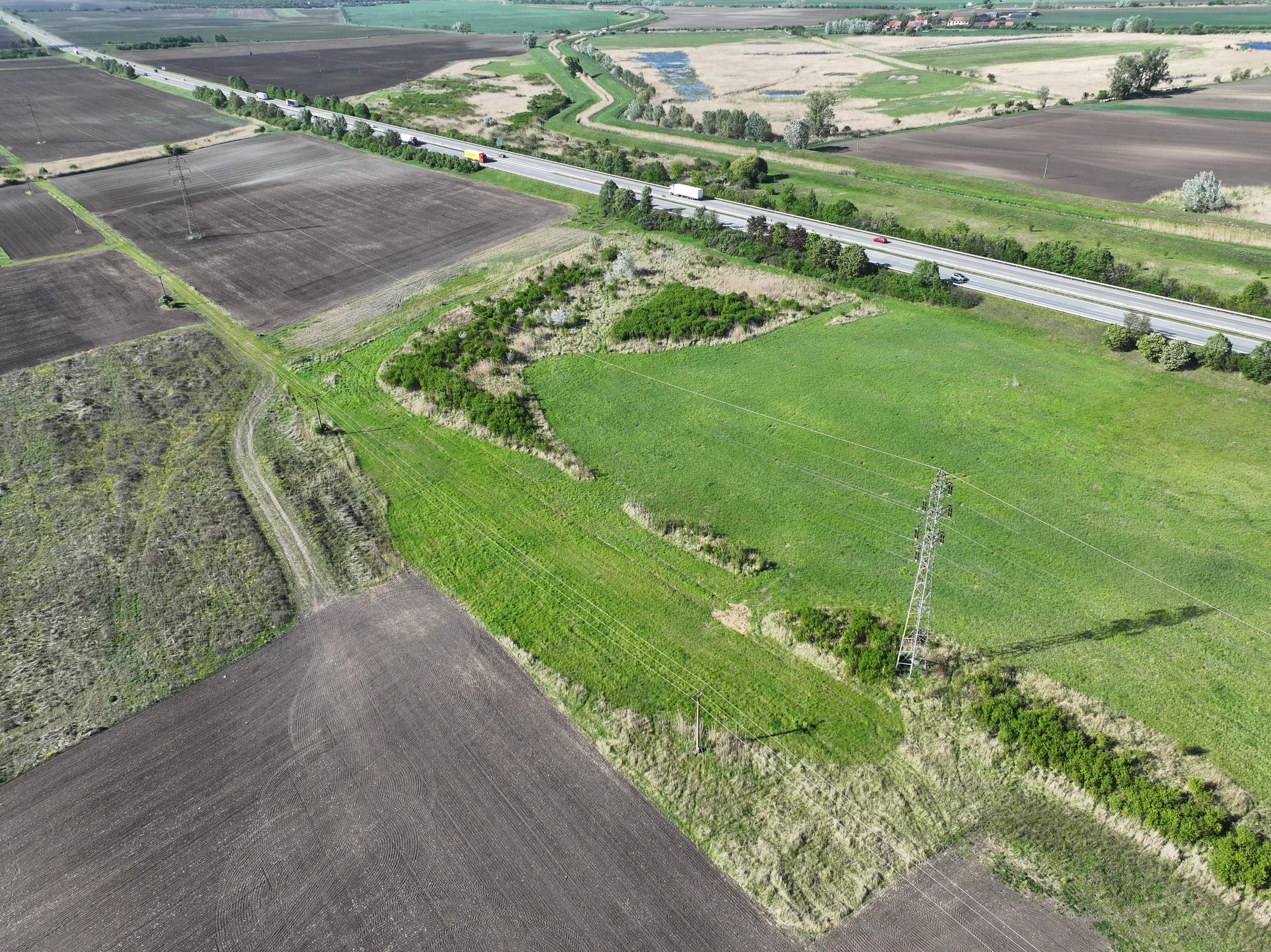
Wet, slightly salty meadows near Rakvice with sedge and reed stands. They hold one of the two Czech populations of the yellow-spined thistle (Cirsium brachycephalum), a Pannonian endemic at the north-western edge of its range, together with rye sedge (Carex secalina).
Drone photo: Antonín Zajíček
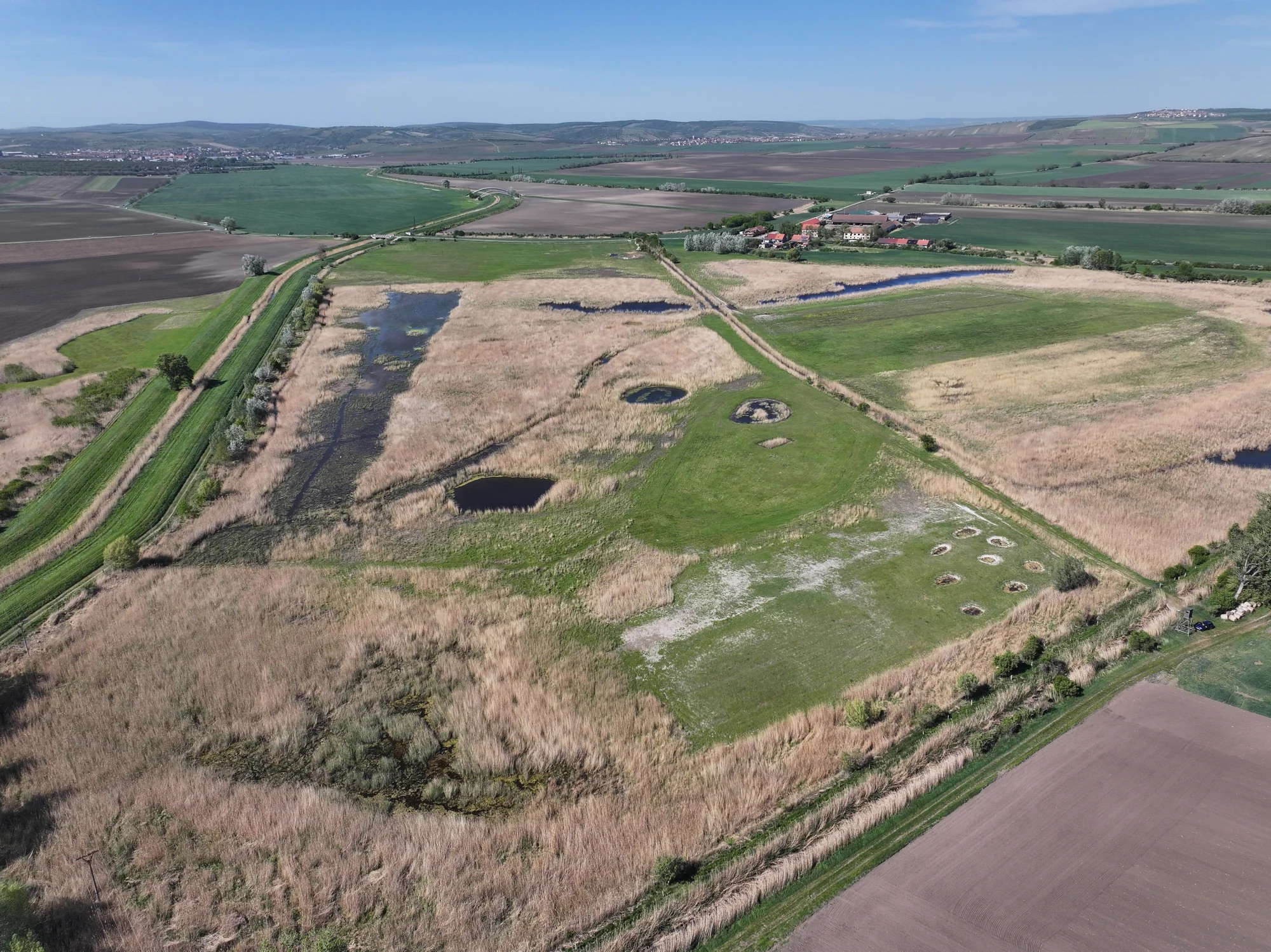
Shallow pools, reeds, pastures and salt meadows in the Trkmanka floodplain near Rakvice – at almost 7 ha, the largest salt meadow of all the project sites. Yellow-spined thistle (Cirsium brachycephalum), brookweed (Samolus valerandi) and marsh mallow (Althaea officinalis) grow here, and fire-bellied toads (Bombina bombina) breed in the pools.
Drone photo: Antonín Zajíček
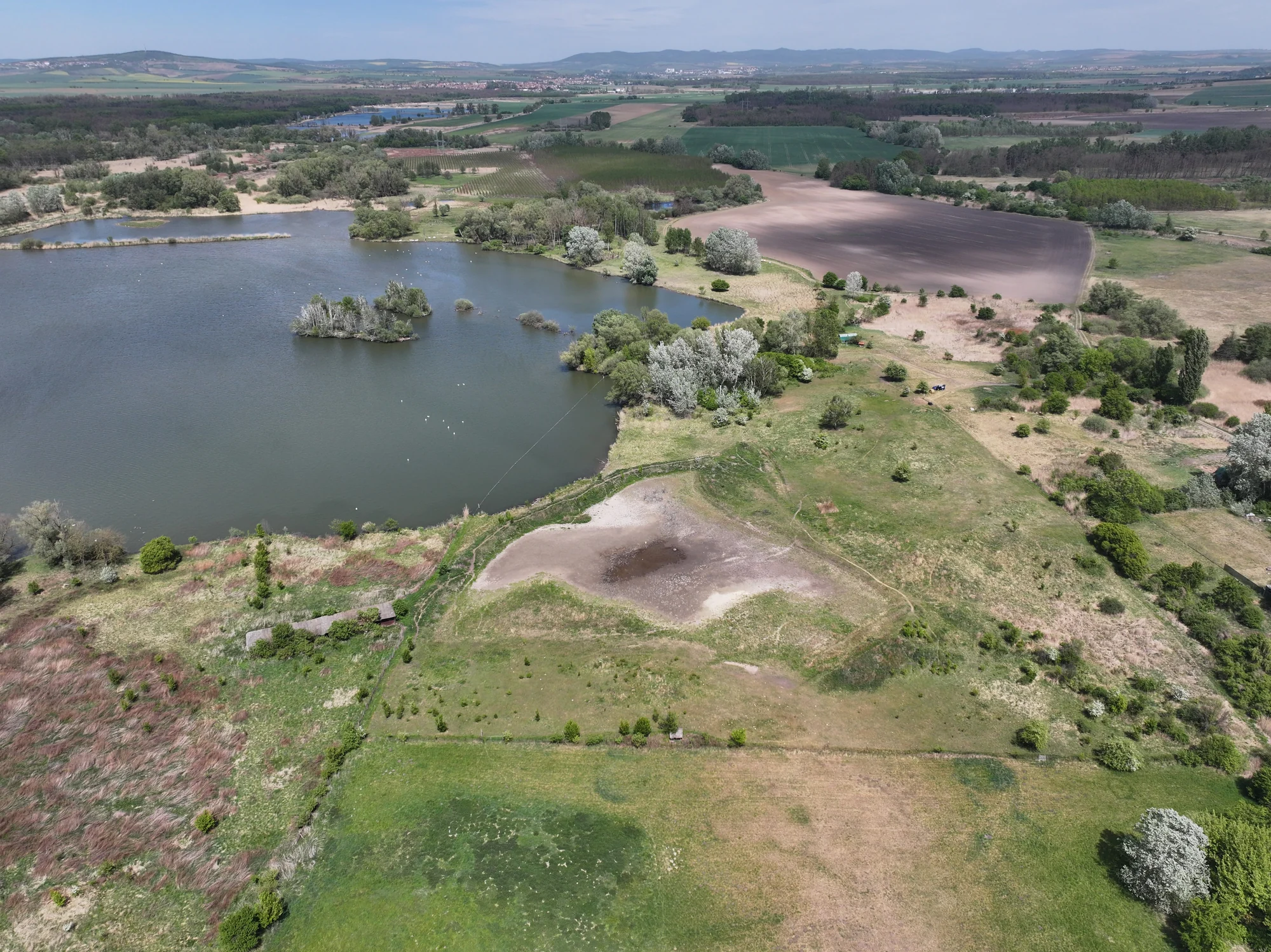
Kosteliska is the project’s working name for the bird park of the same name by the Kyjovka river, on the edge of the Hodonín oak woods (Hodonínská doubrava). Grazing keeps its wet meadows, pools and reeds open for waders and Danube newts (Triturus dobrogicus), and a rare population of the Aesculapian snake (Zamenis longissimus) lives here.
Drone photo: Antonín Zajíček
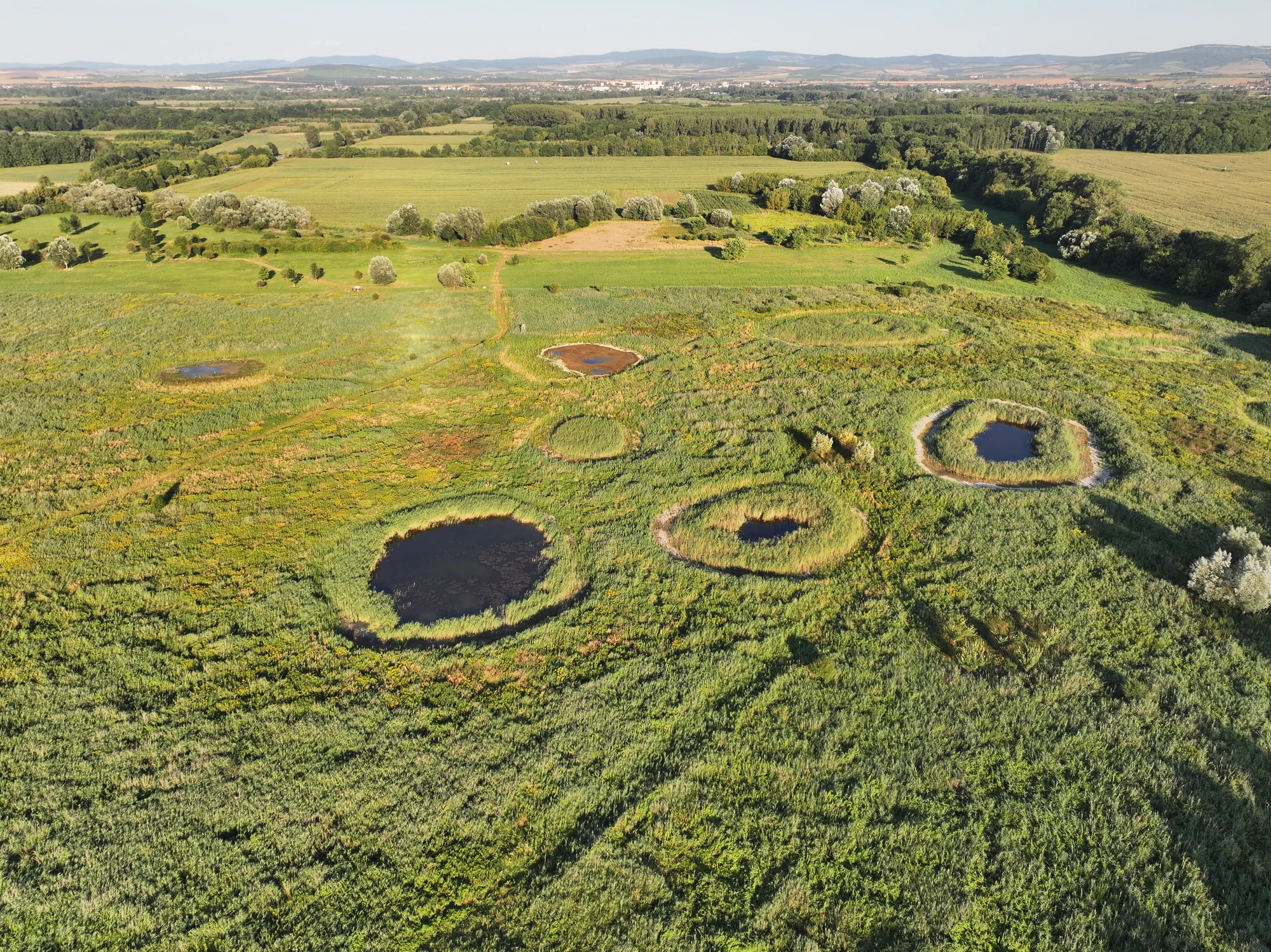
Wet meadows and a chain of shallow pools in the Morava floodplain by Moravský Písek. Salt-tolerant strawberry clover (Trifolium fragiferum) grows at the margins, and fire-bellied toads (Bombina bombina) and Danube newts (Triturus dobrogicus) breed in the pools.
Drone photo: Antonín Zajíček
Nine species that reveal what salt marshes and wet meadows need. Not all are official project targets, but every one of them depends on the kind of care the project is restoring.
 CR
Tringa totanus
“You can’t miss my red legs – and you’ll hear me too. When something comes near, I’m the first to raise the alarm.”
A striking wader with long red legs that nests on wet meadows and low marshes.
Open ground with short vegetation, shallow water and a clear view all round. One of the project’s target bird species.
Photo: Jiří Bohdal

Lycosa singoriensis
“Don’t look for a web – I don’t spin one. I sit at the mouth of my burrow and wait. When prey comes close, I dash out.”
One of the largest spiders in Central Europe. It digs a burrow in which it hides, ambushes prey and guards its eggs.
Sunny, open ground with sparse vegetation – for this spider the bare soil surface matters as much as the plants and the water.
Photo: Magnific (stock)
 VU
Vanellus vanellus
“My chicks leave the nest within hours of hatching, so they need open ground that isn’t overgrown, where they can run. Come too close, and I’ll chase you off.”
A crested bird that feeds and nests on the ground in open meadows, fields and wetlands.
Low, open vegetation with a clear view. Not a project target, but it shows why wet meadows must not all be allowed to grow over.
Photo: Lubomír Hlásek
 NT
Natrix natrix
“I’m at home in the water, but I also love to bask in the sun. And don’t worry – I’m not venomous!”
A snake of pools and ponds, easily recognised by the pale crescents behind its head. A strong swimmer, it feeds mainly on amphibians.
Pools rich in prey, dry sunny spots for basking and safe shelter nearby – a species that links water and land.
Photo: Marie Kotasová Adámková

Lycaena dispar
“When the sun shines, my orange wings glow like a little flame. Look for me on open meadows and around wetlands.”
A butterfly with vivid orange wings, listed as a species of European importance. Project monitoring has confirmed it at several sites.
Varied wet meadows without an unbroken cover of tall vegetation. Patchy grazing and mowing help.
Photo: Marie Kotasová Adámková
 VU
Aiolopus thalassinus
“On bare, salty ground my green and brown colours make me almost invisible. Where the grass grows tall and dense, there is no place for me.”
A rare grasshopper of salt marshes, recognisable by the red shins of its hind legs.
Bare, salty ground with low, sparse vegetation – of the six animals, the one most closely tied to salt marshes. At Slanisko Dobré Pole it lives where the sward stays low and salt-tolerant plants are not crowded out by tall grass.
Photo: Josef Hlásek
 CR
Cirsium brachycephalum
“My cousins, the common thistles, grow almost everywhere – along roads and in fields. In Czechia I grow in just two places, and both are near Rakvice.”
A sturdy, spiny plant with pink flowers that grows on heavy, salty soils flooded for at least part of the year, flowering from summer into early autumn. A Pannonian endemic, it reaches the north-western edge of its range in South Moravia and grows at only two Czech sites, both near Rakvice.
Salty soil, seasonal flooding and regular disturbance. If the water regime changes or management stops, dense reed, sedges and rushes crowd it out.
Photo: Marie Kotasová Adámková
 CR
Lysimachia maritima
“Look closely – I have no petals. What looks like a tiny pink flower is my sepals. And where I grow, the salt marsh is still in good shape.”
A small perennial of salt marshes with fleshy leaves and inconspicuous pinkish-white flowers. Rare in Czechia, it has vanished from many former sites.
Salty soil. Threatened by changes to the water regime and by overgrowth.
Photo: Marie Kotasová Adámková
 CR
Crypsis schoenoides
“When the water retreats, my moment comes! I sprout, flower and drop my seeds before anyone notices – then I wait for the next good year.”
A small, inconspicuous grass of bare mud on the bottom of pools that dry out from time to time. Salt-tolerant, it completes its whole life cycle in the short time after the water retreats.
Pools that fill and dry out naturally, and mud free of dense vegetation. Its seeds can wait in the soil through bad years, so a dry pool bottom is not a dead one.
Photo: Martin Liška
Threat categories: Red List of Threatened Species of the Czech Republic (AOPK ČR, 2017). Legal protection: Decree No. 395/1992 Coll.
What went wrong: five problems, most of them linked.
Until the early 20th century, grazing shaped most of the Czech lowlands, and common pastures often covered more than a third of a village’s land. After serfdom was abolished in 1848, many were divided up and ploughed. Large-scale sheep farming collapsed under competition from cheap Australian and South American wool, and fodder crops allowed cattle to be kept in stalls. Land hunger in the 1930s and the spread of artificial fertilisers ended common grazing in the Moravian lowlands; collectivisation merely completed the process. By the late 1960s and early 1970s, the last animals grazing on village slopes, field margins and ditches had gone.
For a long time, conservation itself kept animals out: until the late 1970s, grazing was banned in many protected areas for fear it would destroy rare plants. Only once it stopped did it become clear that grazing and trampling were exactly what many of those plants needed.
Source: V. Štěpánek (2015): Pastevní krajina v minulosti a současnosti. Veronica 3/2015, pp. 1–7.
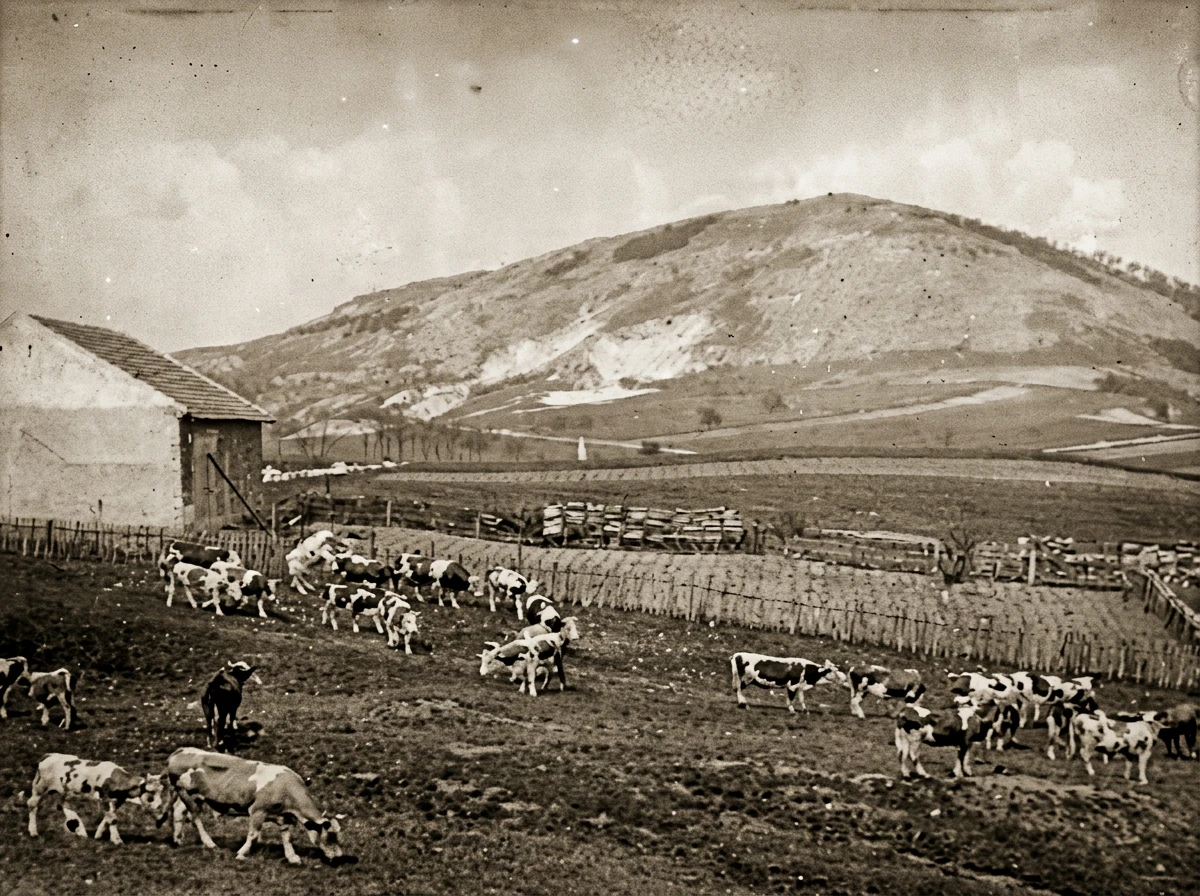
Share of the cadastral area of each site. The bold line is the average of the nine cadastral areas; the thin lines are the individual areas.
With grazing gone, fast-growing plants filled the gaps. Some are invasive – introduced from other continents, they spread aggressively and displace native species. Others are expansive – native plants that take over once land falls out of use. Either way the effect is the same: tall, dense growth that shades or smothers the low plants of the salt meadow.
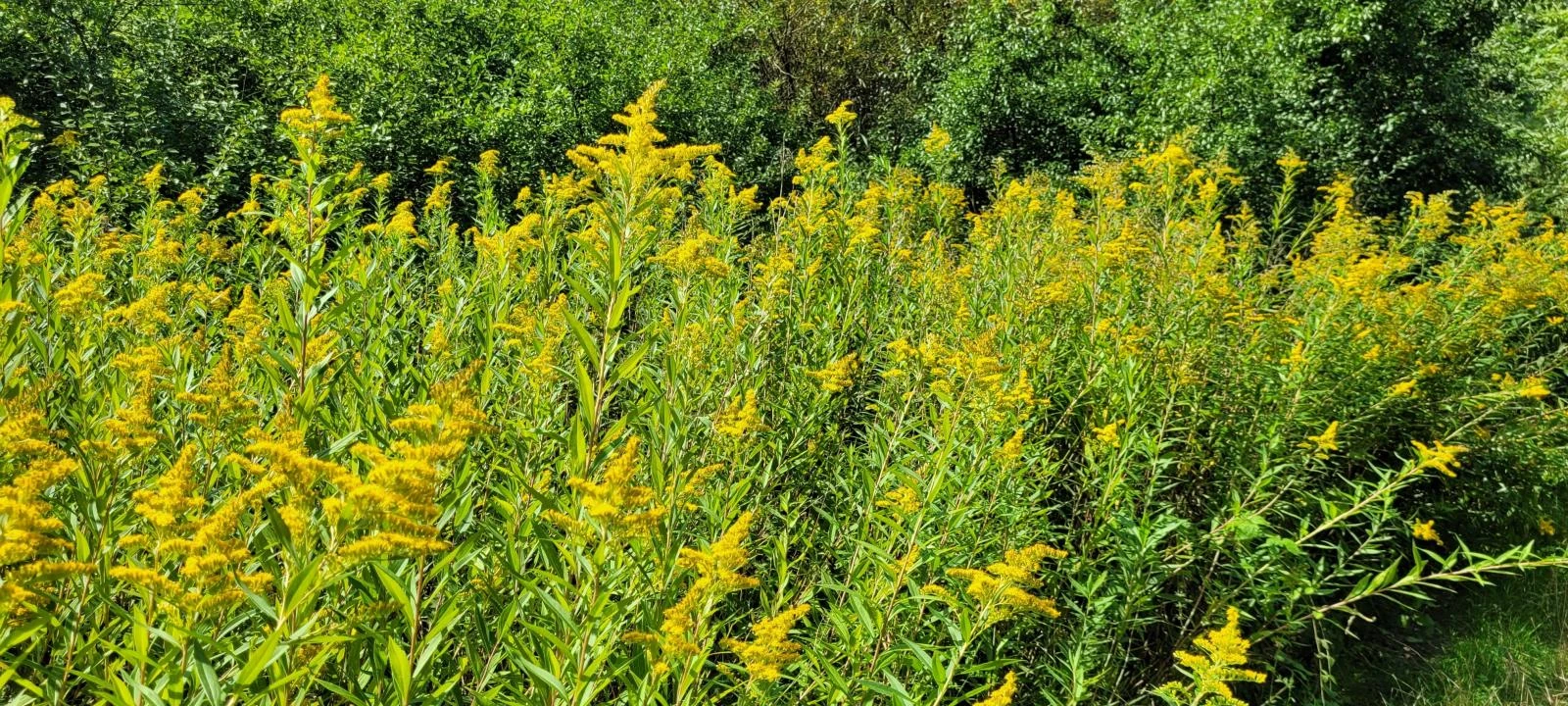
Solidago spp.
North American garden plants. Each stem releases vast numbers of wind-borne seeds, and creeping rhizomes then build dense stands. Mowing just before flowering, combined with regular grazing, keeps them in check. Present at all project sites.
Photo: Marie Kotasová Adámková
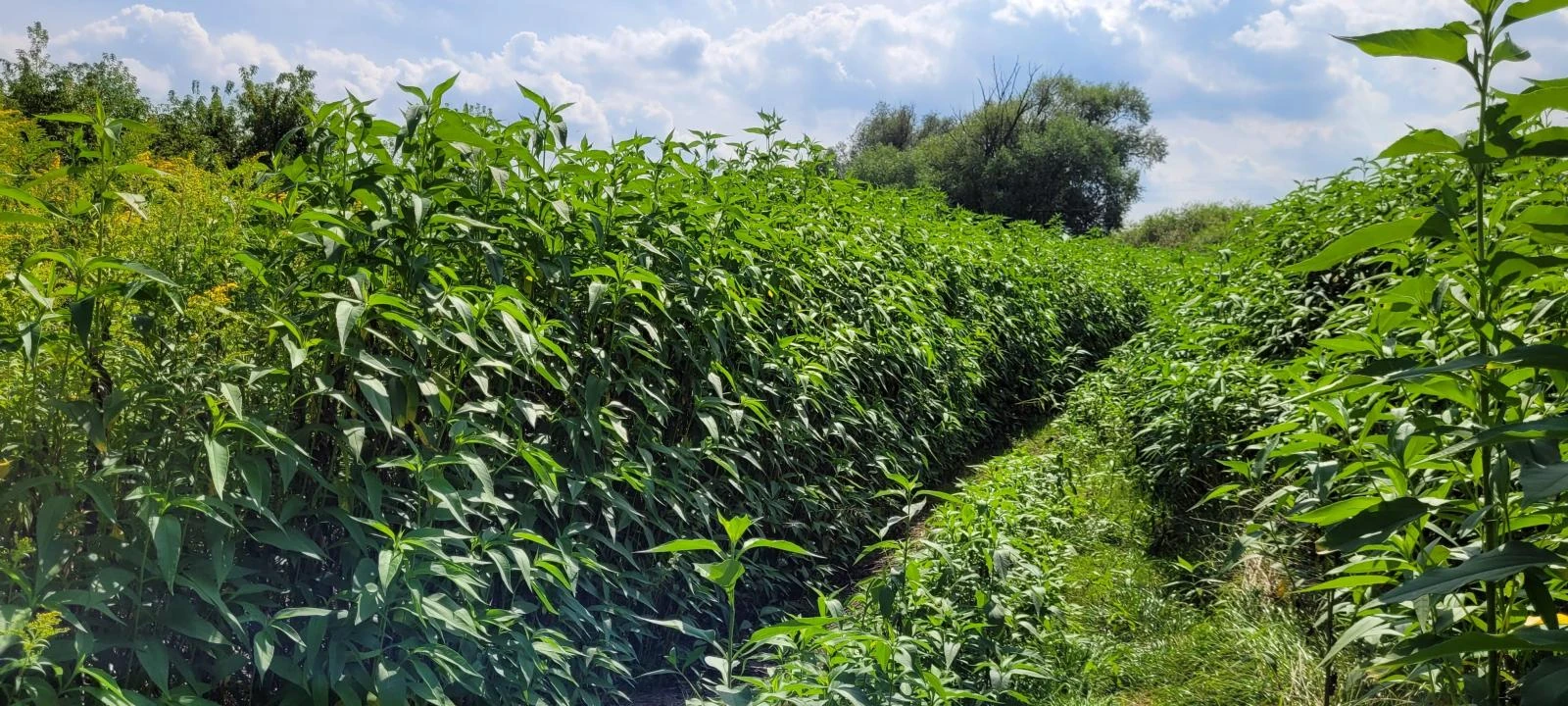
Helianthus tuberosus
A North American tuber crop that escaped from gardens. Tubers carried by water or in soil sprout into tall, dense stands along streams and on wet meadows; repeated cutting in summer gradually exhausts them. Present at four sites: Hevlínské jezero, Husí pastviště, Kosteliska and Trkmanec-Rybníčky.
Photo: Marie Kotasová Adámková
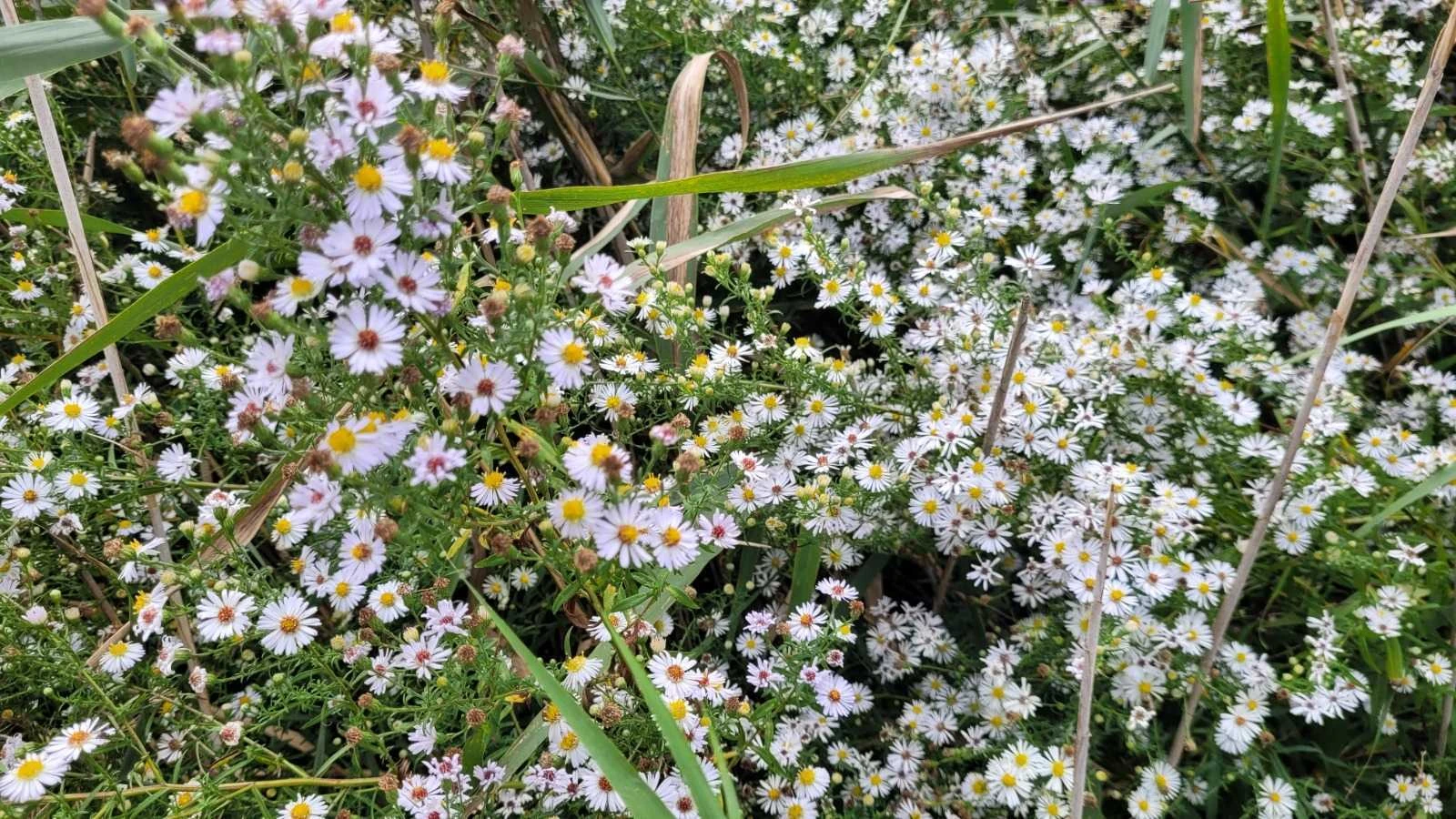
Symphyotrichum novi-belgii
North American garden asters now naturalised along rivers and on wet meadows. Spreading by seed and creeping rhizomes, they form dense clumps that displace native plants, including our rare salt-marsh aster. Present at seven of the ten sites.
Photo: Marie Kotasová Adámková
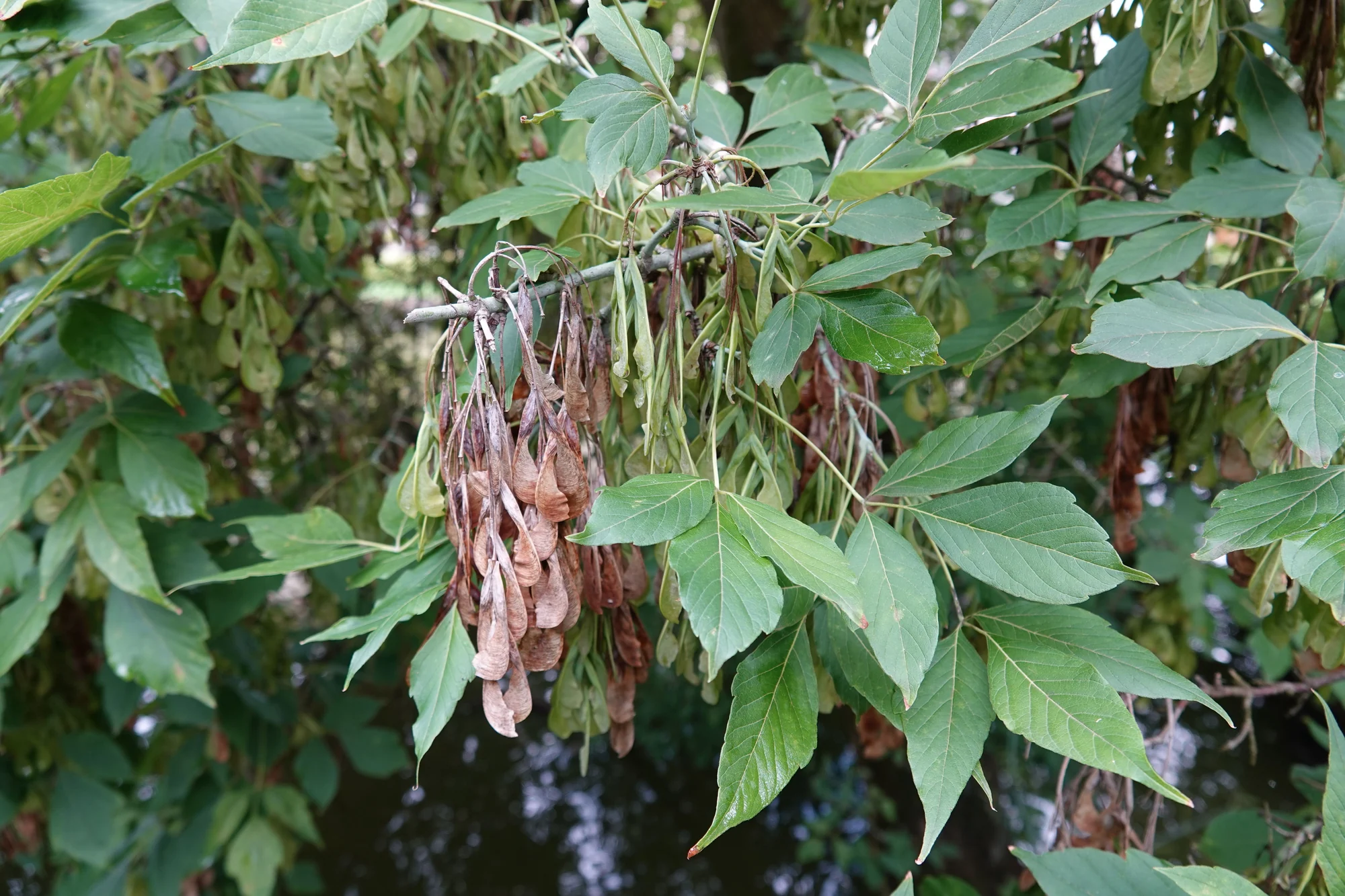
Acer negundo
A North American maple that seeds itself across floodplains and abandoned fields. Cut stumps resprout vigorously, so it must be removed thoroughly; left alone, it turns open meadows into shady thickets. Present at all project sites.
Photo: Tomáš Vrána
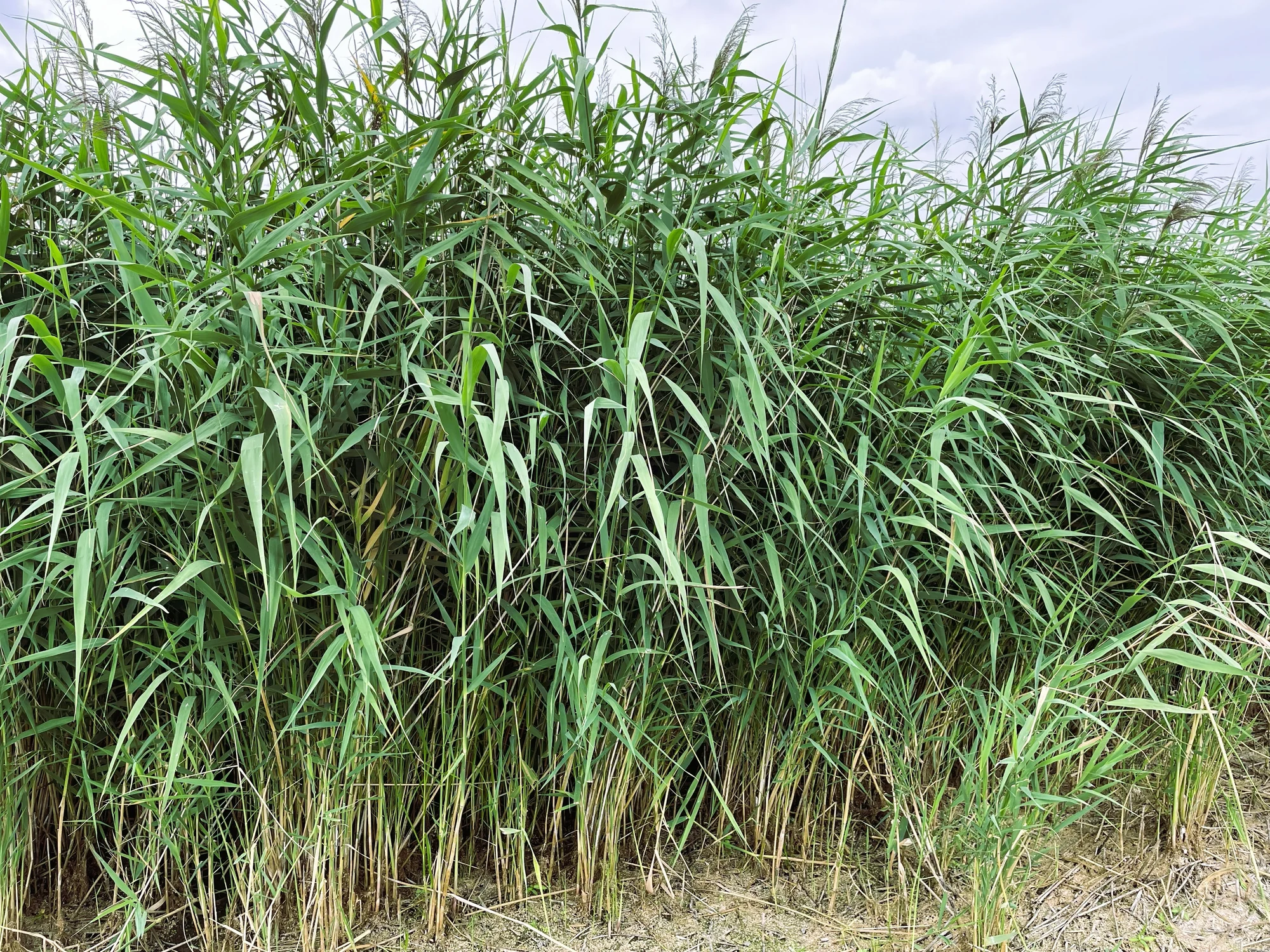
Phragmites australis
A native grass, but where grazing stops and nutrients accumulate it spreads by long runners into tall, dense beds. Grazing by cattle and buffalo, together with mowing, reopens the sward. Present at all project sites.
Photo: ENVIROP archive
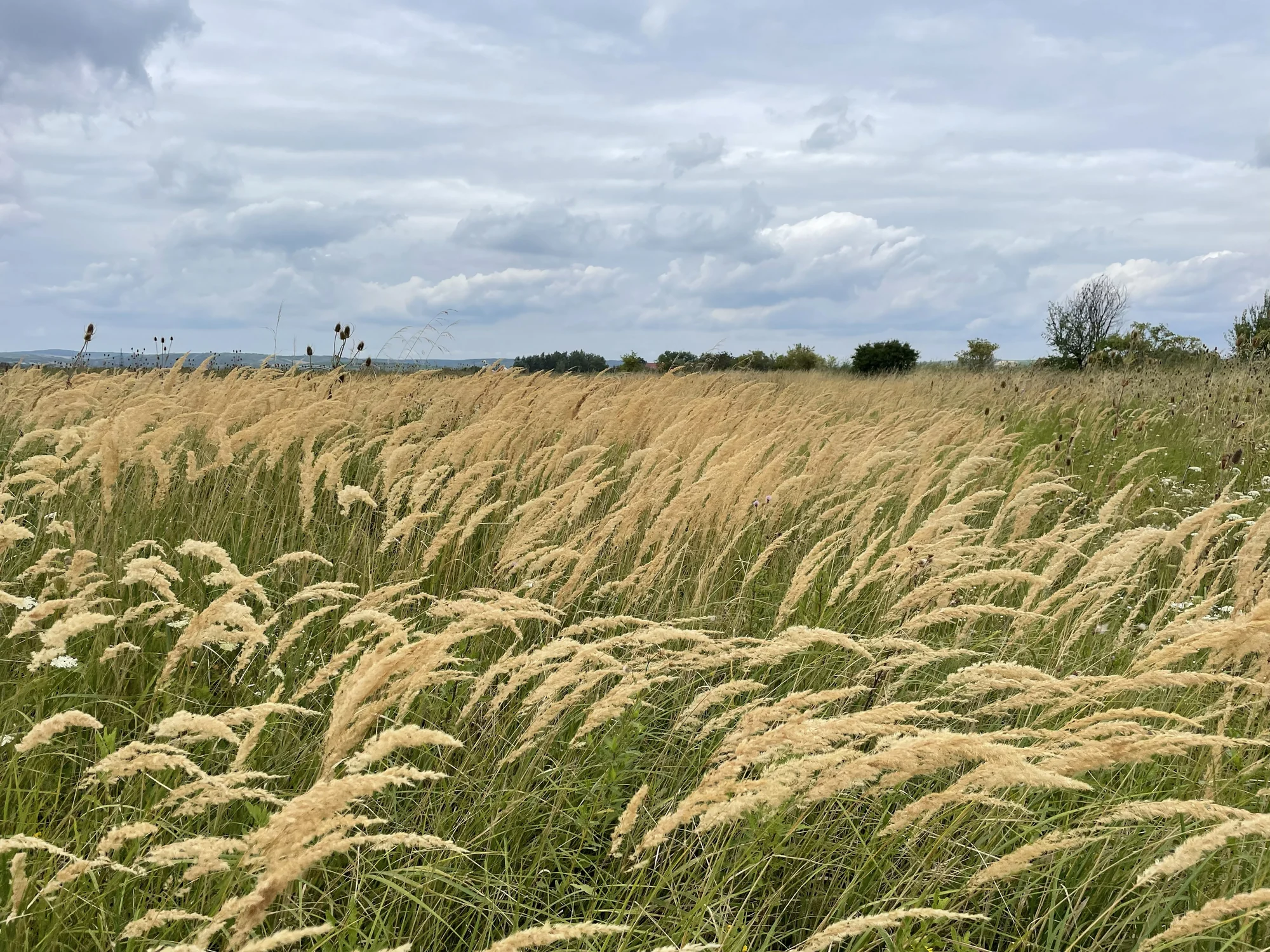
Calamagrostis epigejos
A native grass that flourishes on abandoned meadows. Its rhizomes form dense, uniform stands, and a thick mat of dead leaves smothers smaller plants. Mowing and grazing weaken it. Present at all project sites.
Photo: Marie Kotasová Adámková
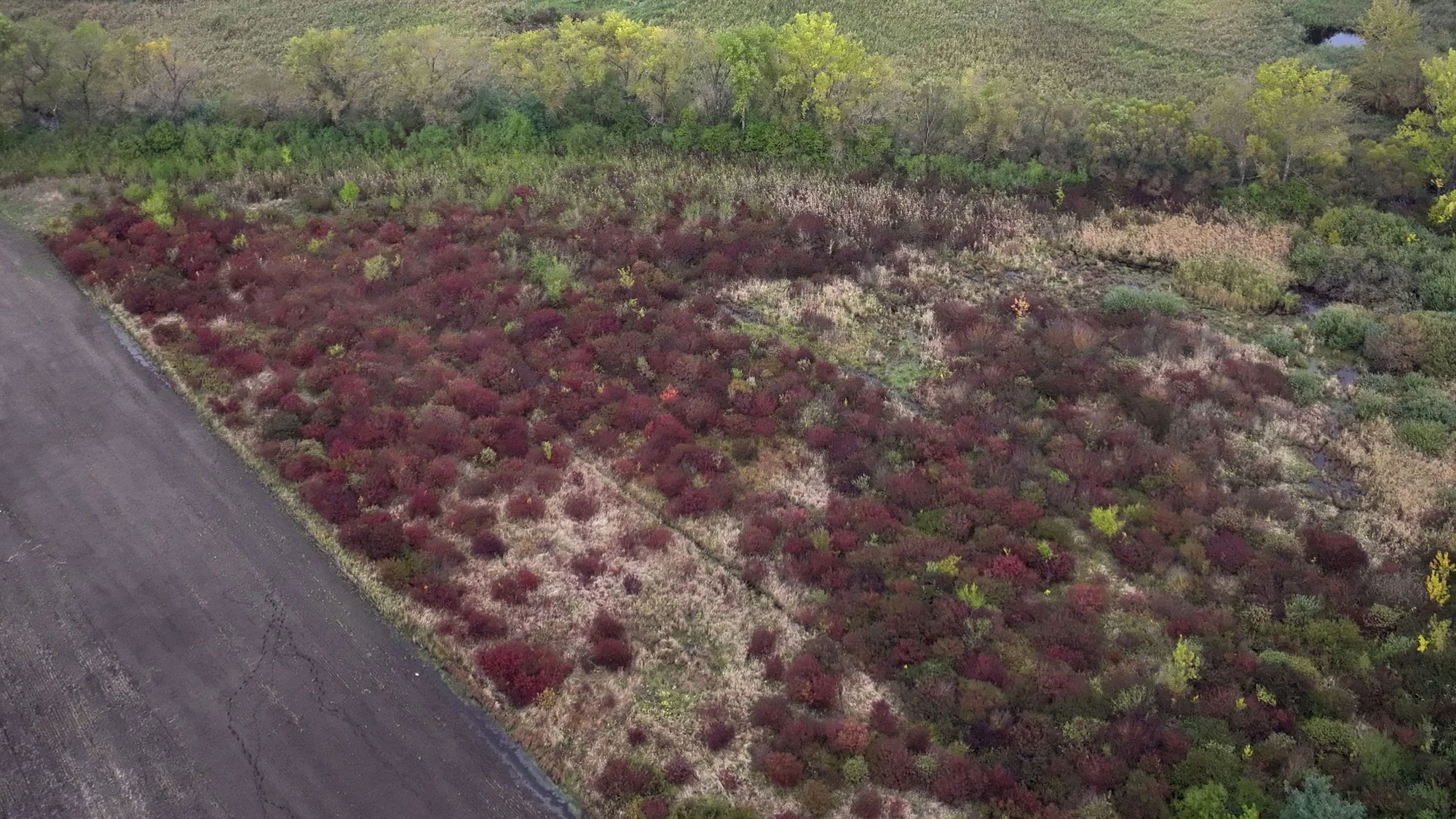
Cornus sanguinea
A native shrub spread by birds that eat its berries and by suckers from its roots. On unmanaged meadows it forms dense thickets. Not a project target, but present at all sites.
Photo: Antonín Zajíček
Estimated probability that a given spot was covered by invasive or expansive plants in 2022, before the project began. Machine-learning model based on ČÚZK aerial imagery and PlanetScope satellite data; values below 0.2 (invasive) and 0.25 (expansive) are not shown. The darker the colour, the higher the probability.
Vypálenky: Reed, goldenrod and New York aster.
Trávní dvůr: Goldenrod and reed.
Kosteliska: Goldenrod, Jerusalem artichoke, New York aster and reed.
Hevlínské jezero: Reed and dogwood. Dogwood is not yet included in the detection model, although it covered much of the southern part of the site.
Trkmanské louky: Reed, dogwood and box elder. Dogwood and box elder are not yet included in the detection model.
The current version of the detection model maps goldenrods, Jerusalem artichoke and New York aster (invasive) and common reed (expansive). Orthophoto 2022 © ČÚZK. Model: World from Space, LIFE in Salt Marshes.
Nutrients and pollutants reach several sites from outside. The water changes colour, and nutrient-loving plants replace the specialists.
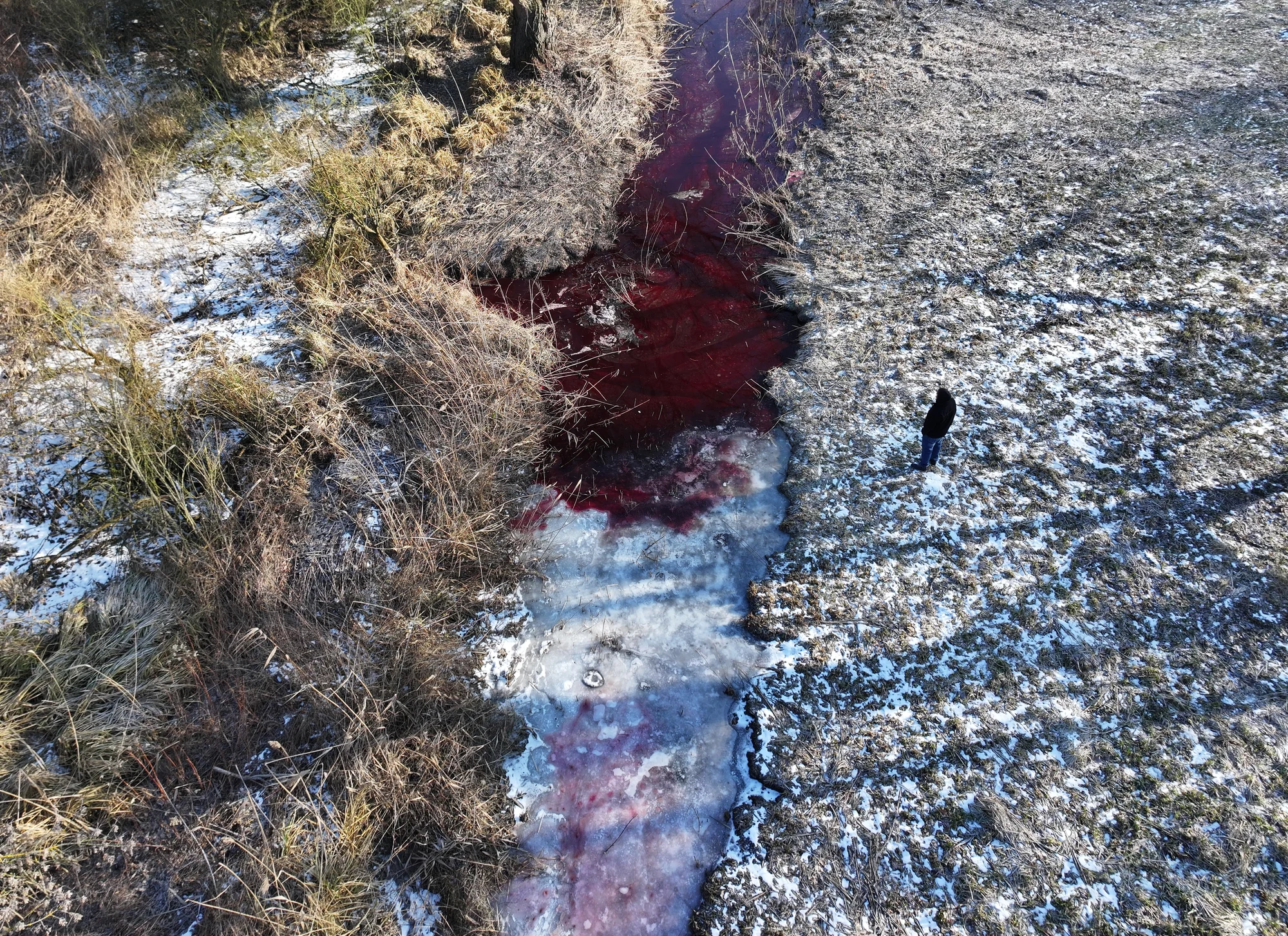
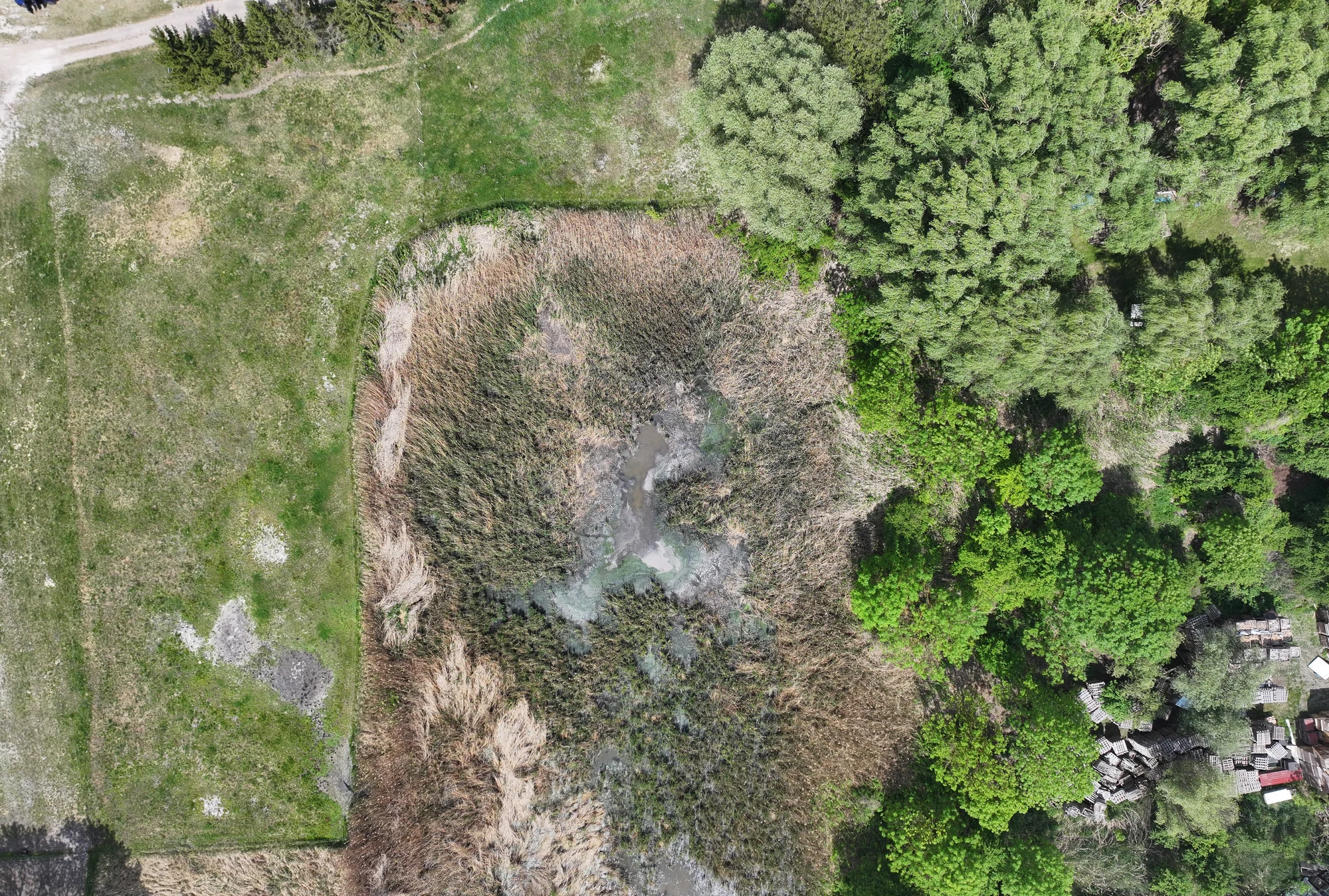
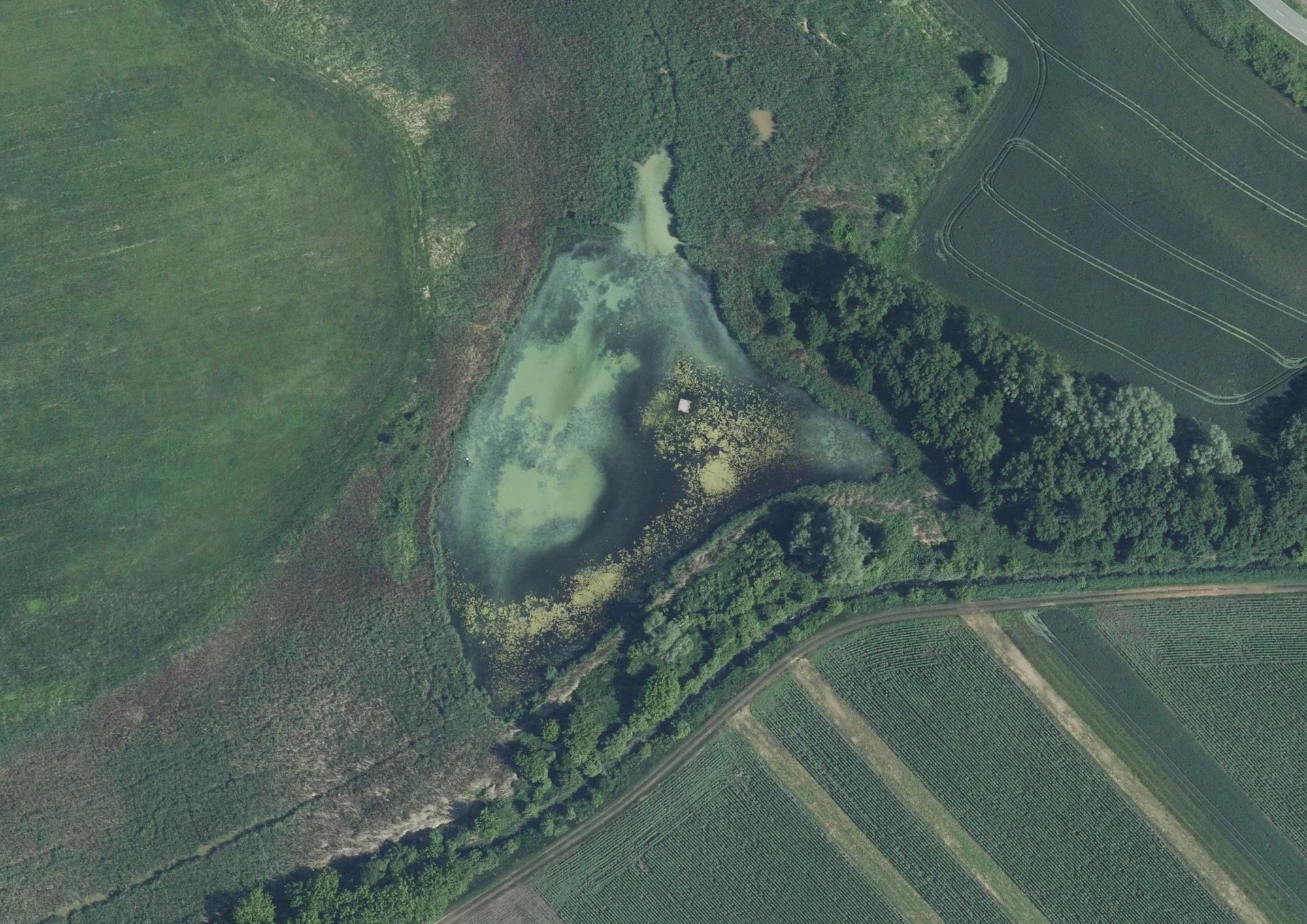
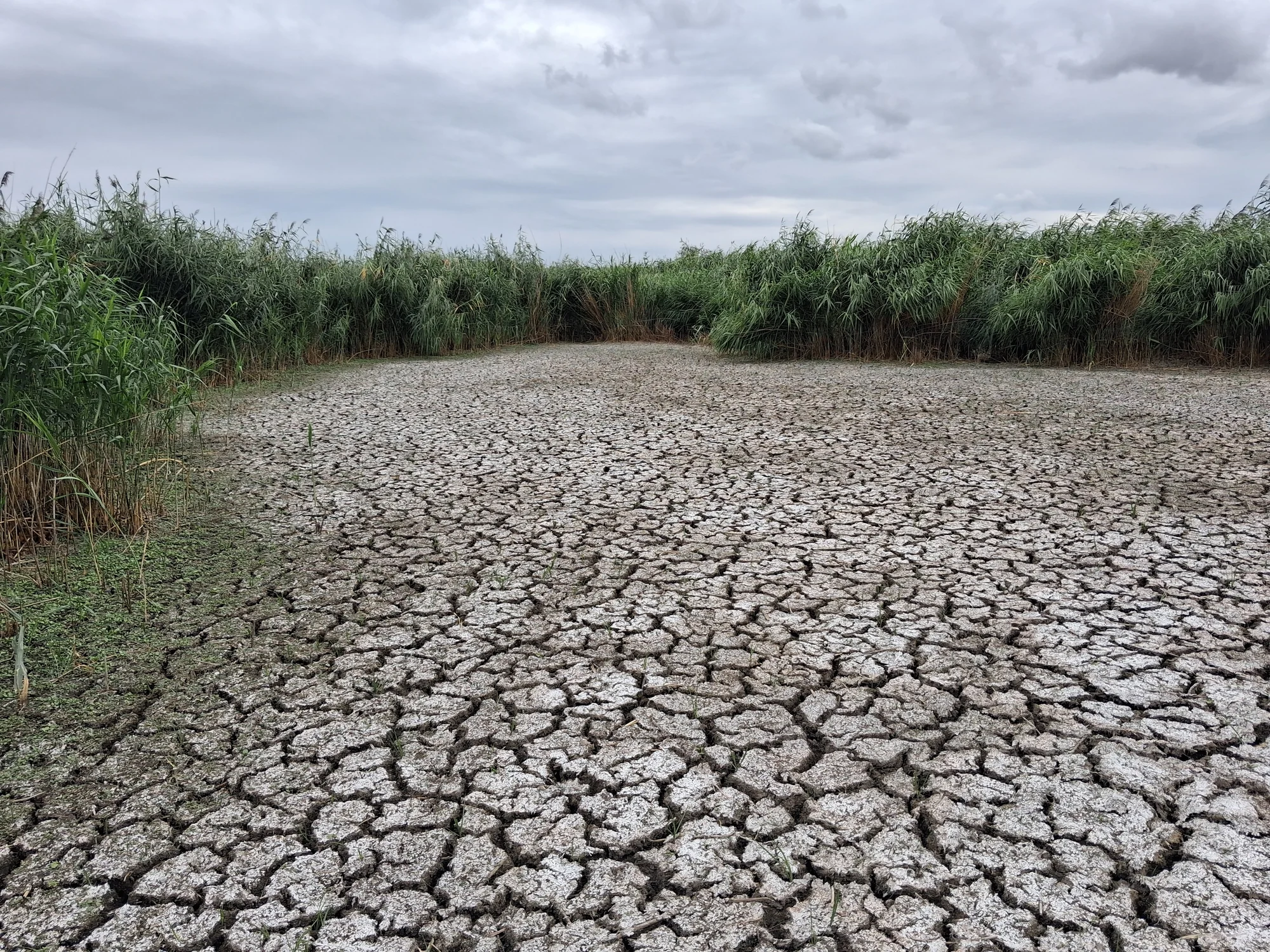
In the 20th century the landscape was drained for intensive farming; as the water table fell, salt stopped rising to the surface. In recent decades, rising temperatures and more frequent droughts linked to climate change have made matters worse.
Dry pool bottom at Trkmanec-Rybníčky. Photo: Marie Kotasová Adámková
Mean annual air temperature at the Lednice weather station, 1961–2023. Blue years were cooler and red years warmer than the 1961–1990 average.
+1.9°Cwarmer than 1961–1990
27hot days a year (30 °C or more), up from 11 in 1961–1990
Data: ČHMÚ, daily air temperature, Lednice station, 1961–2023. Last ten years (2014–2023) compared with 1961–1990.
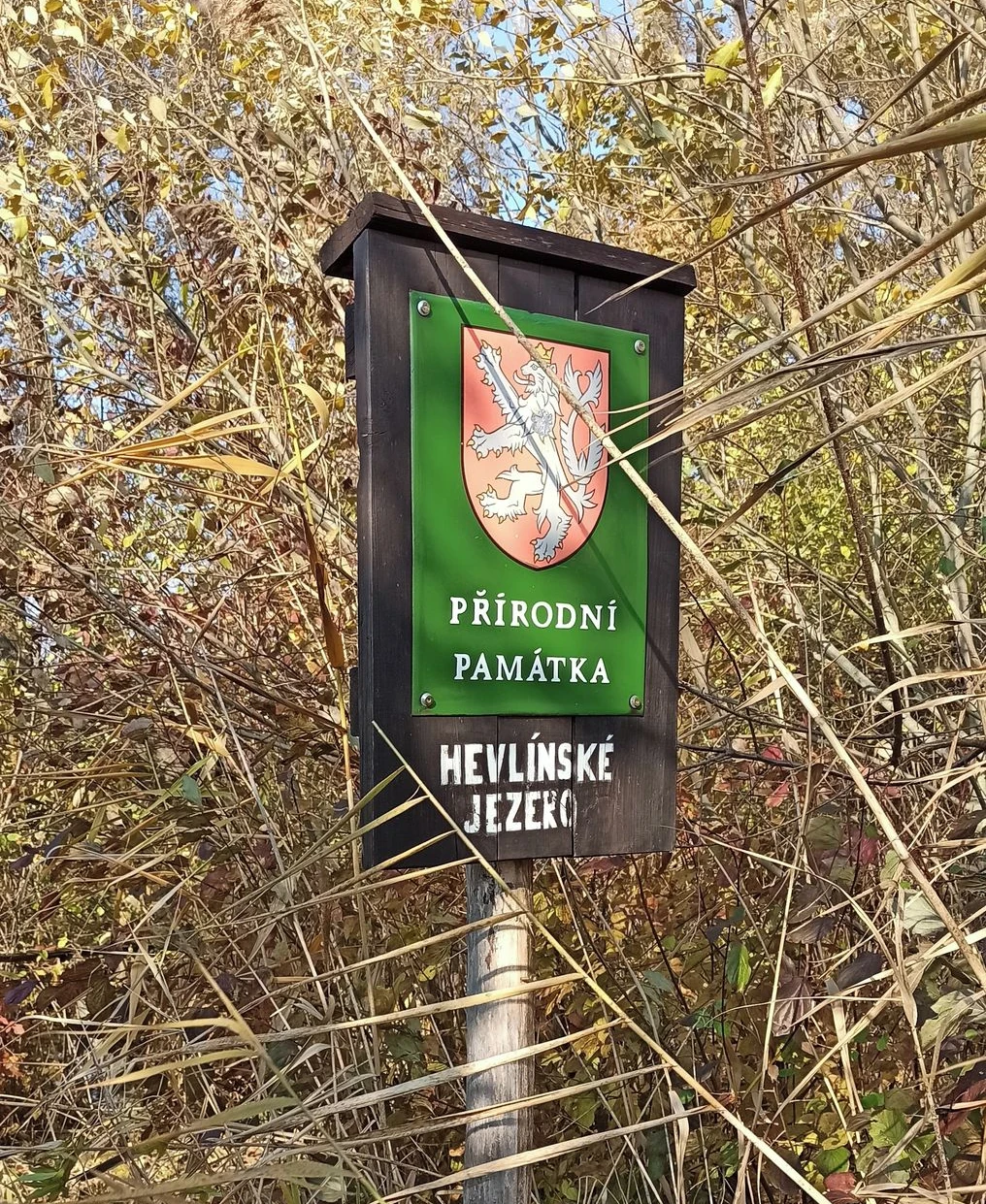
Protected and valuable as they are, these sites were little known. Access was difficult and information scarce, so even locals rarely visited them.
If children don’t grow up knowing about nature and appreciating it, they will not understand it. And if they don’t understand it, then they won’t protect it. And if they don’t protect it, who will?
Most of the work is traditional: animals, mowing and clearing. A few methods are new.
Grazing is the backbone of the project. Each species grazes in its own way, so the right mix of animals creates the right mix of habitats.
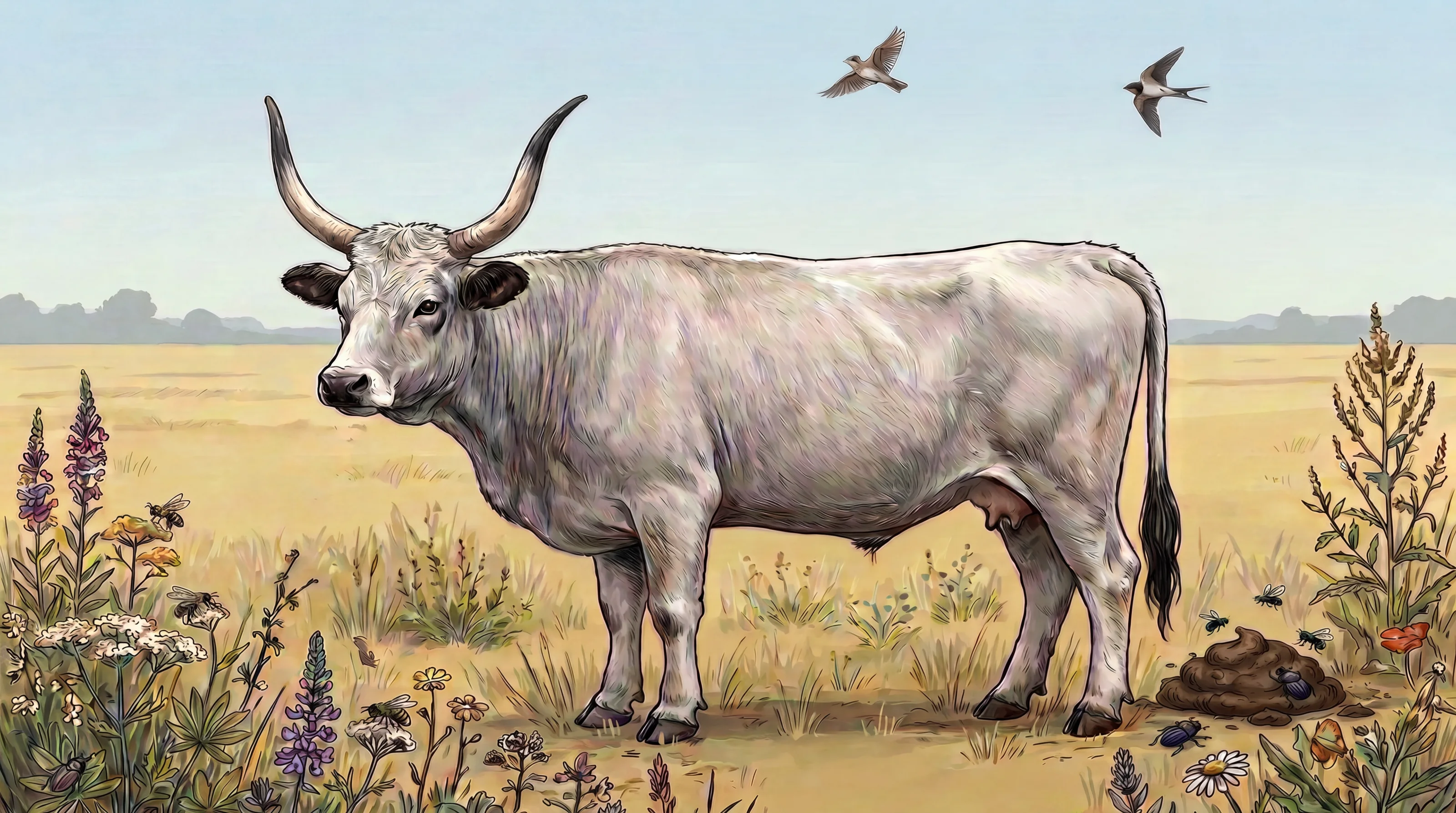
Hungarian steppe cattle
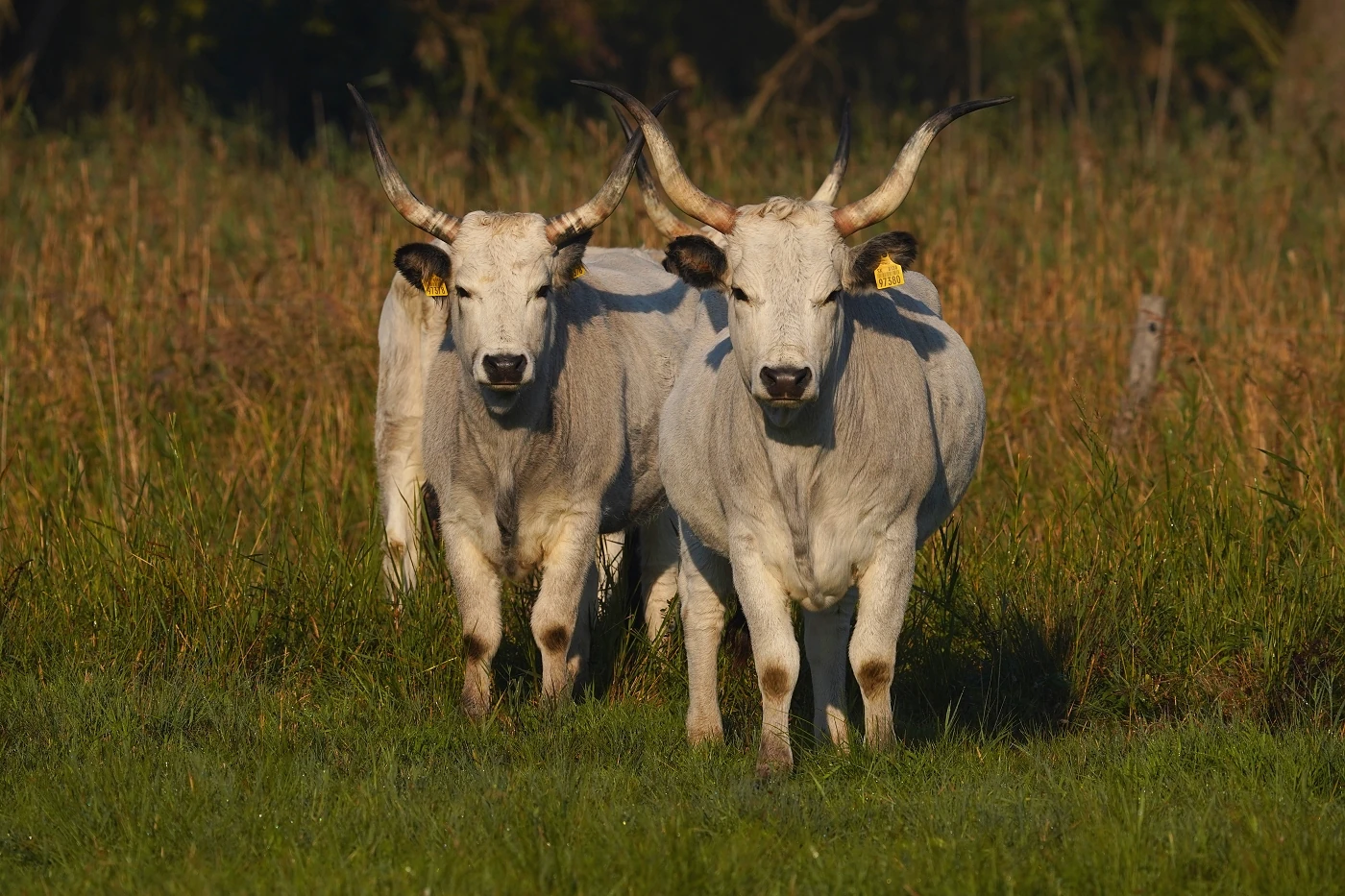
Why this breed? Hardy and undemanding, it copes with both waterlogging and drought, comes from the Pannonian steppes and was traditionally kept in the region – in Dubňany, for example. Scroll to explore it part by part.
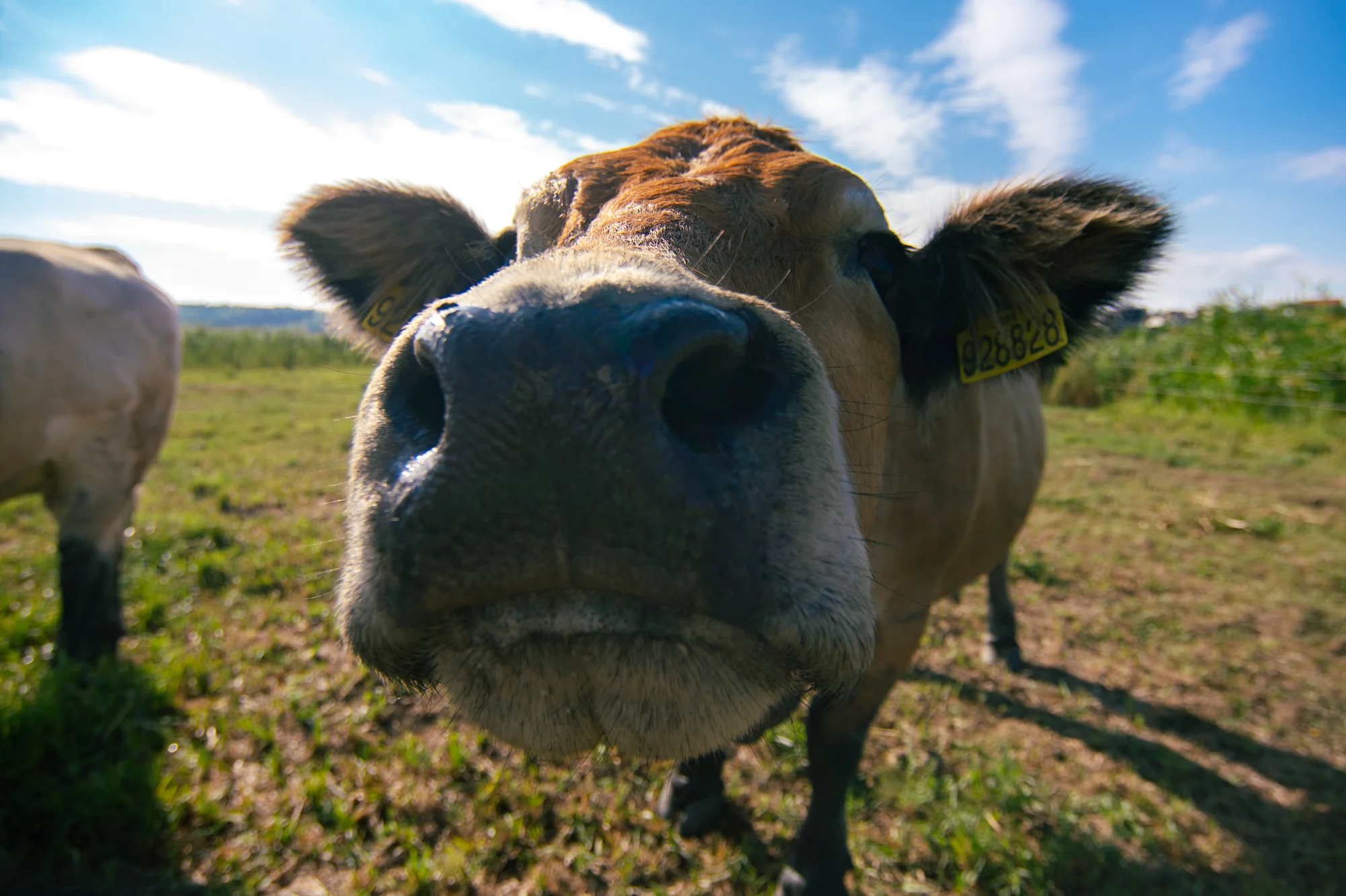
Its long tongue wraps around plants and tears them off, leaving a patchwork of grazed and ungrazed patches, each with its own plants and animals. It also browses leaves and bark, opening up sunny spaces – permanently shaded ground supports far fewer species.
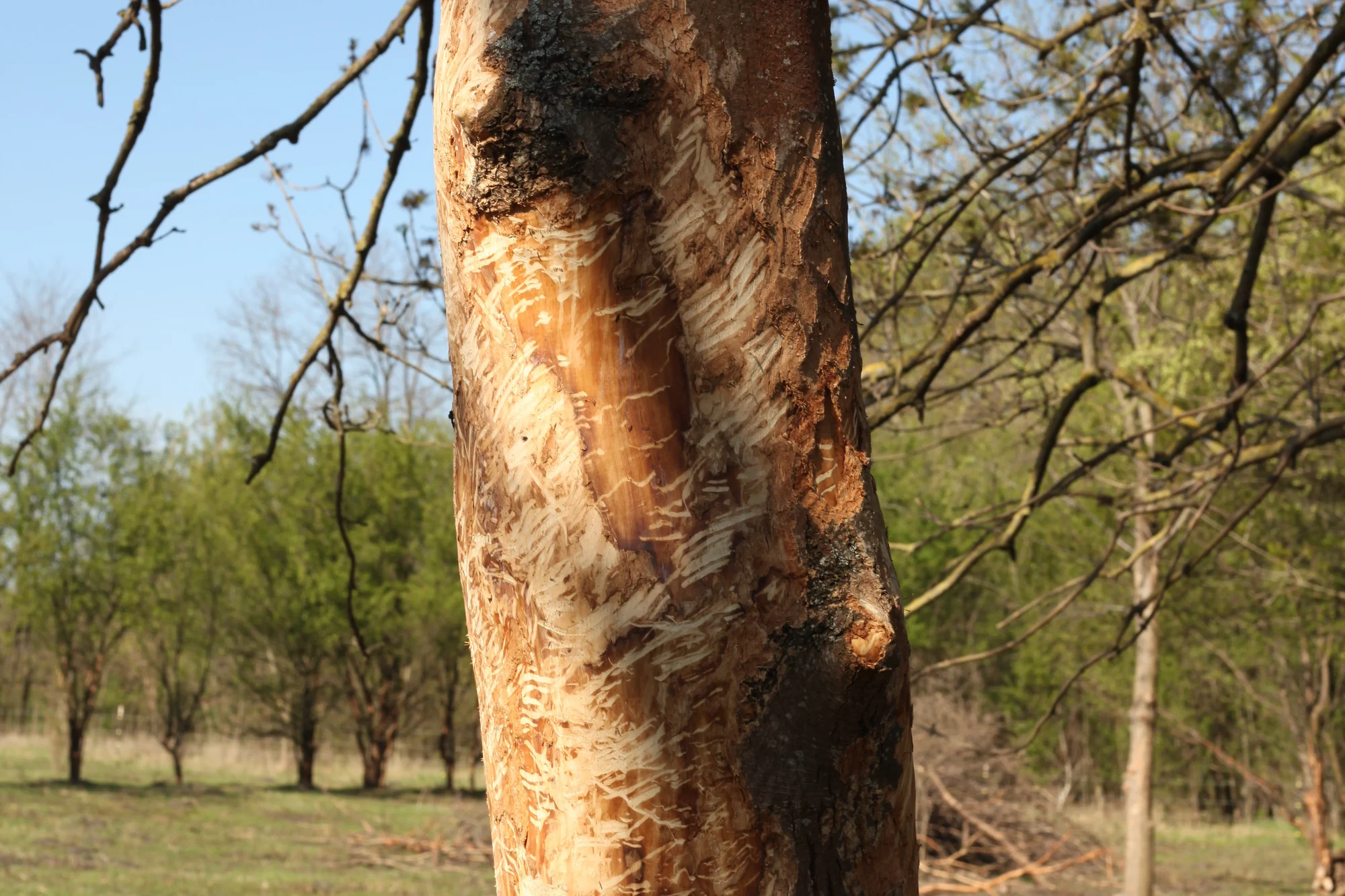
It uses its horns to strip bark and break the branches of self-seeded trees, and to fend off predators such as wolves, foxes and dogs.
Birds line their nests with its shed winter coat, starlings pick insects off its back, and swallows and wagtails follow the herd. Where cattle roll on the ground, bare patches appear – ideal nesting sites for solitary bees.
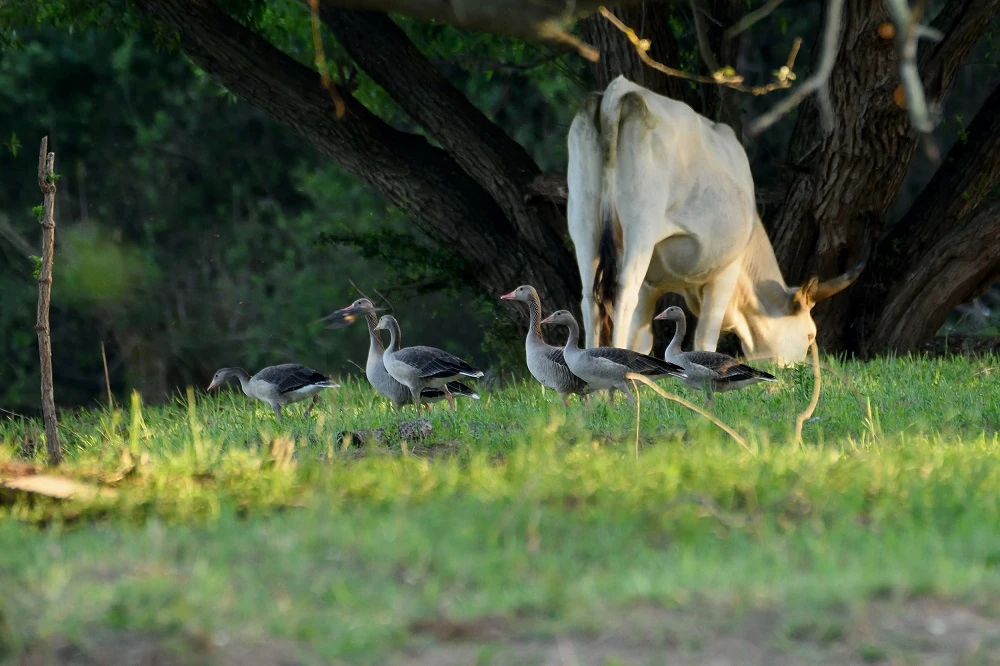
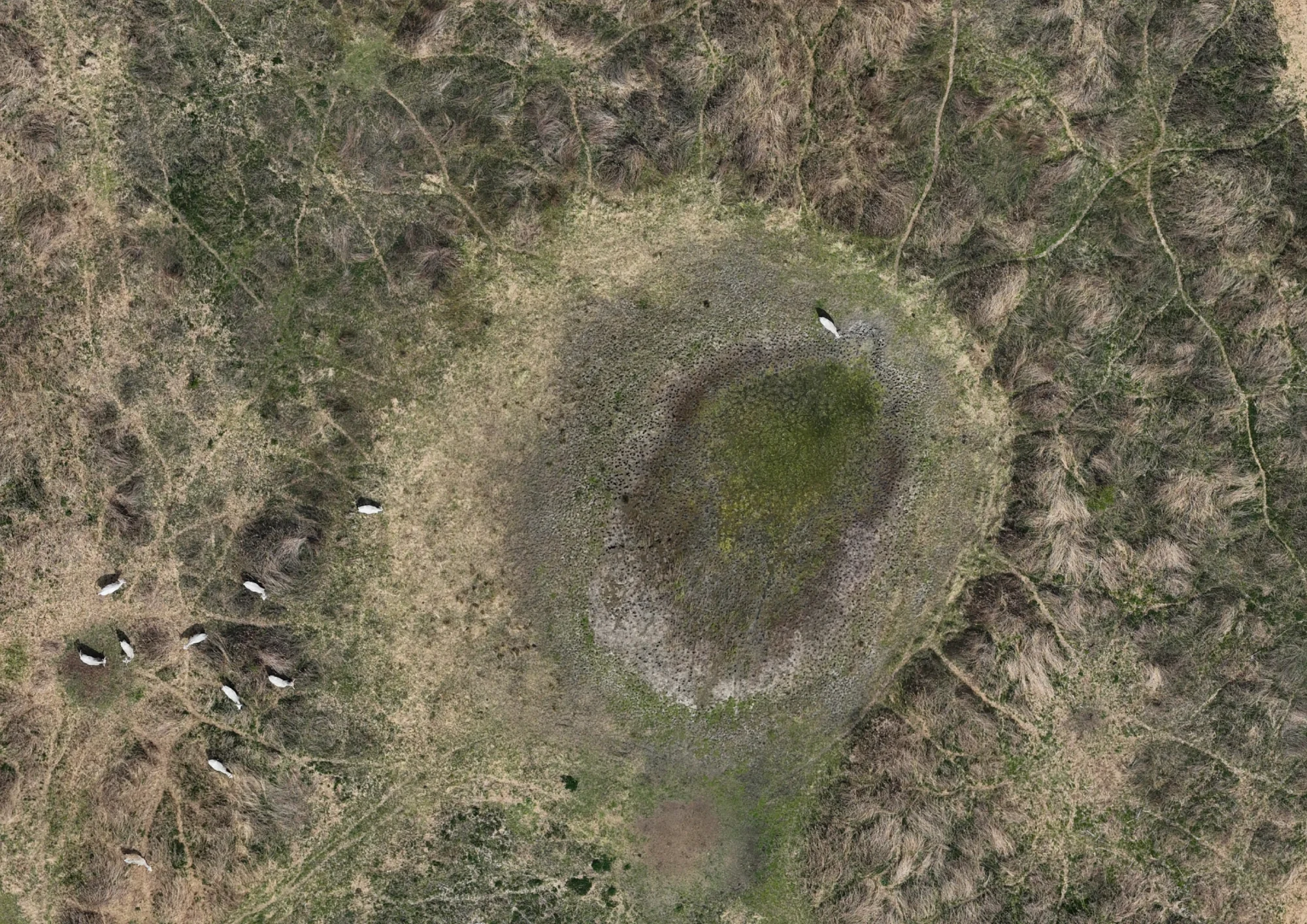
Hooves break up small patches of soil, creating room for plants that cannot compete in dense grass – often rare ones. At Vypálenky, the cattle trampled whole networks of paths through the former reedbeds.
Cow dung supports a whole community of insects and fungi, and the animals that feed on them – among them the hoopoe, which hunts for large insects on grazed pastures with short grass.
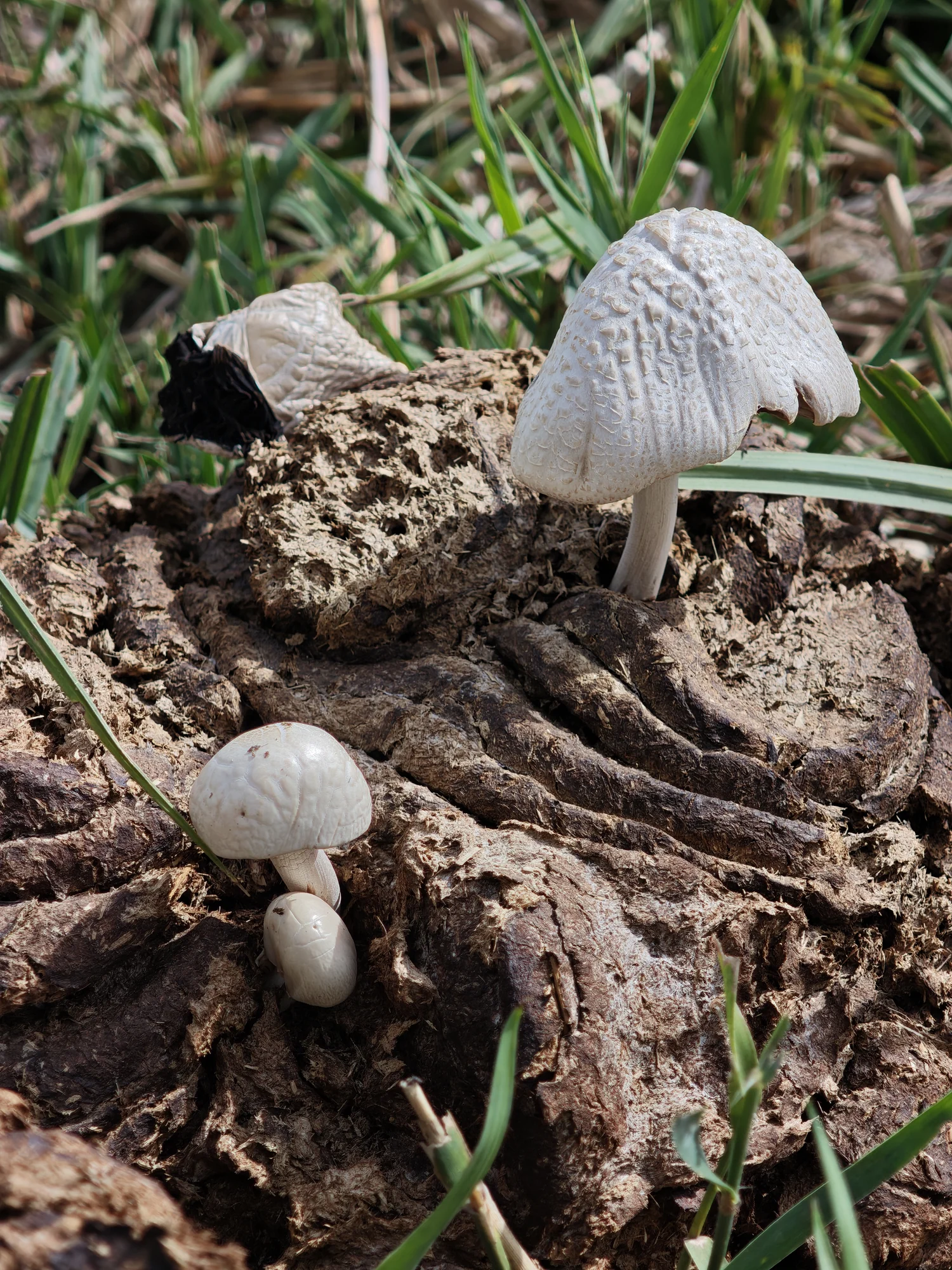
Illustration: Matúš Hrnčiar.
Non-selective grazers: they eat more or less everything, herbs included, and crop the sward to about 5 cm. They also tackle taller growth and, being heavy, disturb the soil considerably.
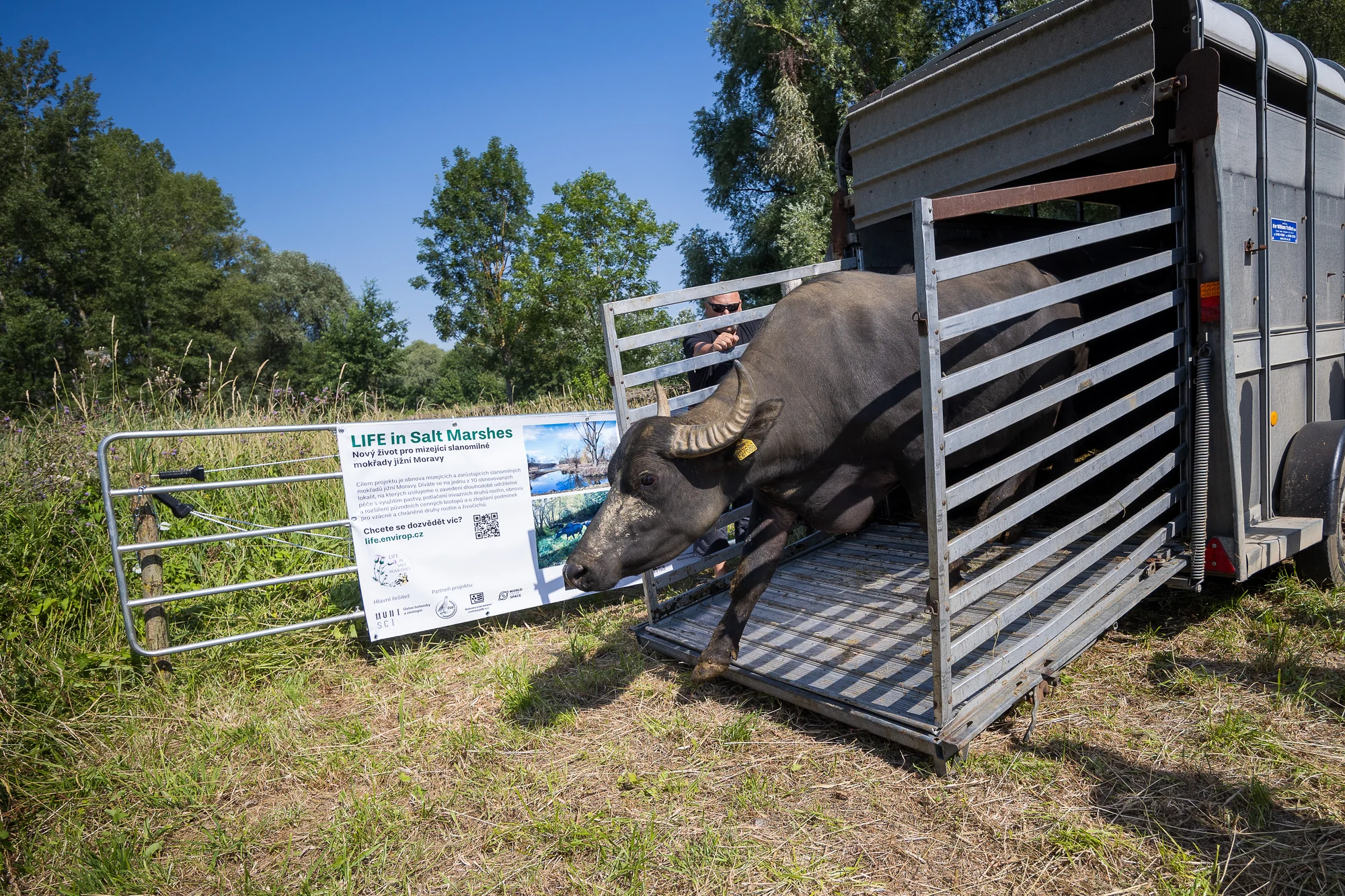
Undemanding and not choosy. They readily graze reed, eat goldenrod too – though they do not seek it out – and browse willow scrub. Broad hooves keep them from sinking into waterlogged ground, and their wallows deepen pools for amphibians and insects.
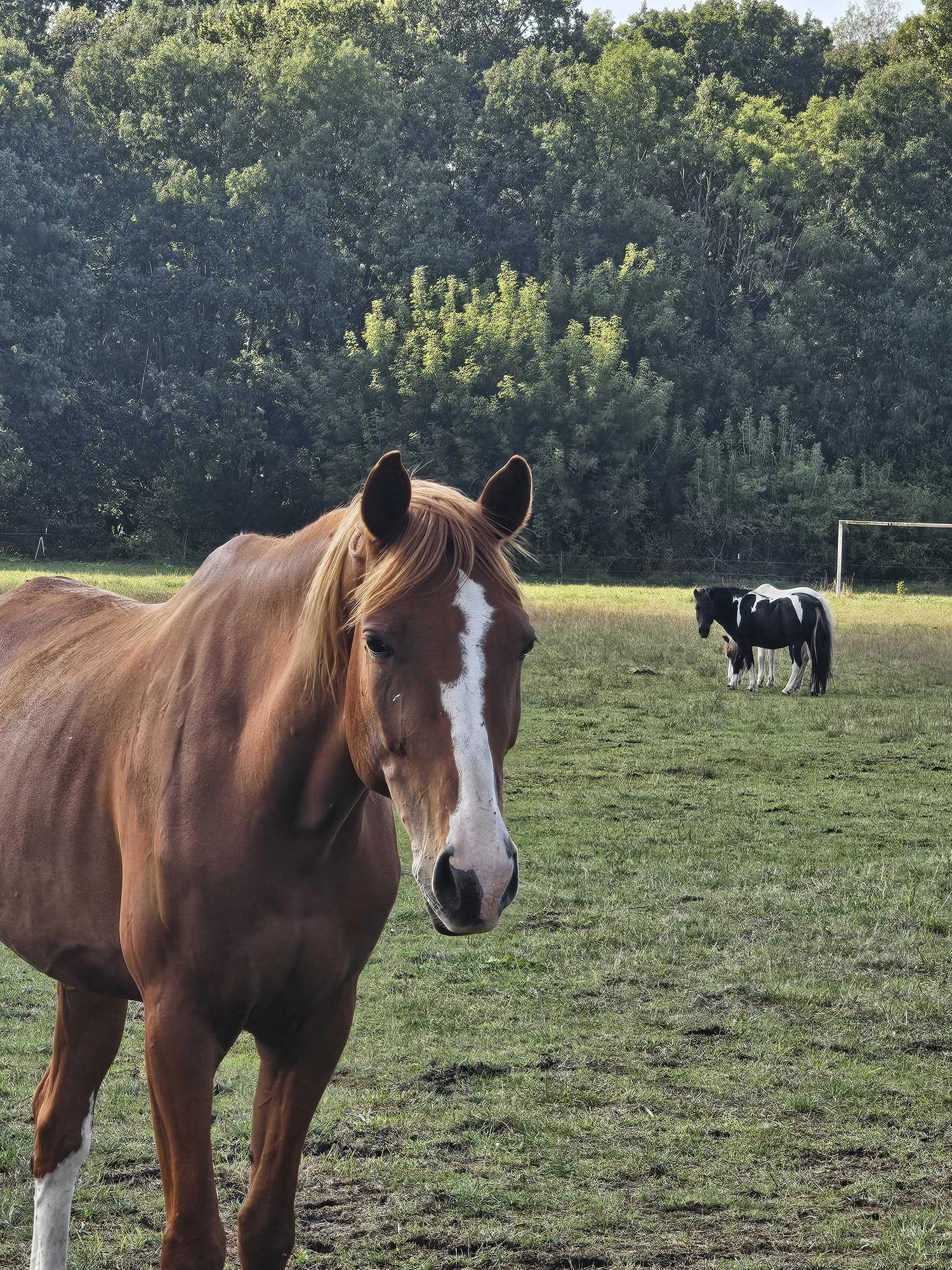
They grip plants with their lips and bite them off close to the ground, to about 3 cm, feeding mainly on grasses. Horses are heavy and suit places where the soil needs to be disturbed and compacted – such as salt marshes. Ponies are lighter and readily eat wood small-reed (Calamagrostis epigejos), a tall expansive grass that other grazers tend to leave.
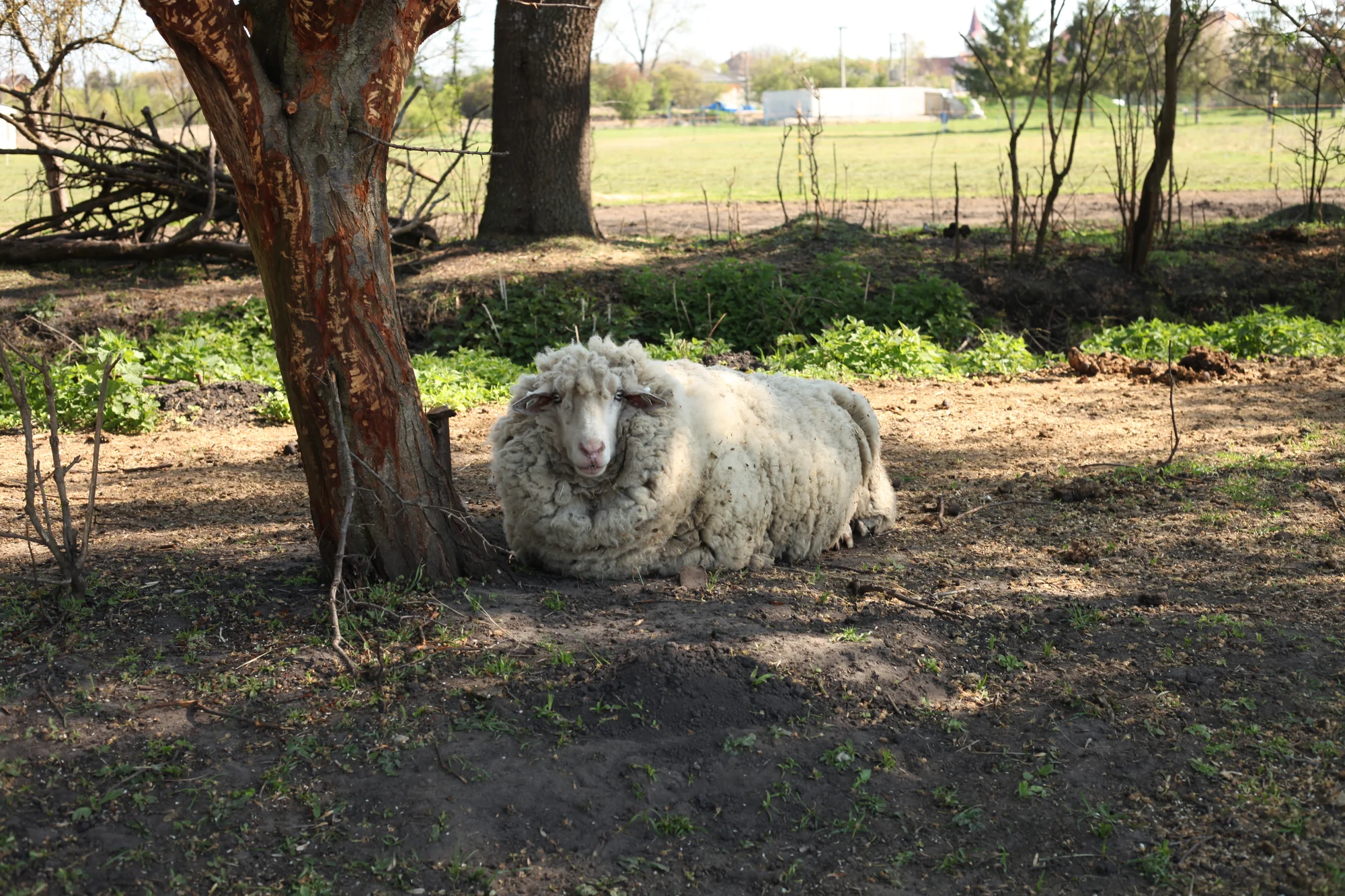
Selective: they avoid tall flowering grasses and graze the lower layer of the sward down to 2–3 cm. Being light, they barely disturb the soil.
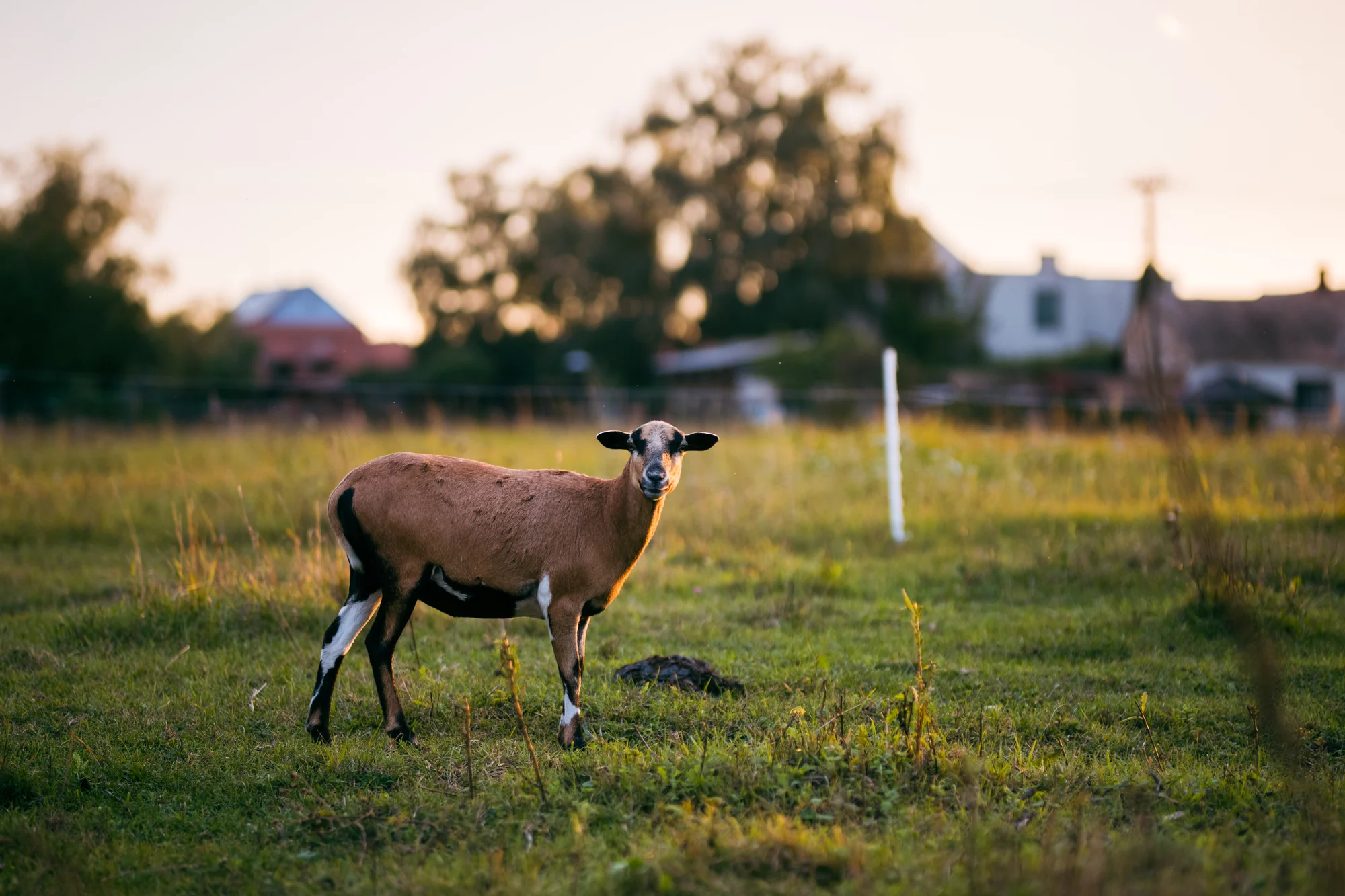
They will graze tall grasses, but prefer to browse broad-leaved herbs and, above all, the leaves and shoots of trees and shrubs – ideal after scrub has been cleared.
Photos: Cattle – JMP ČSO; Water buffalo – Radek Miča; Horses and ponies – Matúš Hrnčiar; Sheep – Nina Babicová; Goats – Nina Babicová. Sources: AOPK ČR – Pastva (palava.aopk.gov.cz/pastva); AOPK ČR – water buffalo at NPR Slanisko u Nesytu (2025); Ekolist, 31 July 2024; Ochranářská příručka – Exmoor pony; Menard et al. (2002), Journal of Applied Ecology 39.
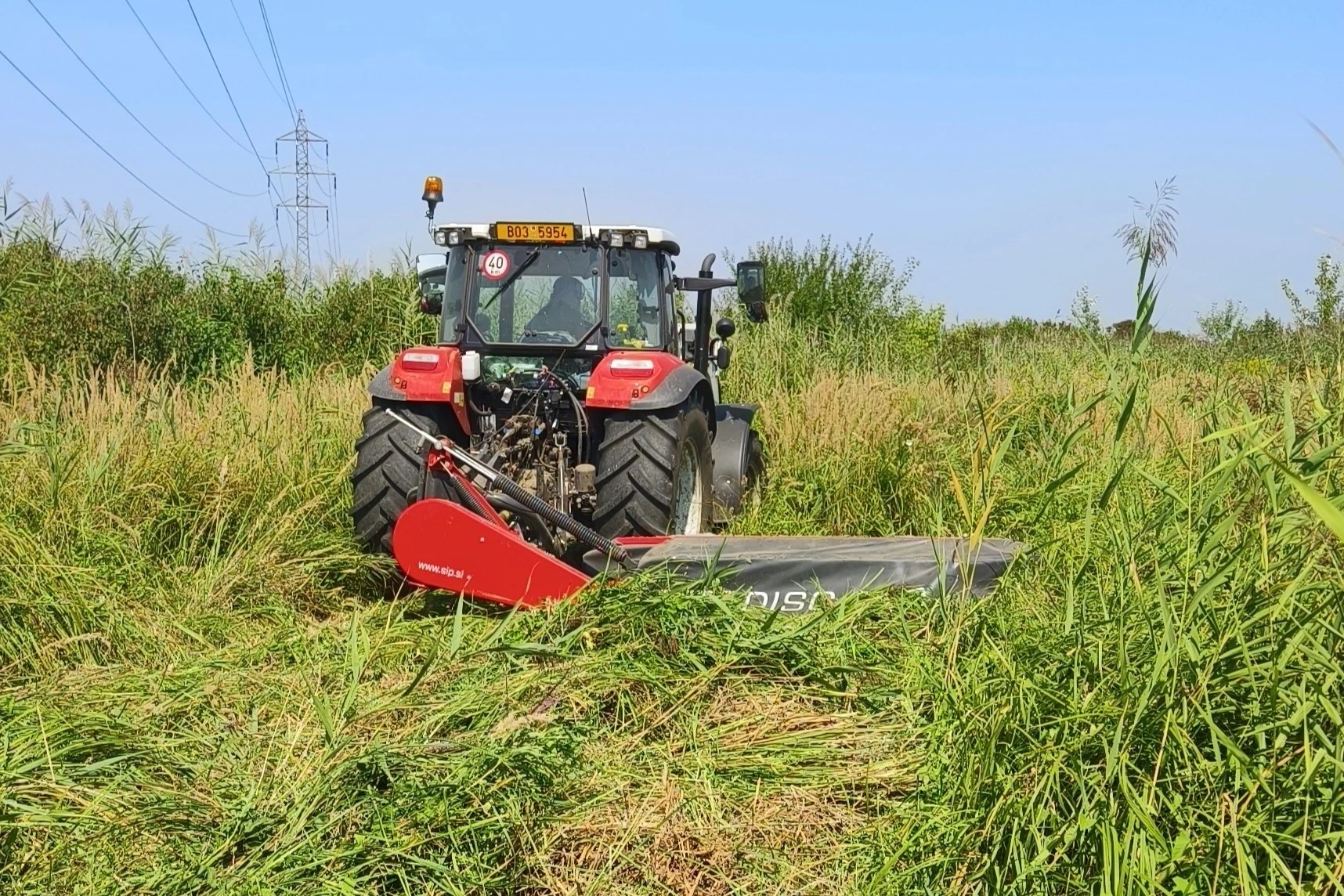
Where animals cannot go, we mow. Some places are mown by hand, but many areas are large, so the project acquired an indispensable helper: a tractor with a mower, baler and loader. It also clears manure and moves the bales.
Photo: Marie Kotasová Adámková
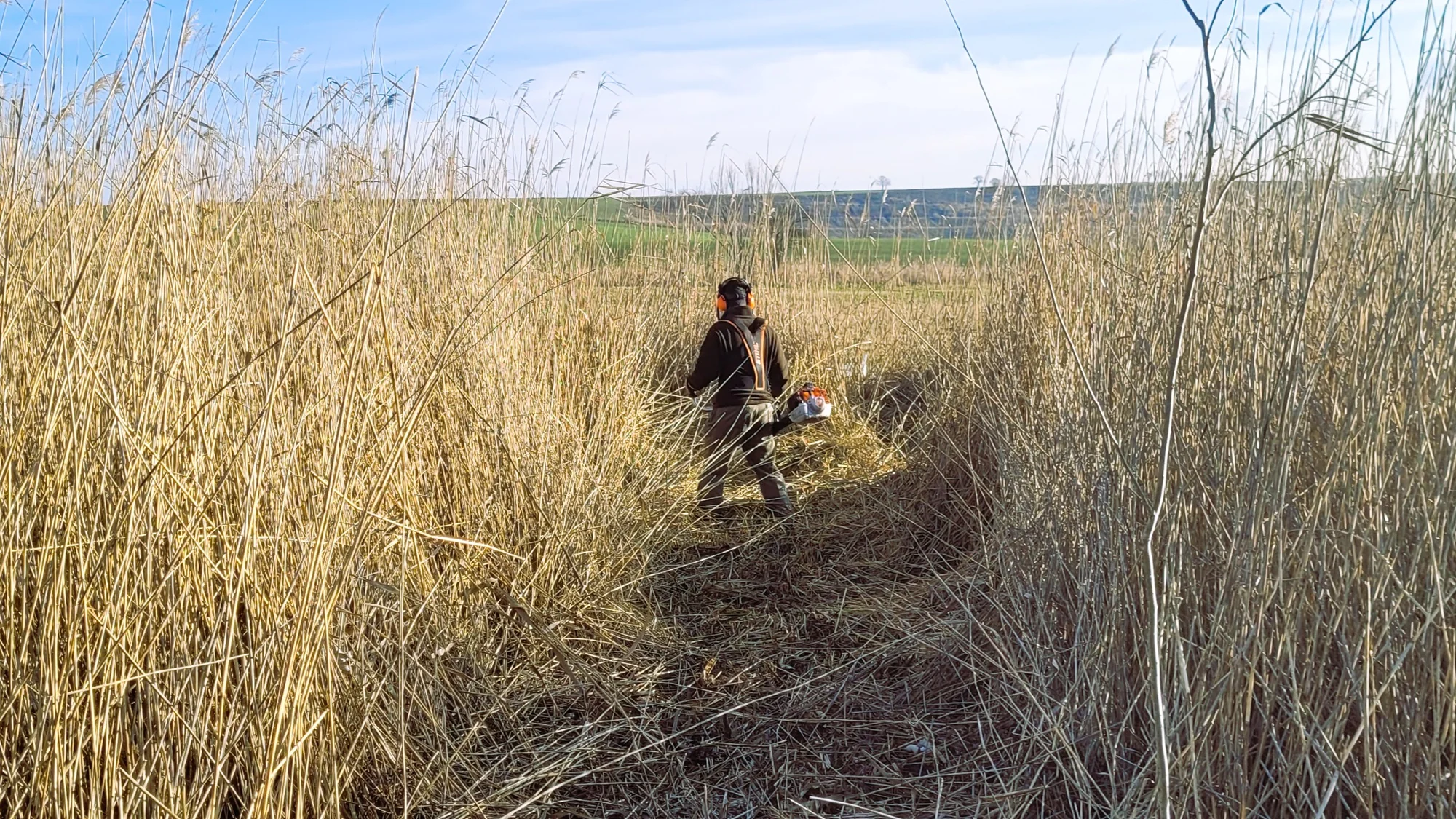
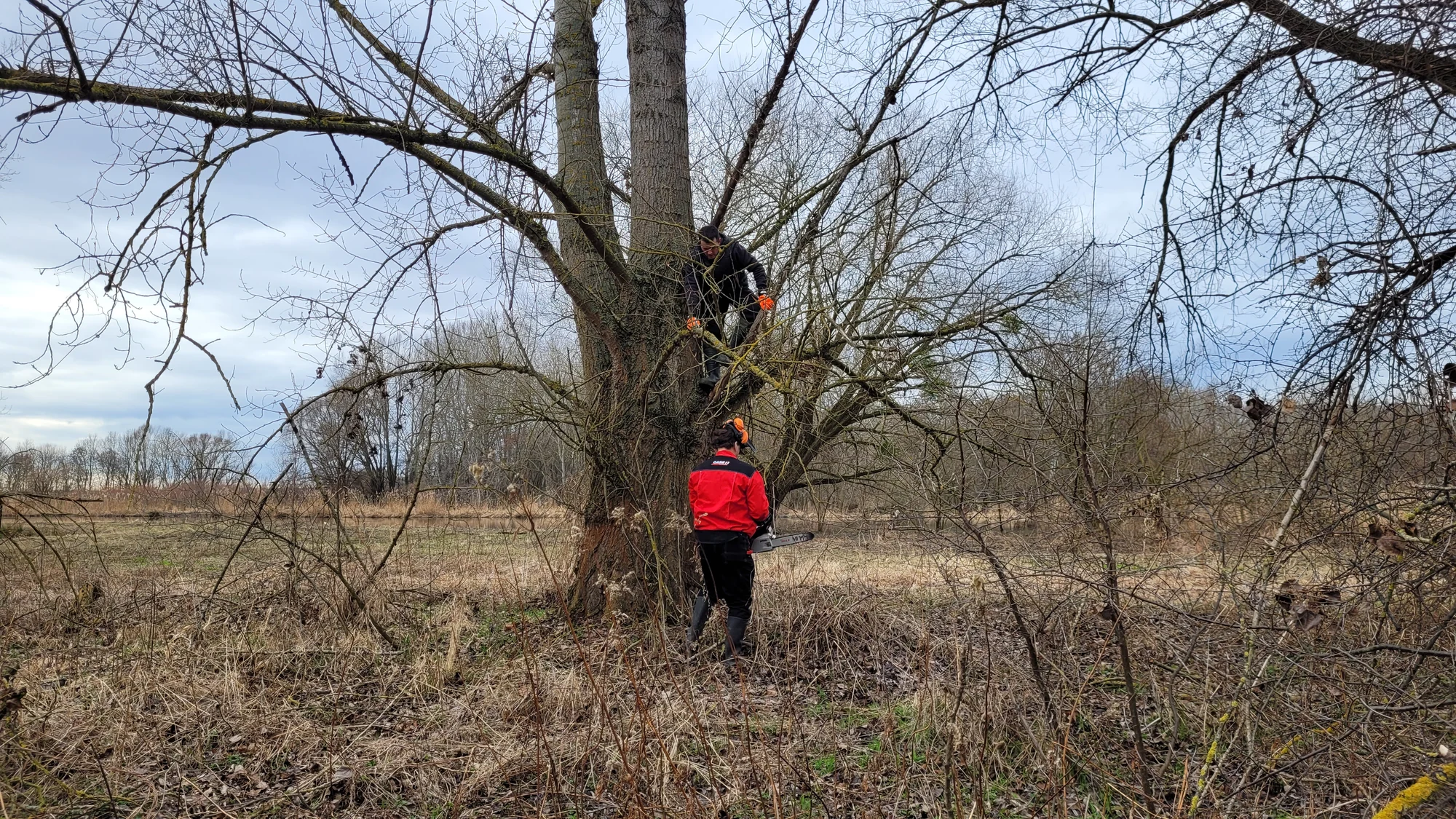
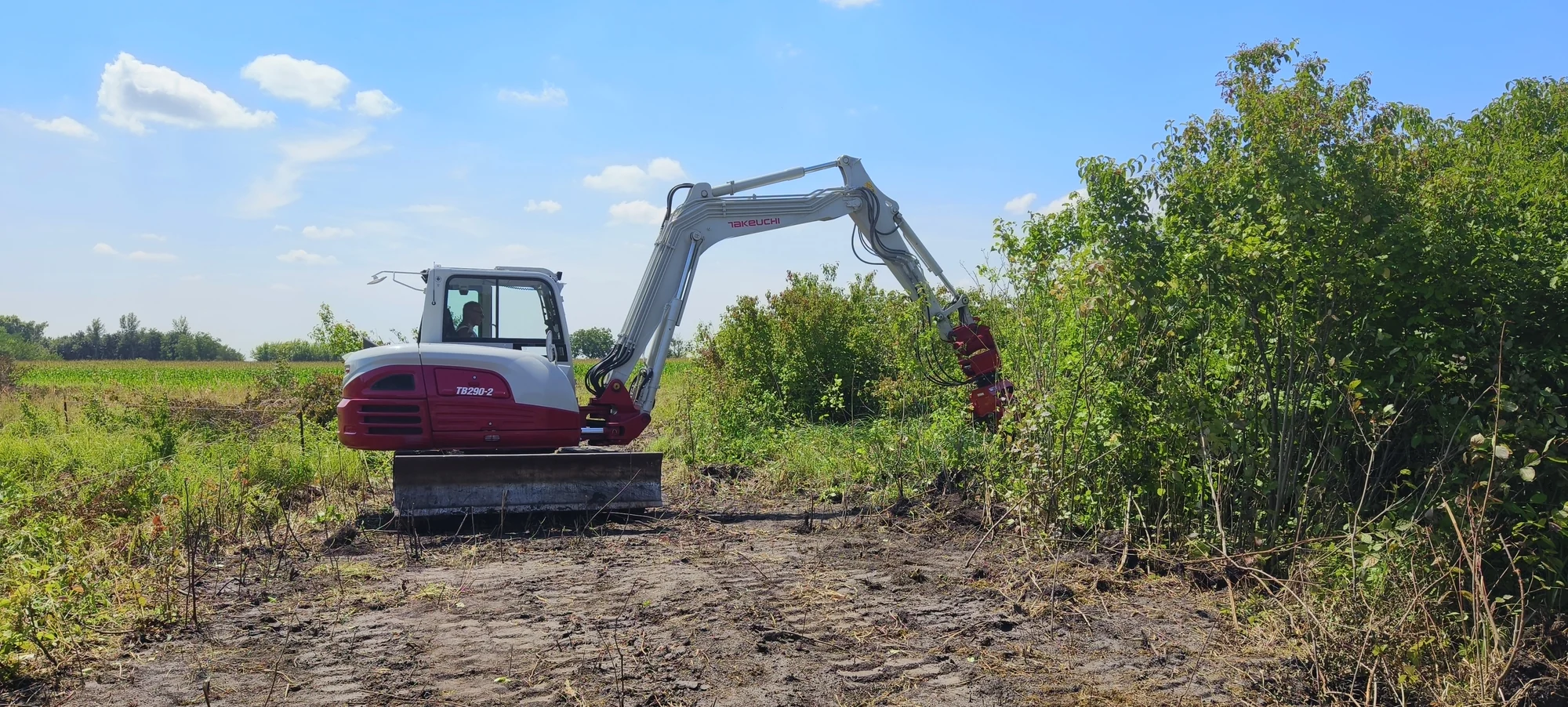
We remove self-seeded trees and invasive shrubs and thin overgrown woodland, so that light reaches the ground again.
Photo: Marie Kotasová Adámková
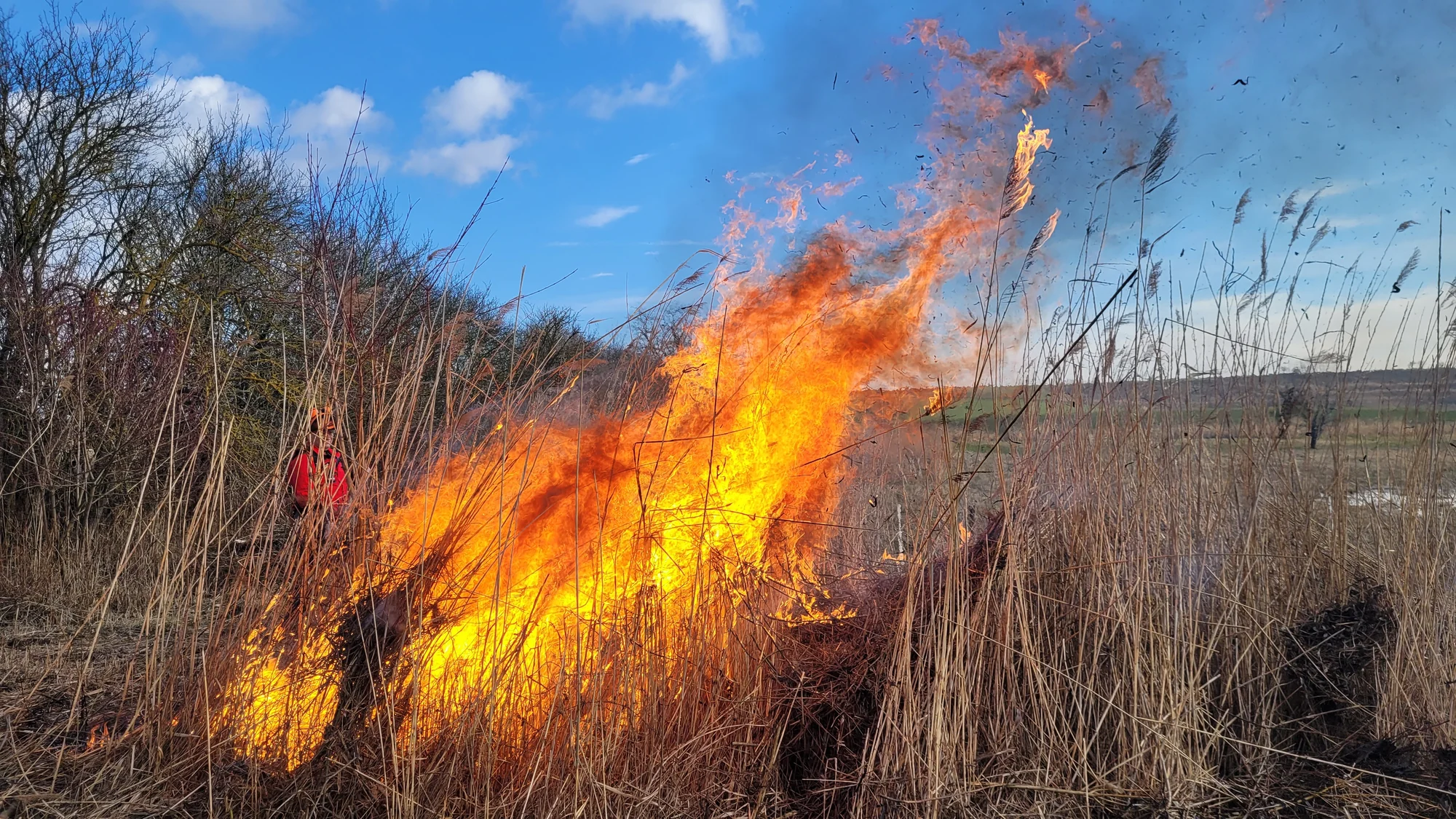
Brushwood from clearing that cannot be used in any other way is burned on site. Fire is used only under clearly defined conditions: suitable weather, the right season and agreement with the fire brigade.
Photo: Marie Kotasová Adámková
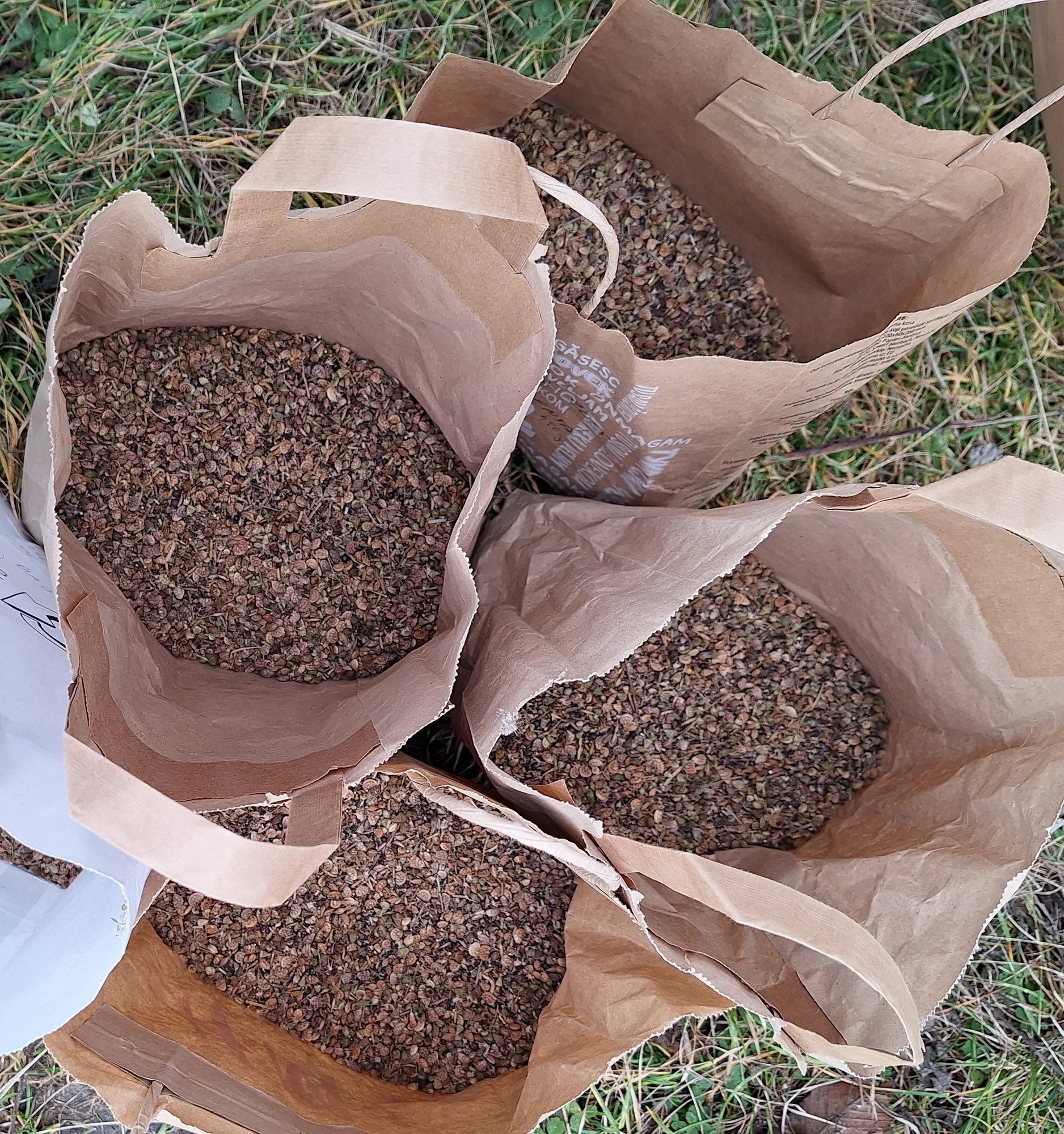
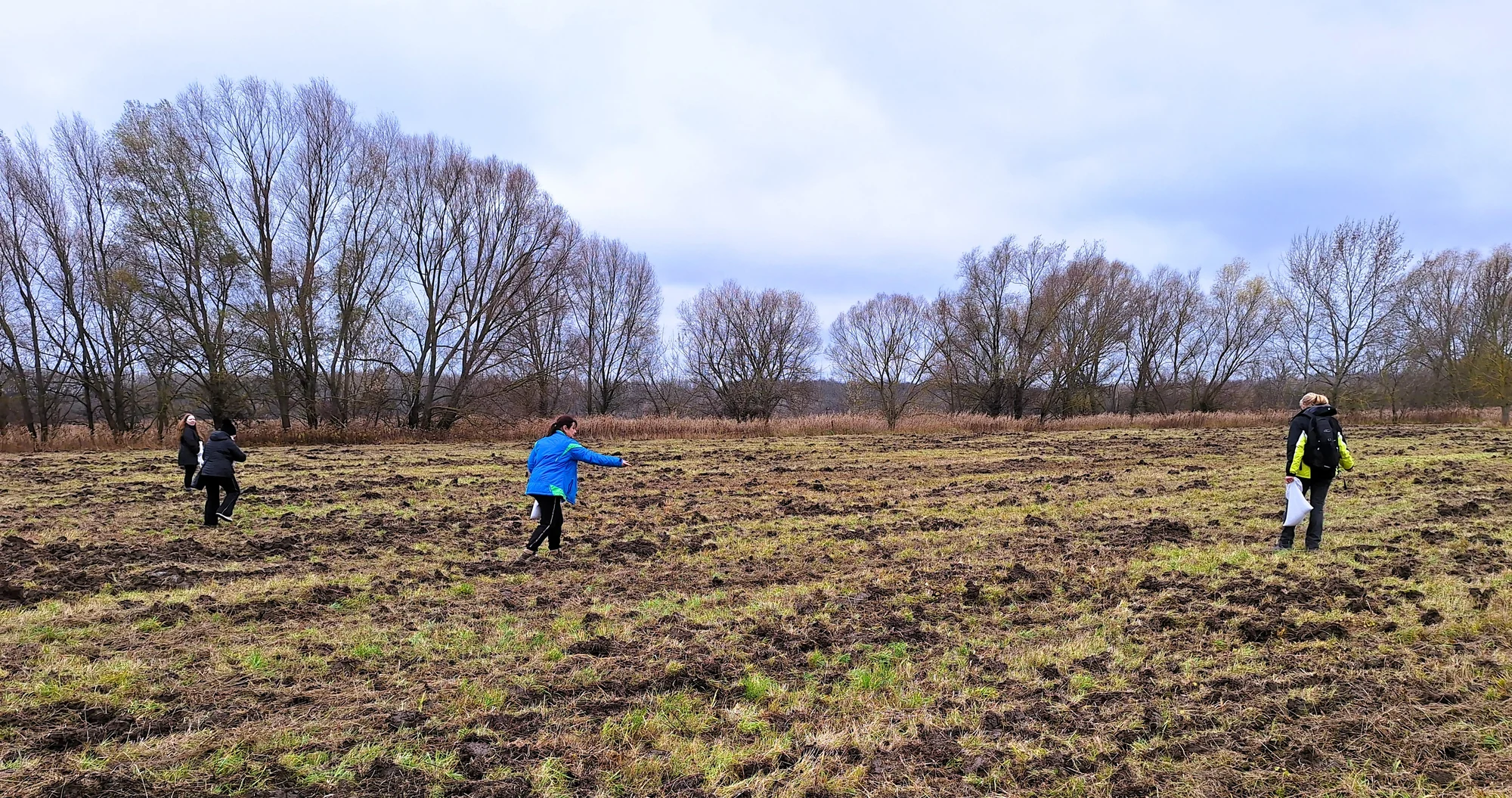
At Vypálenky, we sowed seed mixes harvested from local plants on 2.2 ha of meadow heavily overgrown with goldenrod (Solidago), so that native species can reclaim the ground once the goldenrod is cut back.
Photo: ENVIROP archive
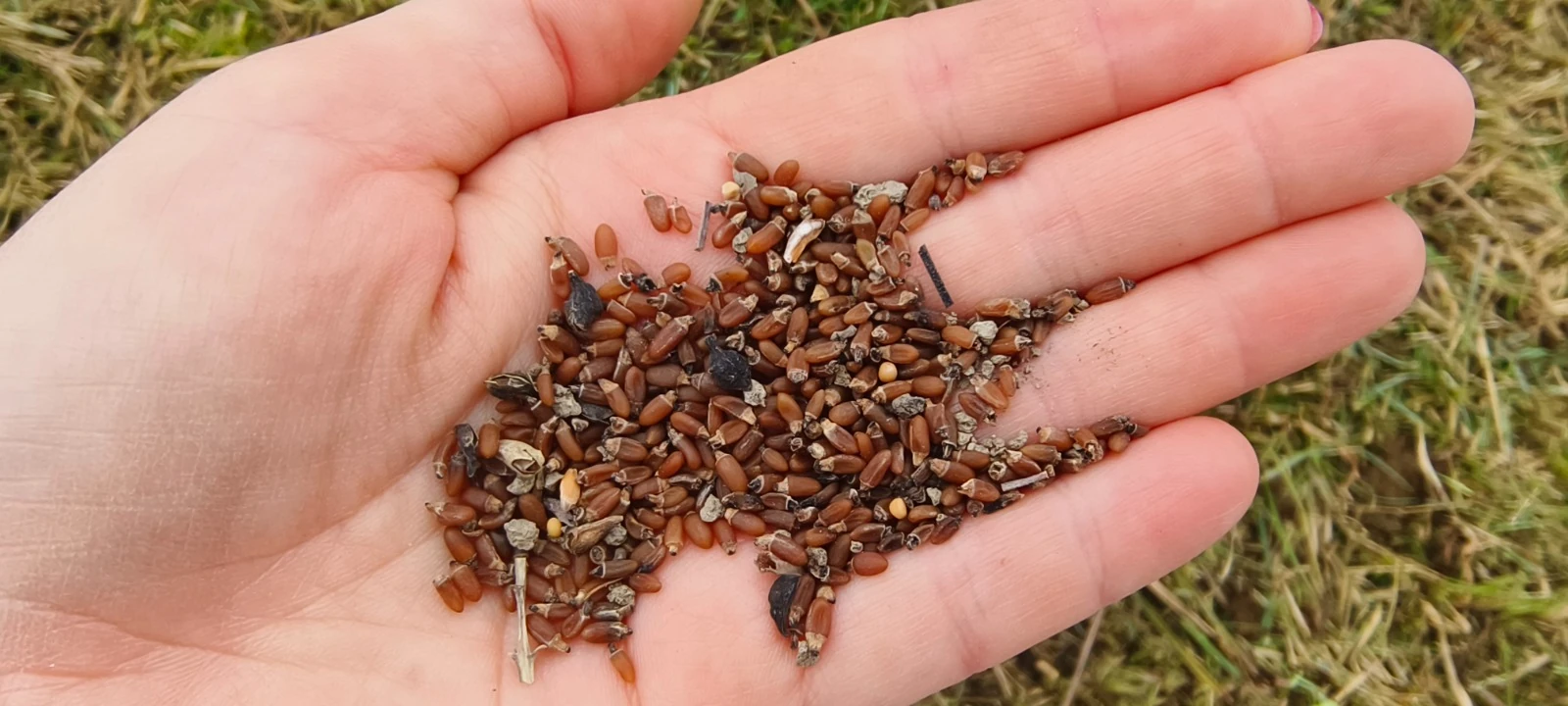
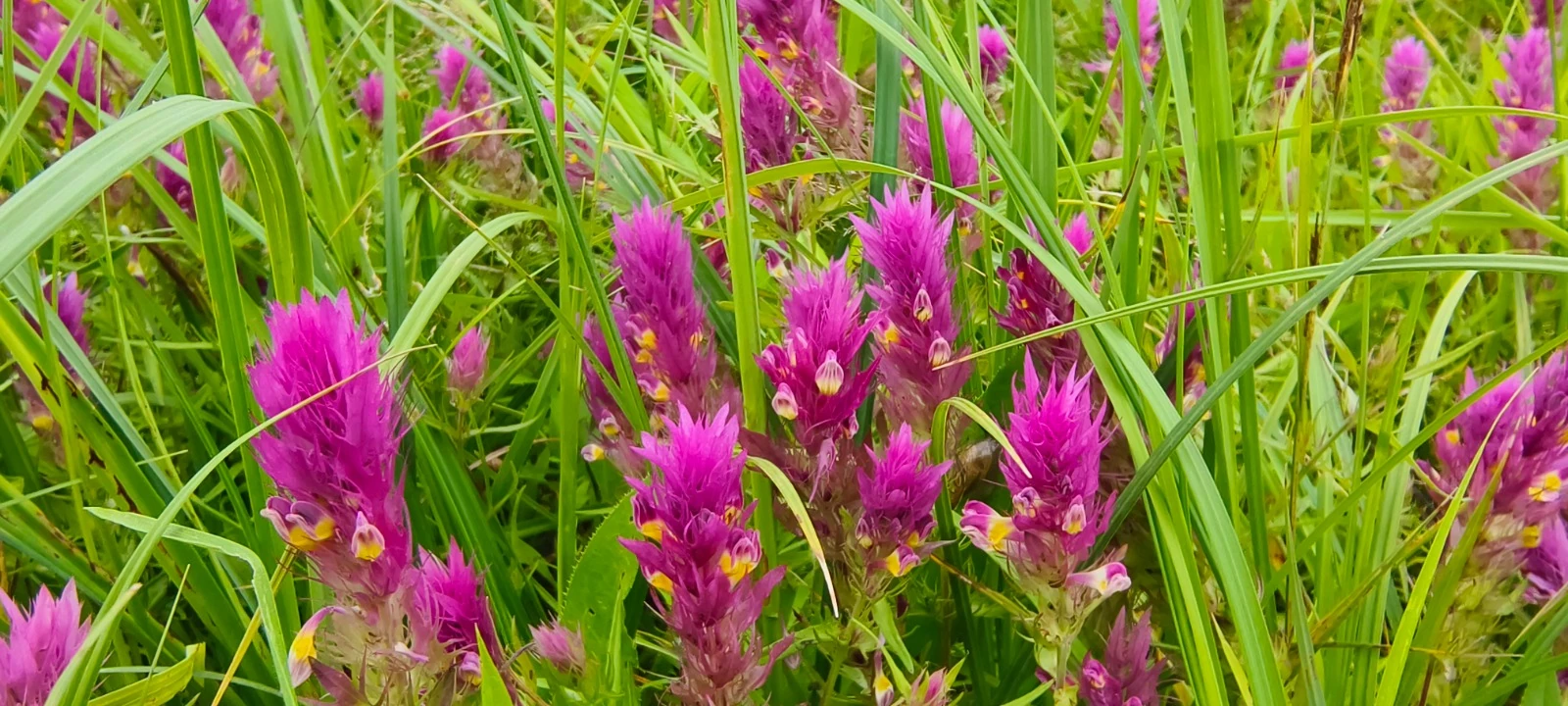
Hemiparasitic plants such as field cow-wheat (Melampyrum arvense) attach to the roots of dominant plants – grasses, but also invasive goldenrods – and draw water and nutrients from them, weakening them and freeing up space for other species. We are currently testing the method on a small patch at Kosteliska before using it on a larger scale.
Photo: Marie Kotasová Adámková
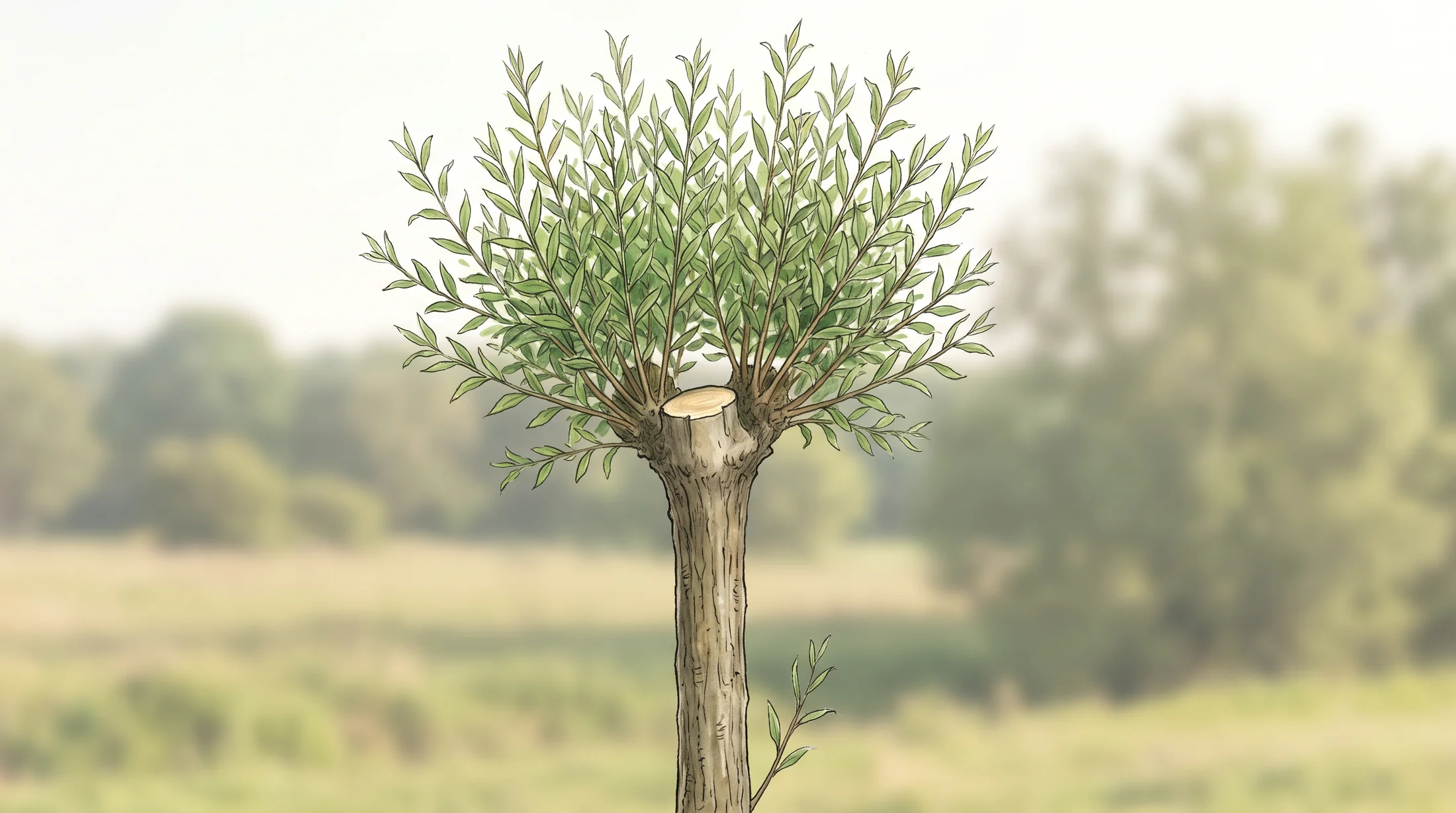
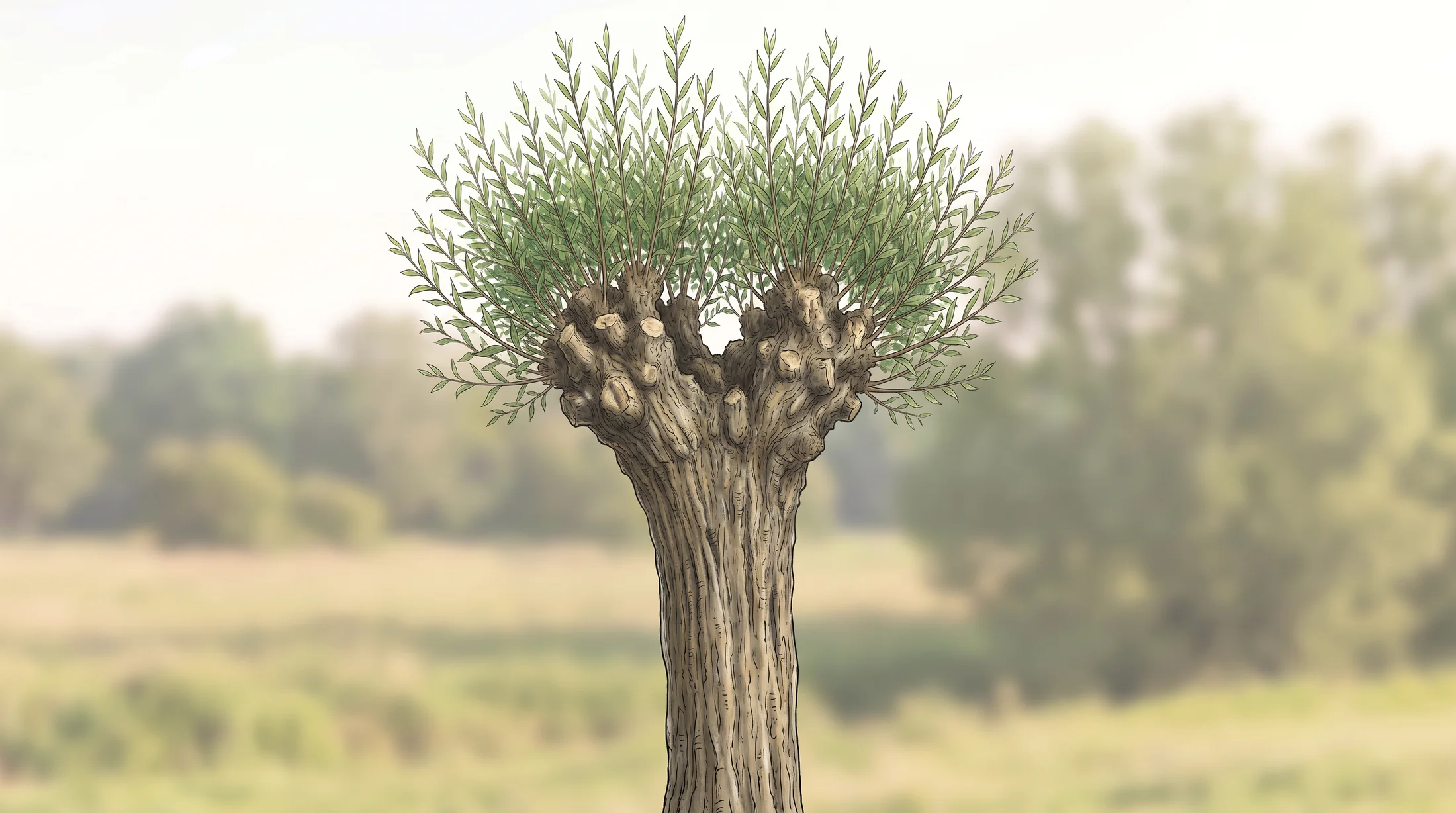
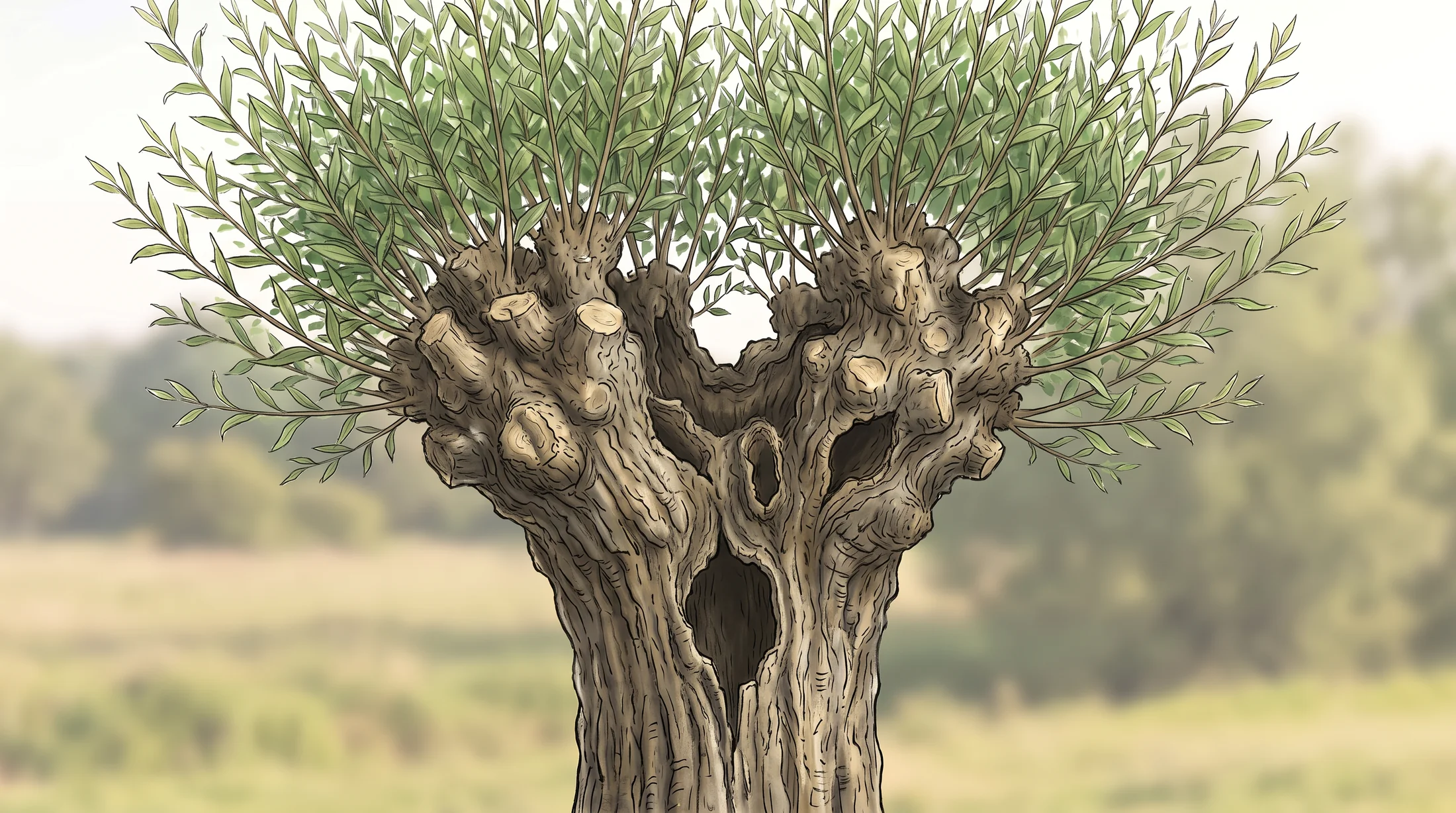
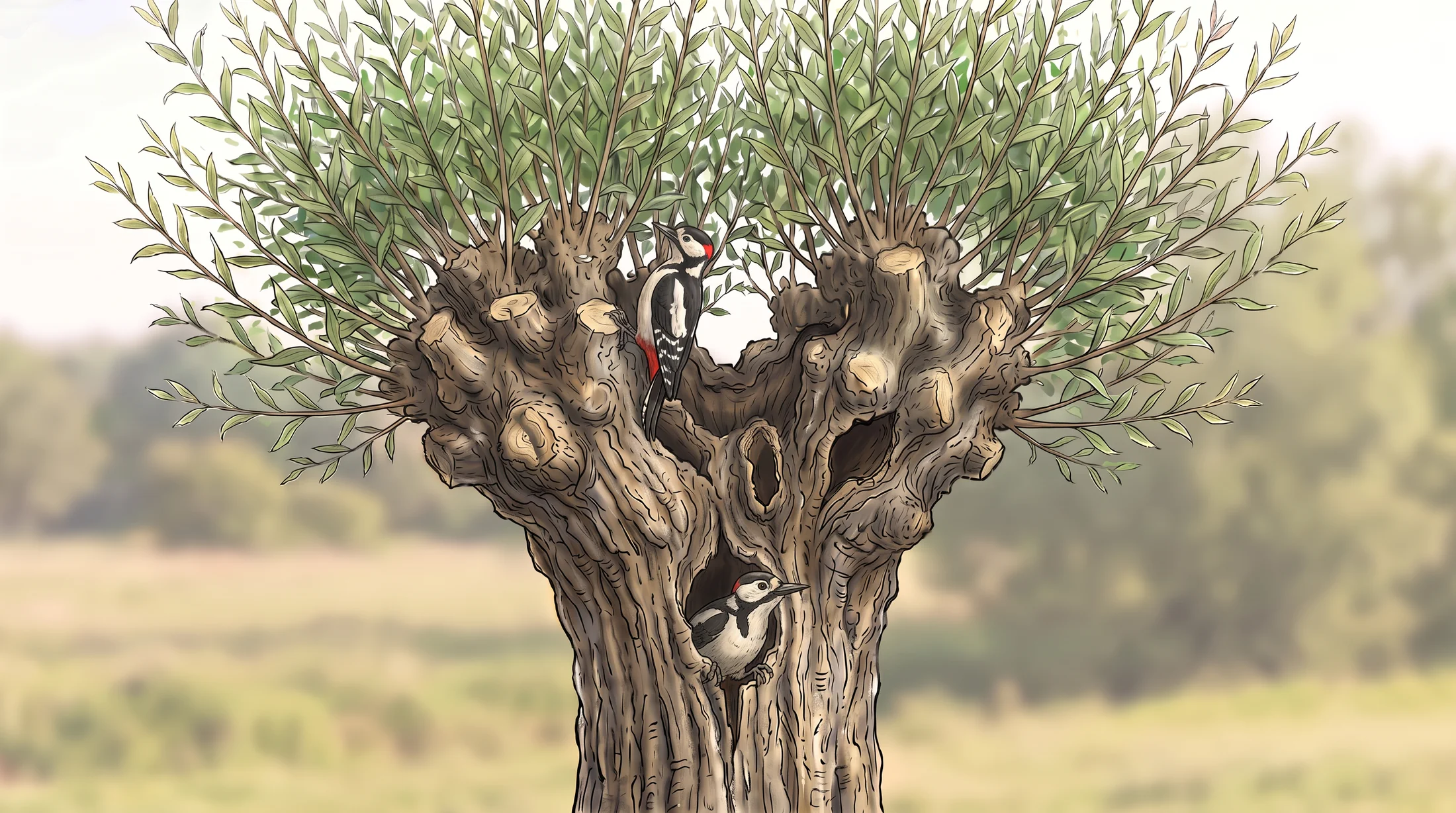
Pollarded willows are not a separate species but willows whose branches are regularly cut back at head height. Over time they form a short, thick trunk topped by a ‘head’ of upright shoots. Poplars, limes and ash trees used to be treated the same way, supplying firewood, rods for basketry and leaves for livestock.
Today, many pollards are neglected and disappearing, and with them the rare insects, bats and birds that depend on them. The project is therefore bringing pollarding back.
A young, straight willow is cut at head height – and within a few months it sprouts again.
 Just cut
 A few months later
Photo: Marie Kotasová Adámková
The shoots are cut back every few years. What looks harsh in fact makes these otherwise short-lived trees live many times longer.
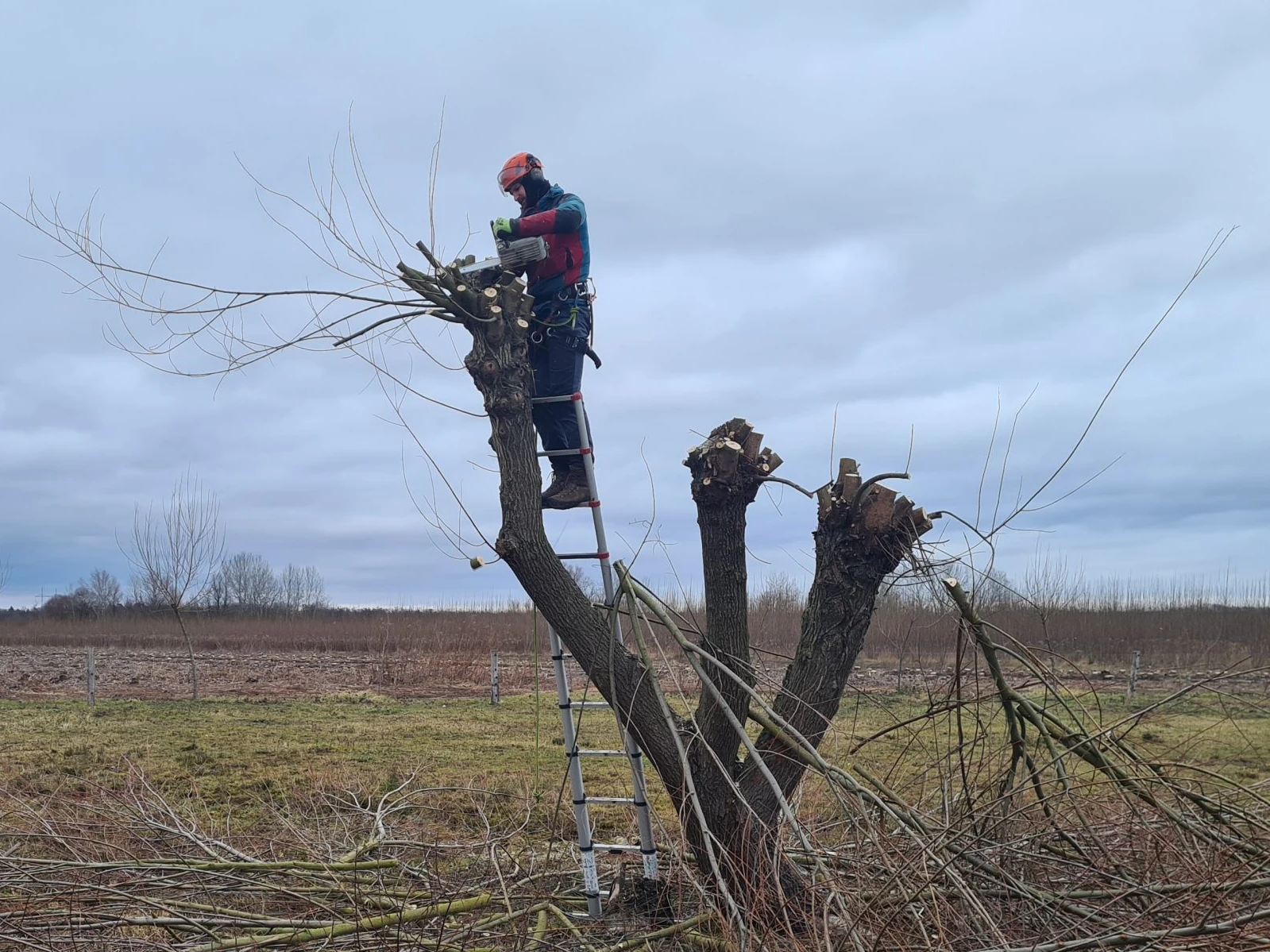
Photo: Marie Kotasová Adámková
Over the years the head broadens and begins to split, and hollows form in the trunk.
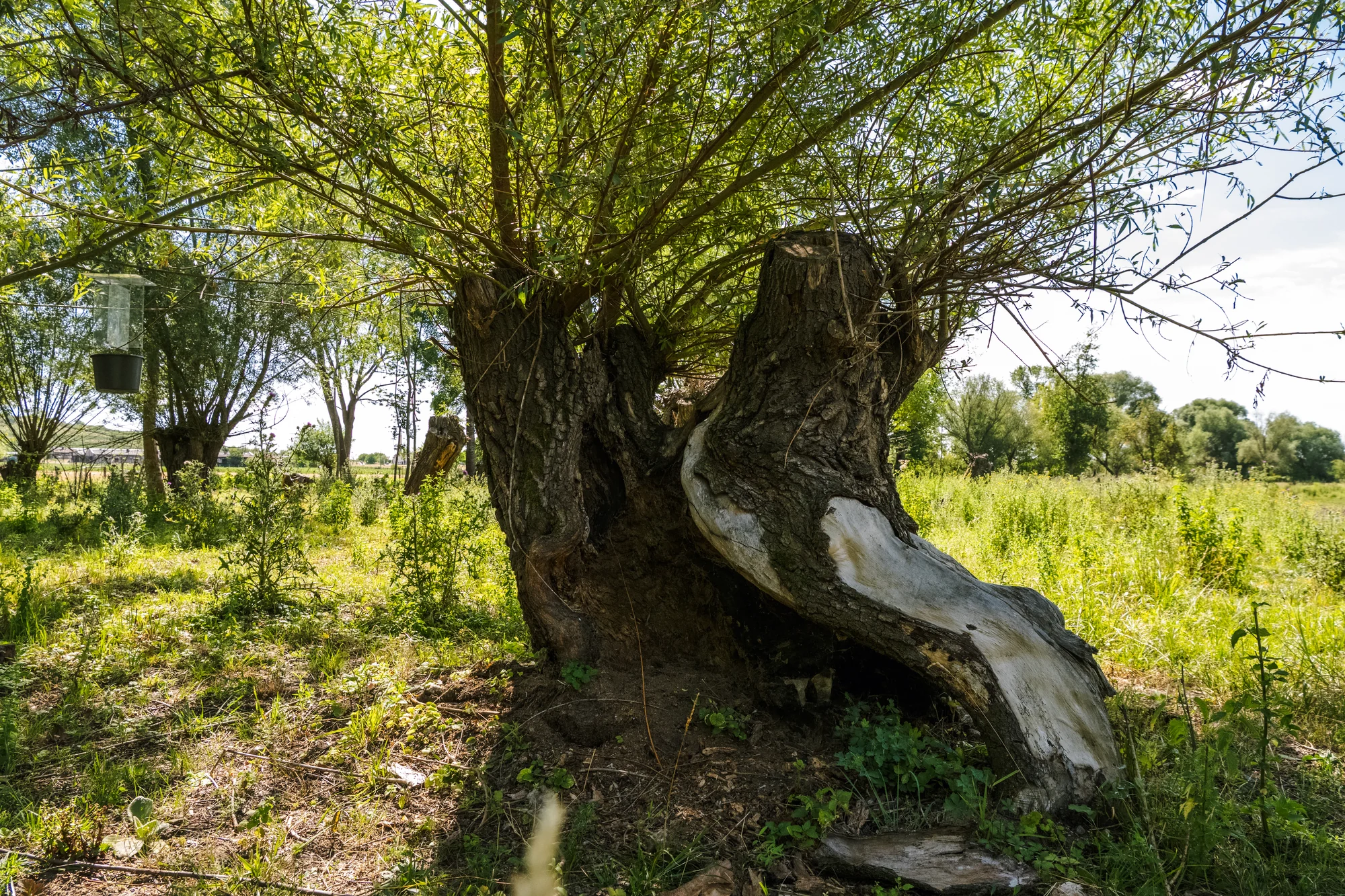
Photo: Nina Babicová
The hollows provide homes for insects, bats and birds, including endangered species such as the hermit beetle (Osmoderma barnabita) and the hoopoe (Upupa epops).
 Watch the video · 0:31
Source: AOPK ČR – Ořez vrb na hlavu (palava.aopk.gov.cz/orez-vrb-na-hlavu). Illustrations: Matúš Hrnčiar.
Old and dead wood – rotting stumps and slowly decaying trunks – supports hundreds of species, mostly insects but also fungi and birds. We therefore leave part of the cut wood on site.
Photo: ENVIROP archive, Matúš Hrnčiar. Source: AOPK ČR – Staré a mrtvé dřevo (palava.aopk.gov.cz/stare-a-mrtve-drevo).
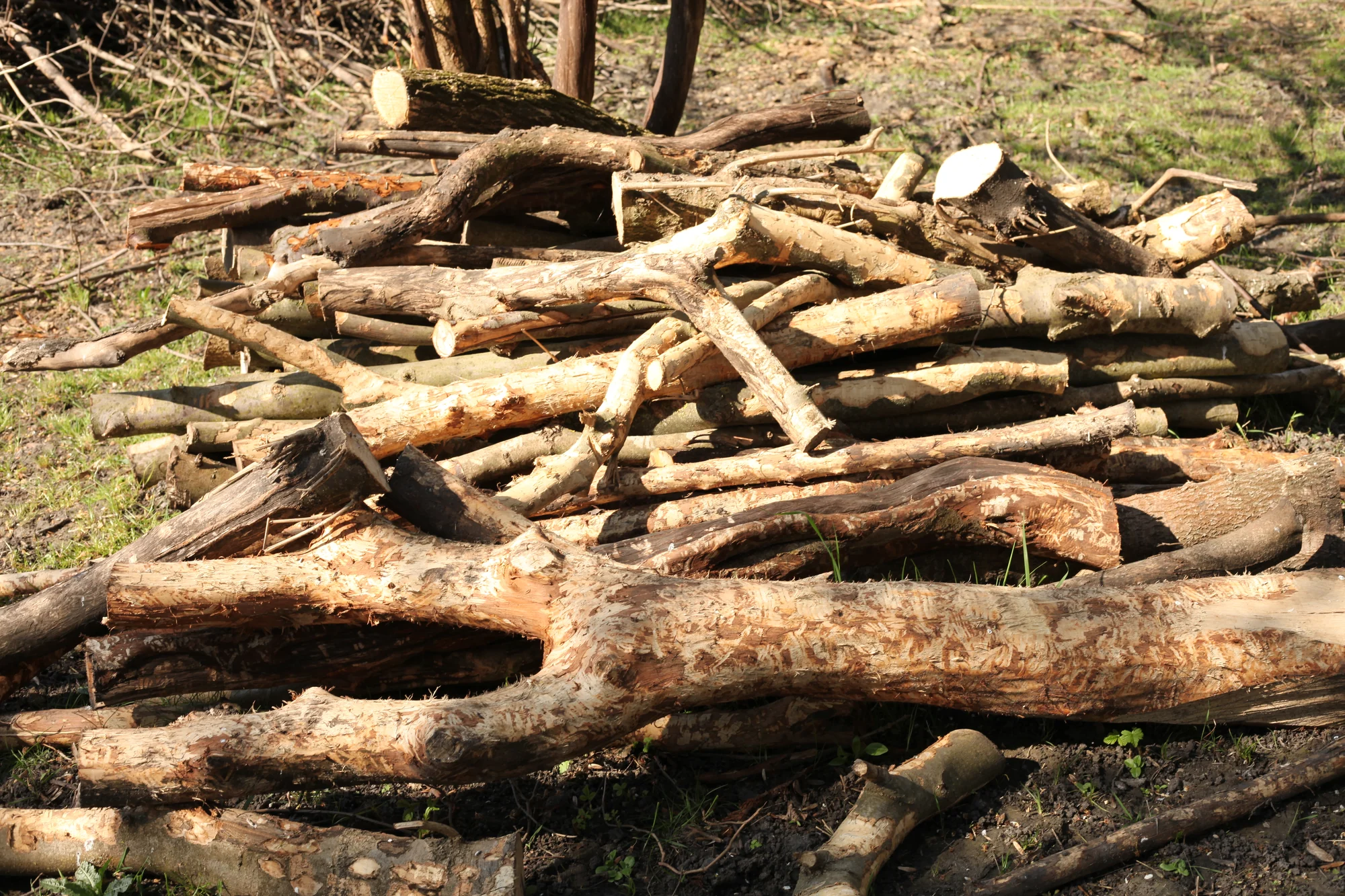
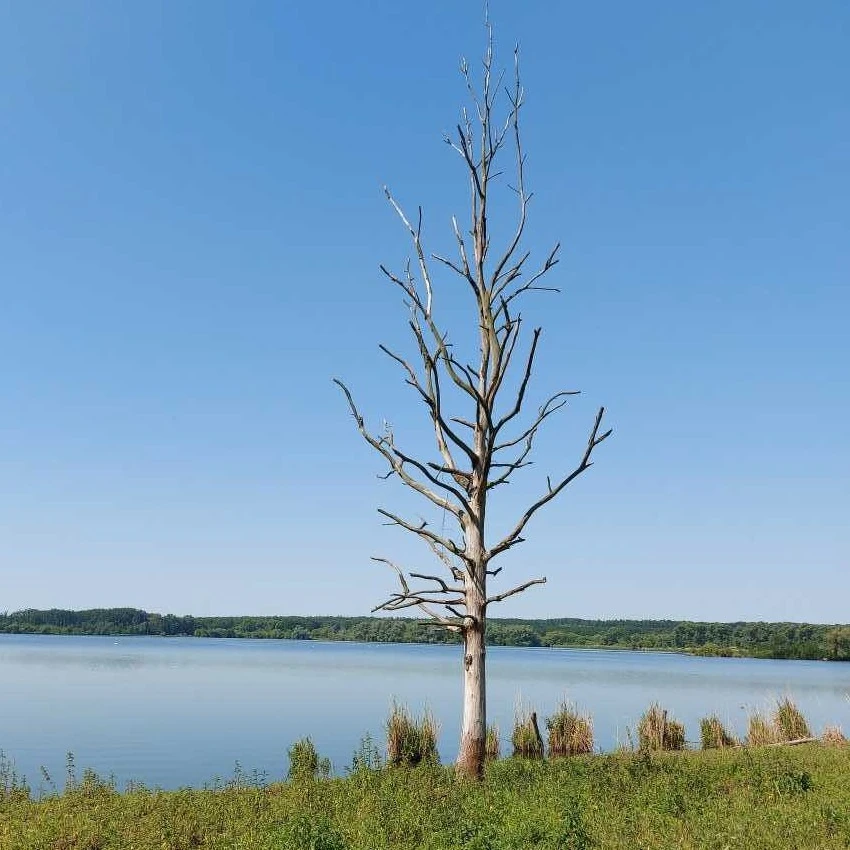
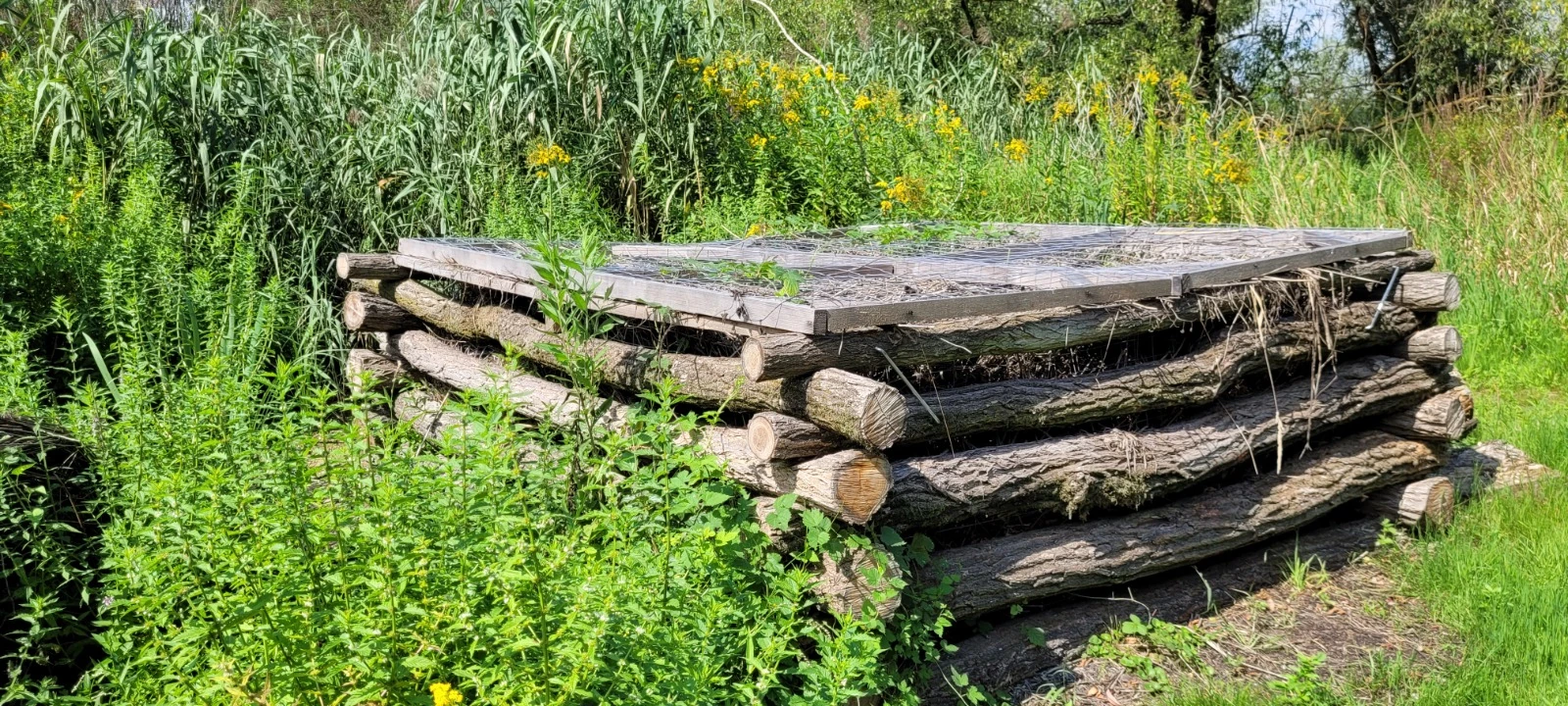
At Kosteliska, home to a rare population of the Aesculapian snake (Zamenis longissimus), we have built a snake shelter from stacked logs. Snakes bask on top and hide in the gaps between the logs. Plant material rotting inside shelters like this keeps them warm and moist – ideal for incubating eggs.
Photo: Marie Kotasová Adámková. Source: Metodický list – Hadník (herpetology.cz).
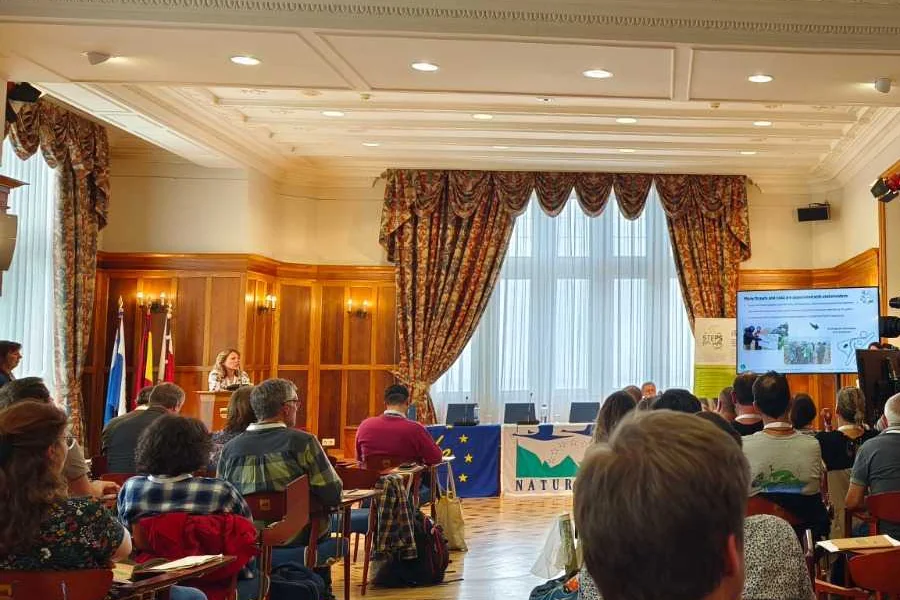
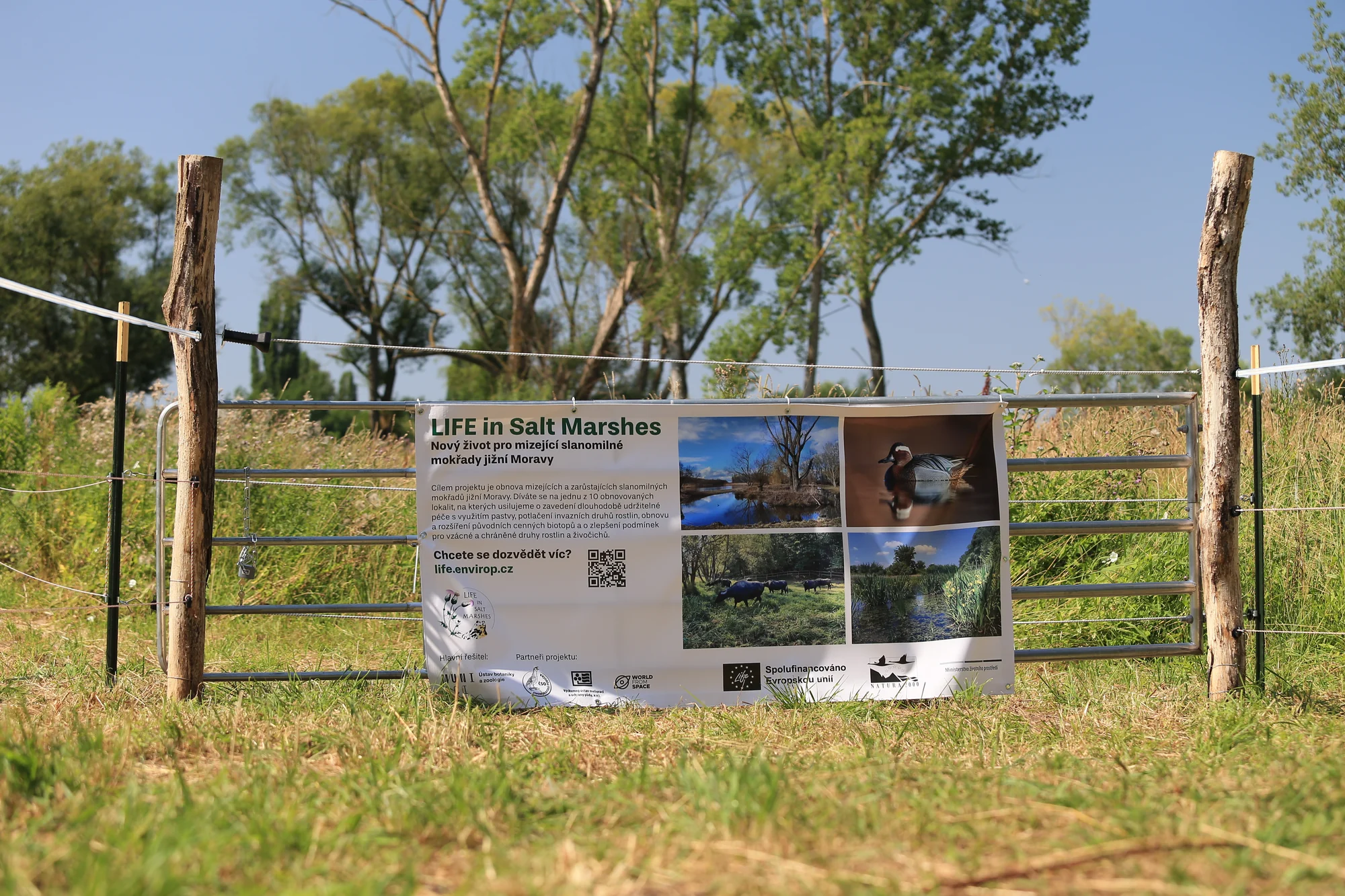
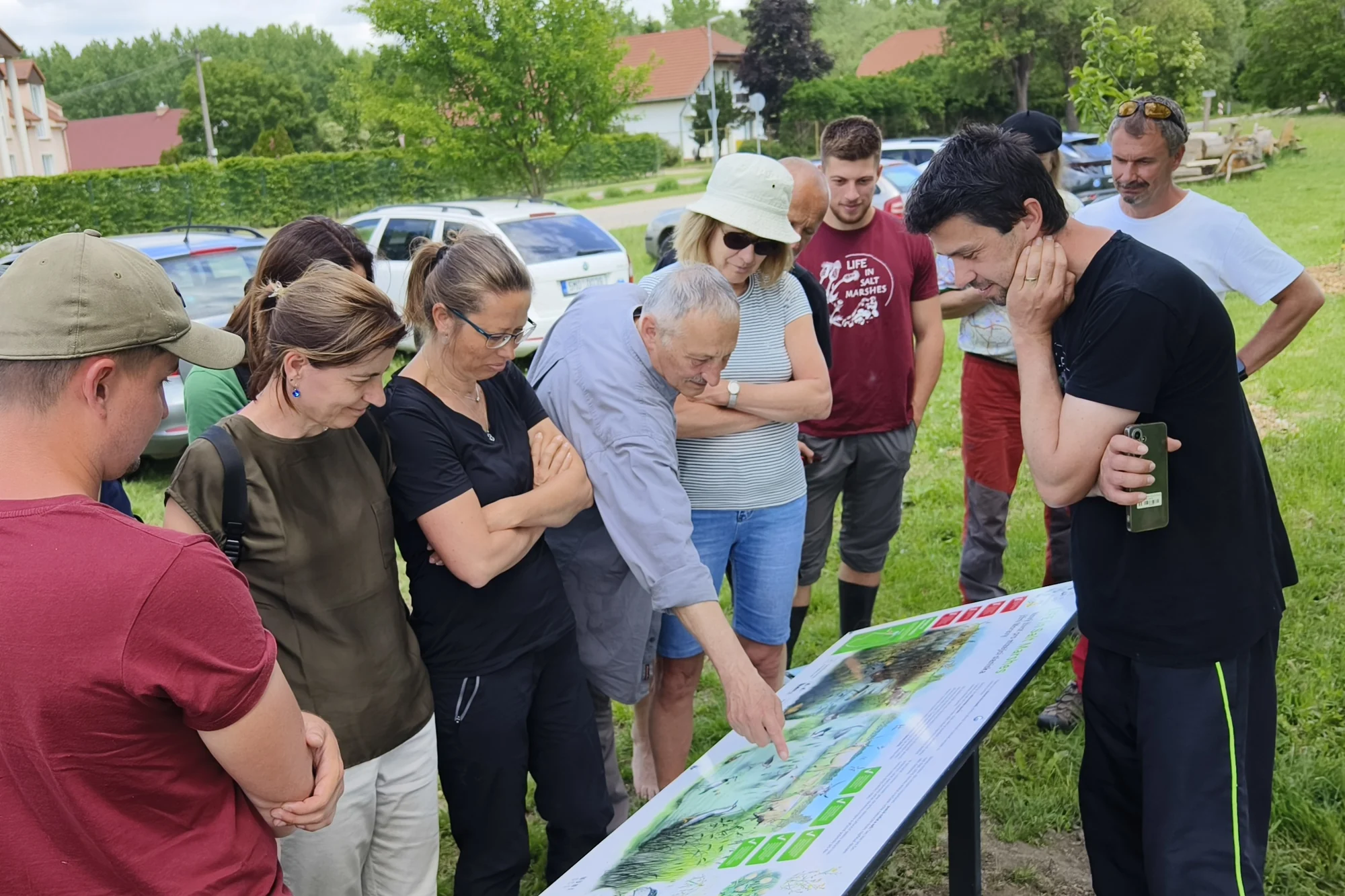
The sites only have a future if people know and value them. We work with the media, lead excursions, give talks and install information boards on site.
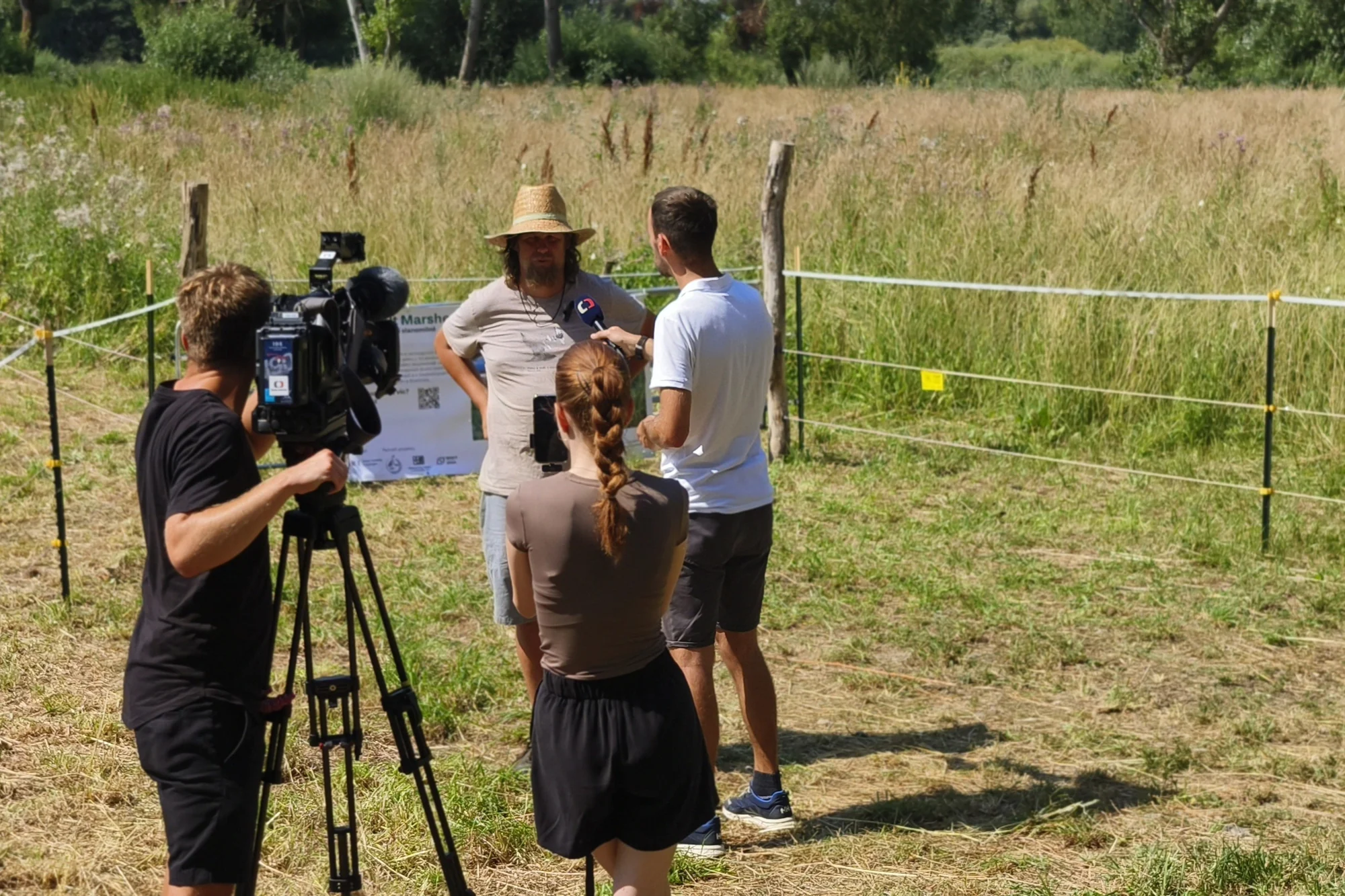
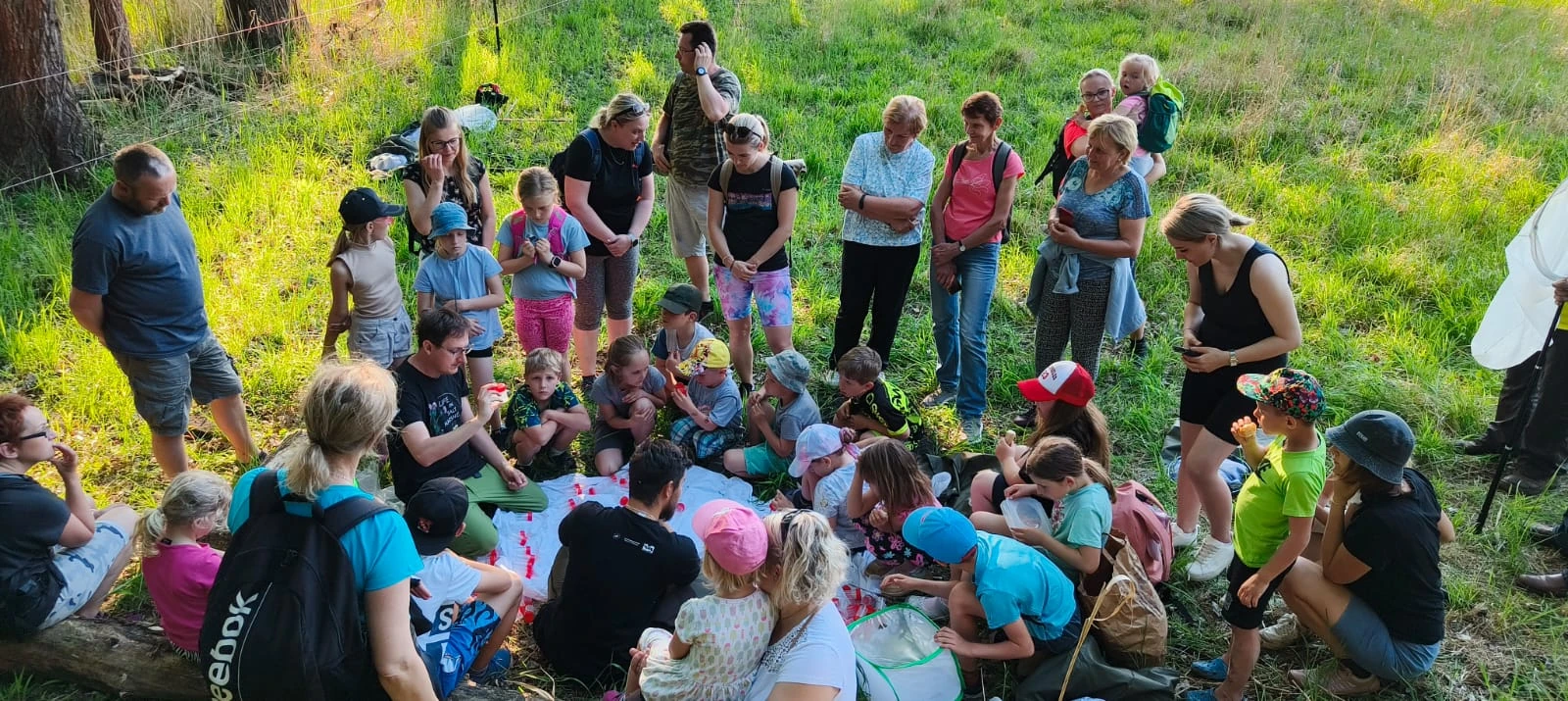
The species themselves are the real judges of our work. Counting them year after year is our main measure of success.
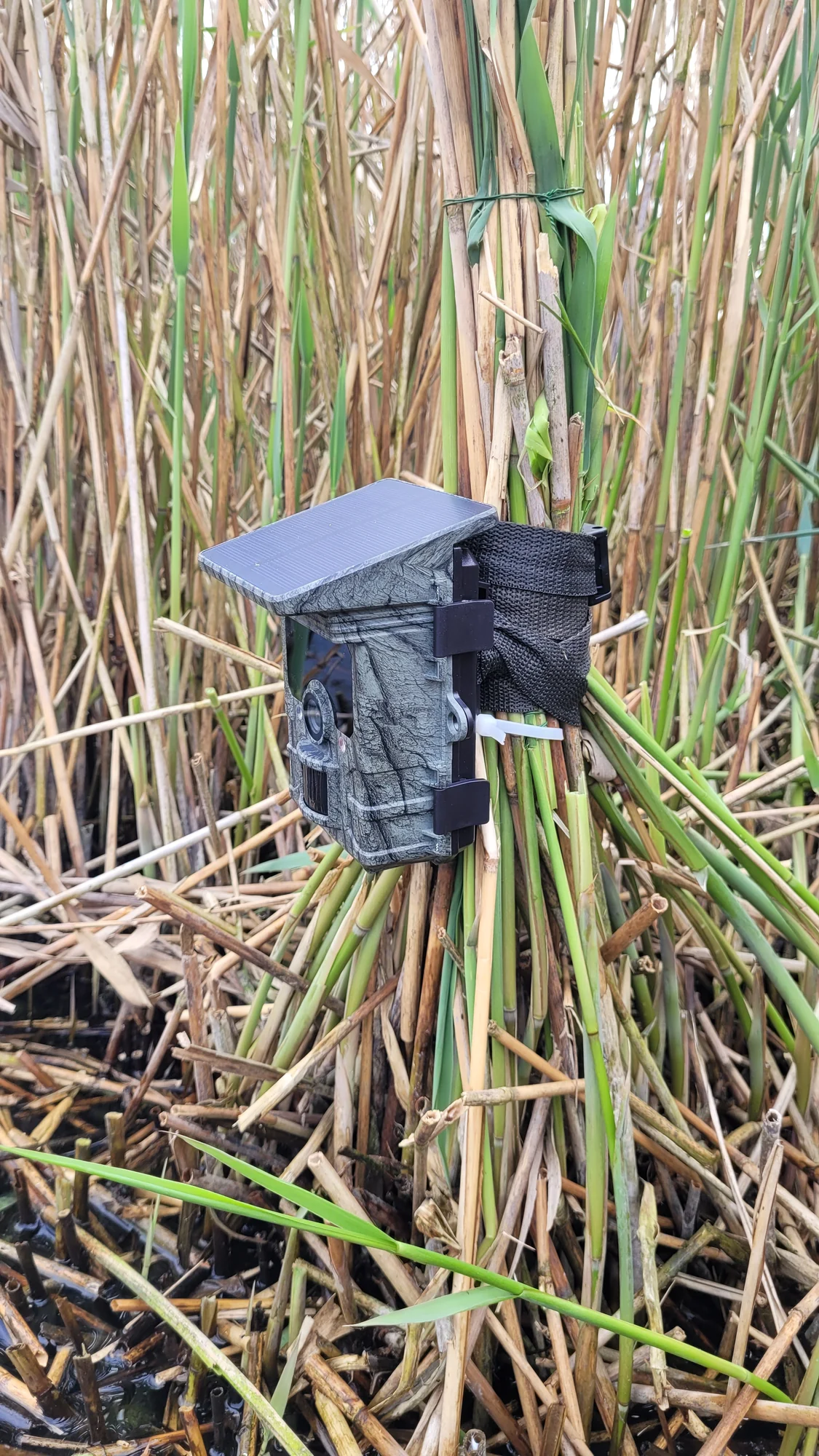
Specialists walk fixed routes across the sites at set times of year. Between their visits, cameras and recorders keep watch.
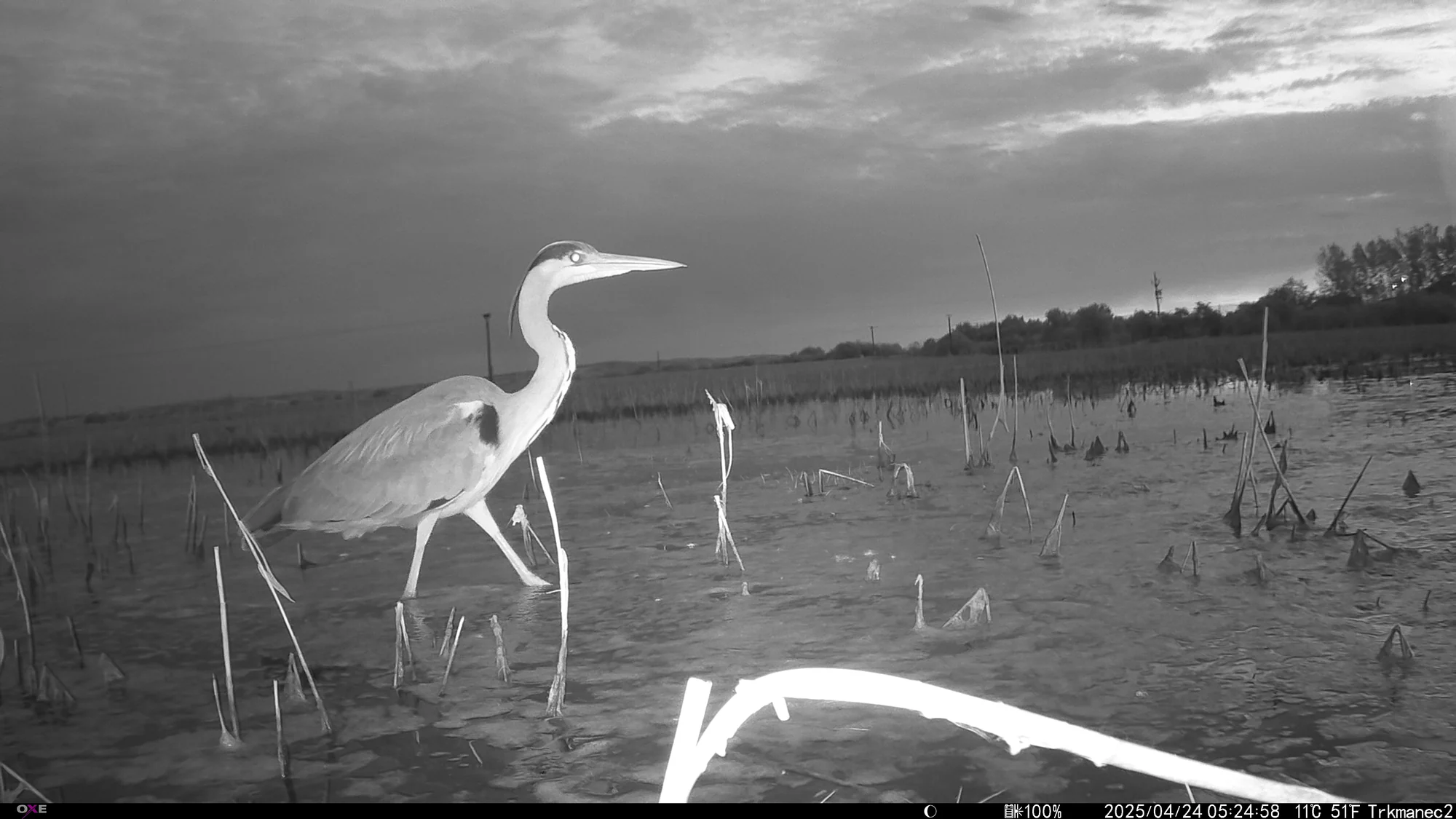
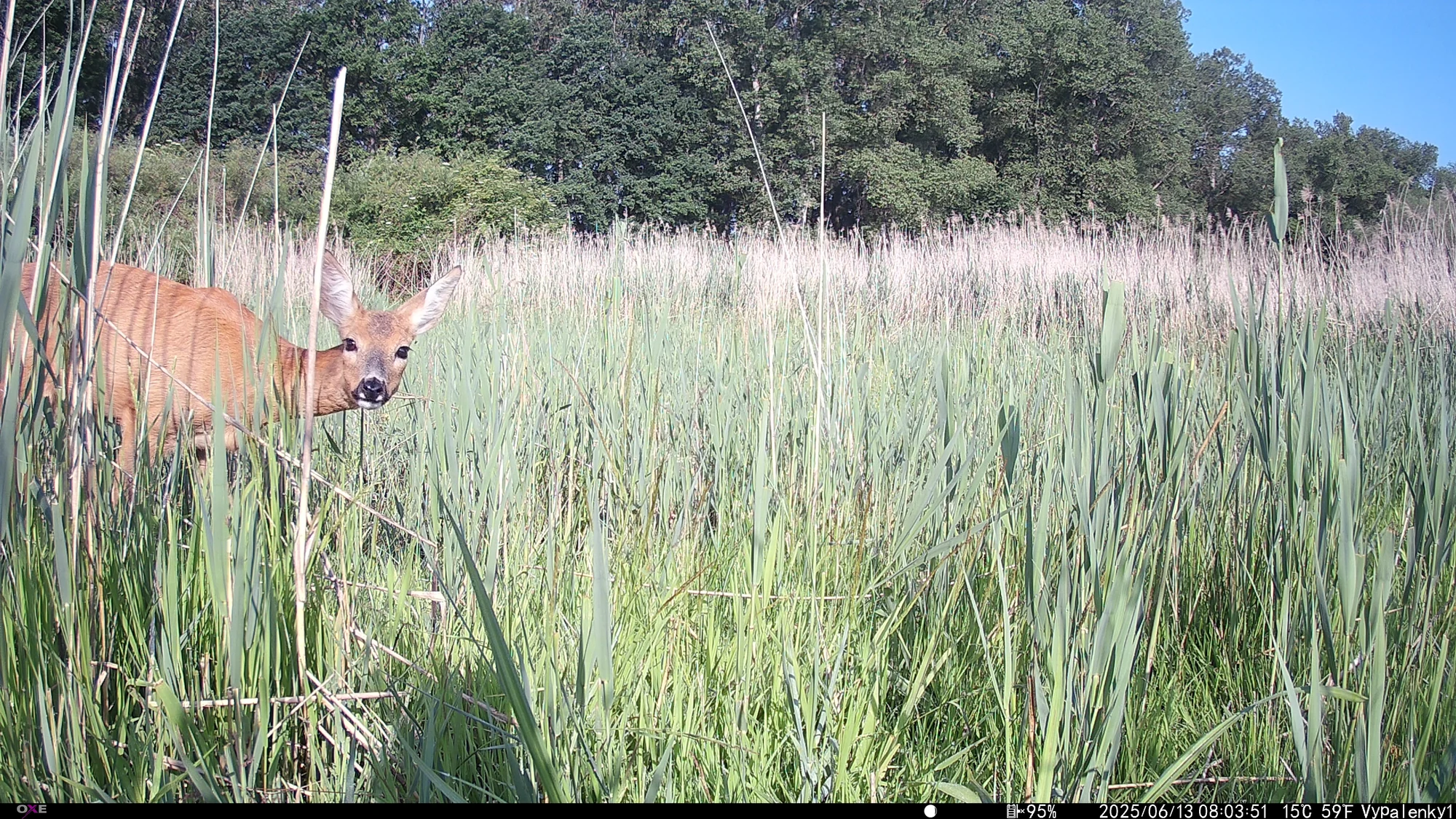
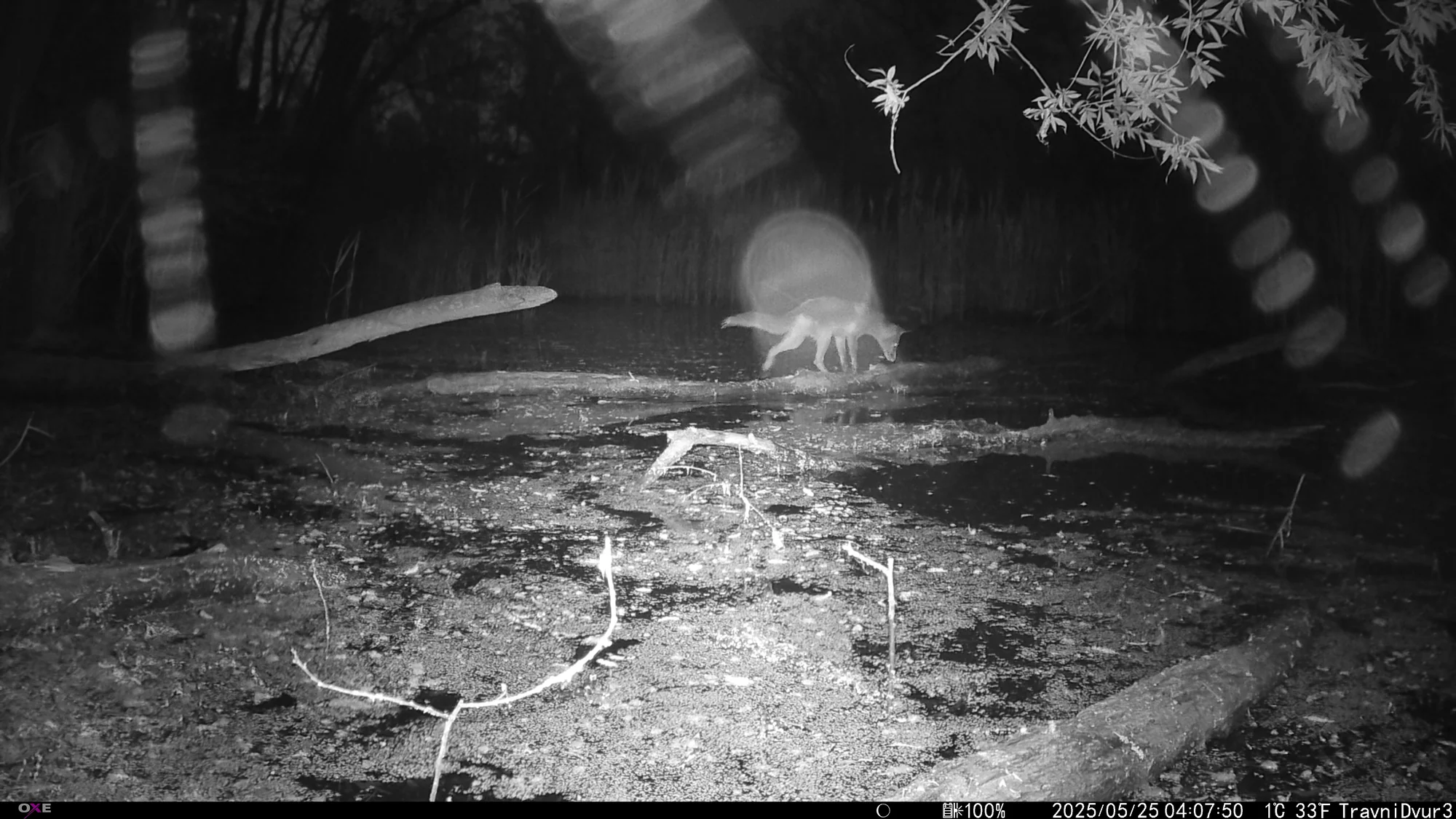
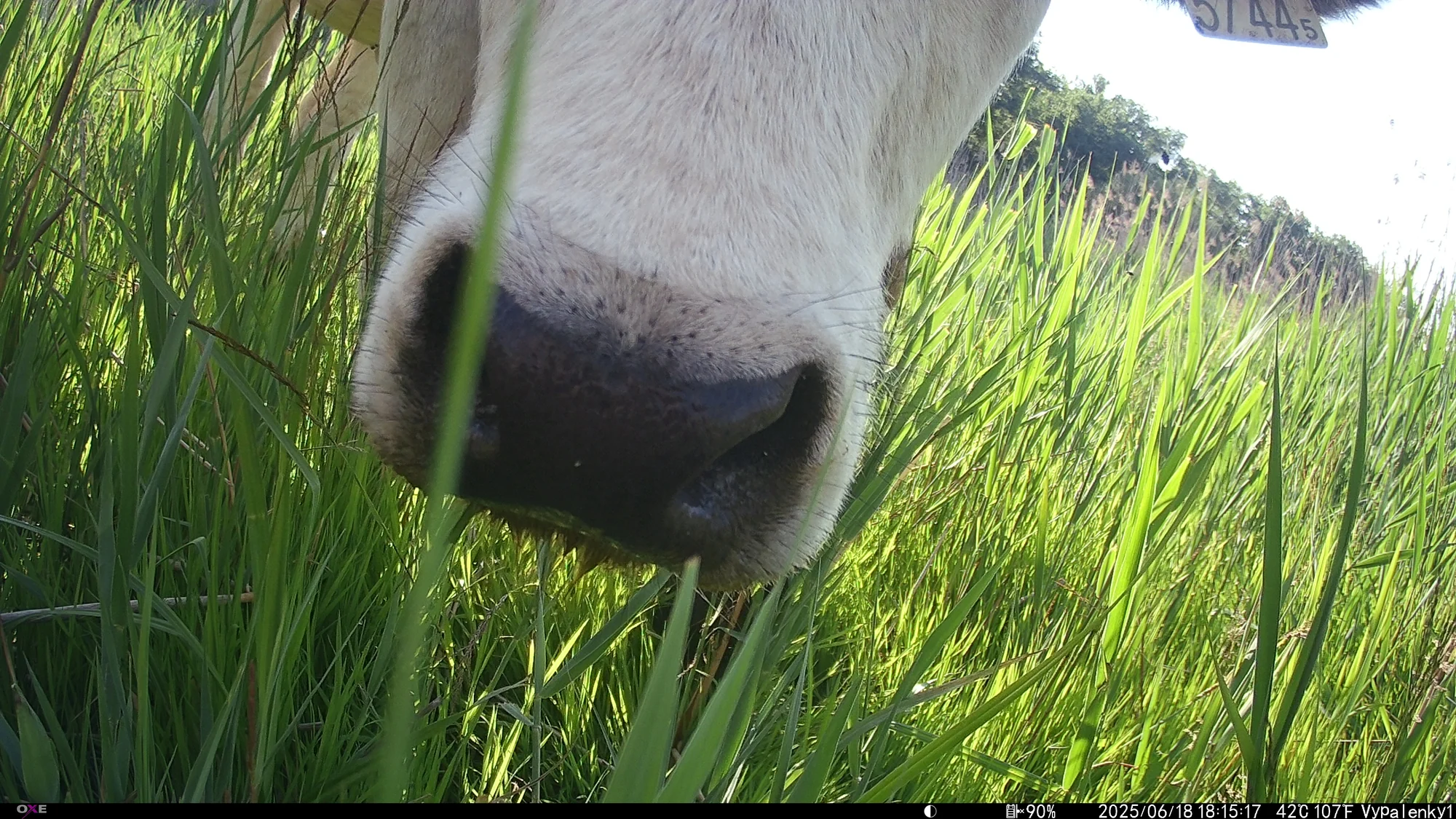
A camera trap takes a picture whenever something moves in front of it. At night, infrared light illuminates the scene without disturbing the animals. We use them mainly for birds and mammals, but by day they also catch reptiles – a basking turtle, for instance, or grass snakes.
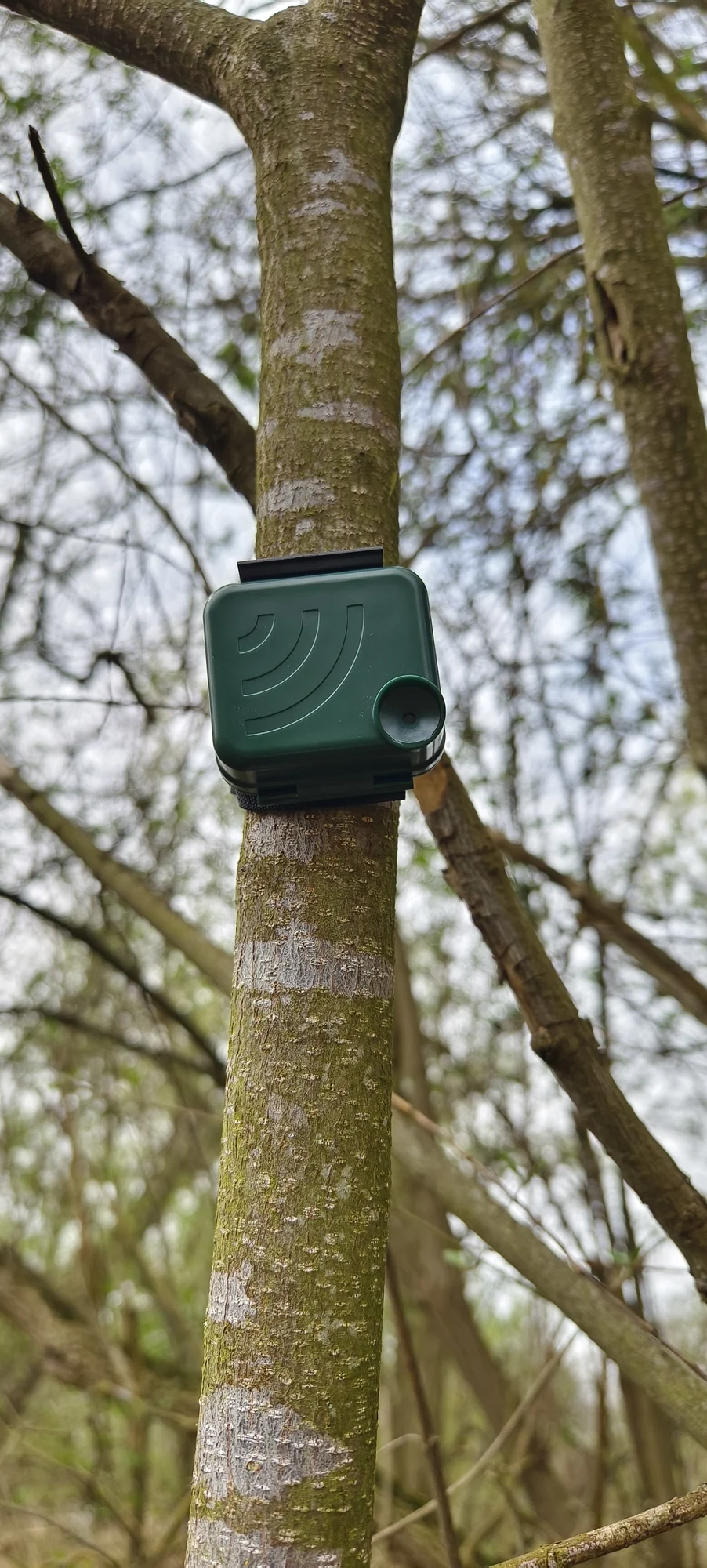
Weatherproof recorders hang in trees and switch on at set times, day and night, for weeks on end. Specialists, aided by call-recognition software, then identify the species in the recordings. They work best for birds and amphibians, and occasionally for mammals.
Floodplain forest 0:09
Wetland 0:11
European tree frog (Hyla arborea), fire-bellied toad (Bombina bombina) and water frogs (Pelophylax spp.)
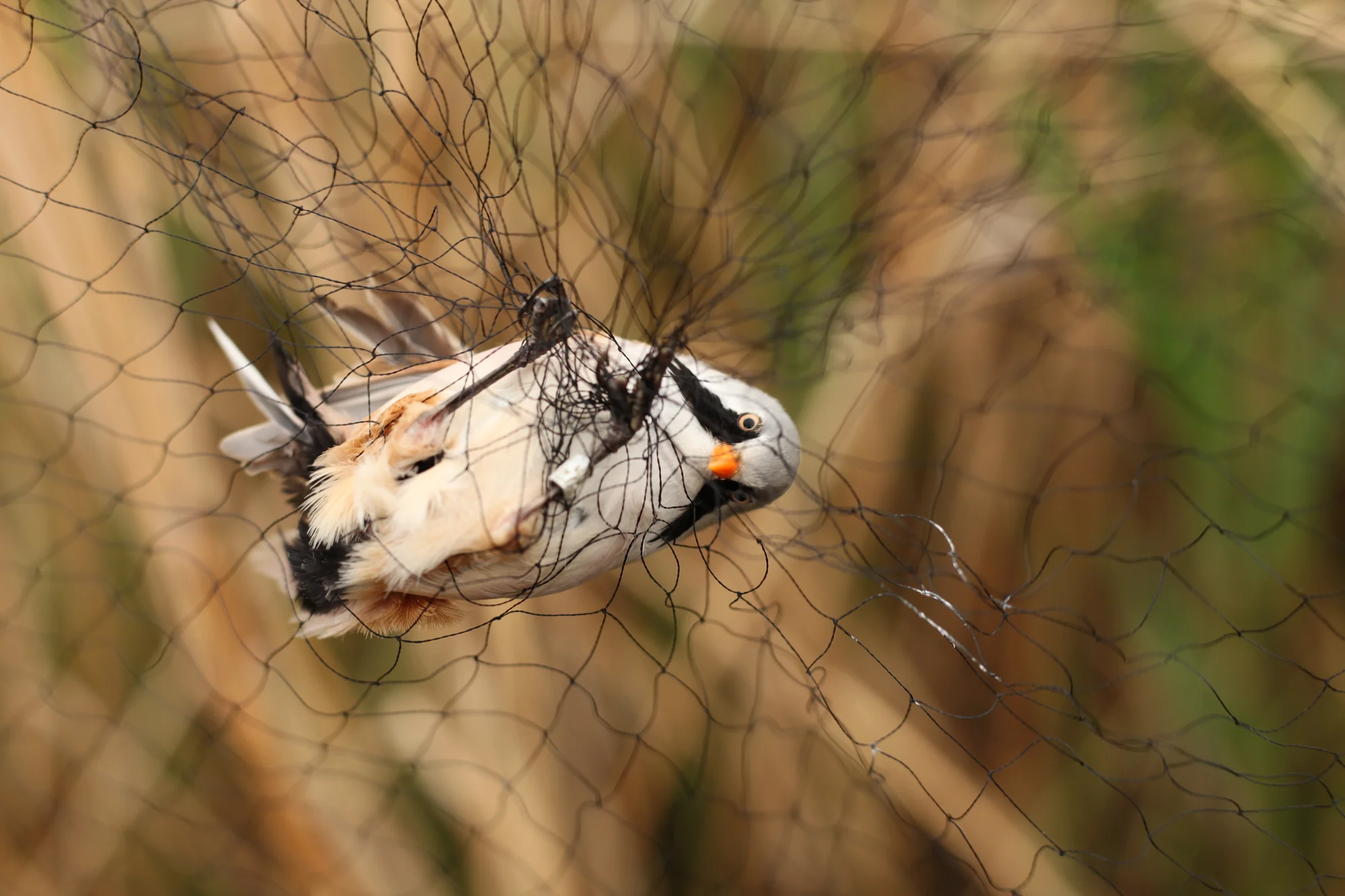
Fine, dark nets are strung between poles in the vegetation. In flight they are hard to see, so birds fly into them and drop gently into a pocket of the net. Ringers carefully free each bird, record its species, age and sex, measure and weigh it, fit a small ring on its leg and release it.
Mist netting is not part of the systematic monitoring; we use it mainly during excursions and events for the public. Every bird is handled with the greatest care.
Insects, spiders and other invertebrates are small, extremely diverse and found everywhere from the soil to the treetops. No single method captures them all, so we combine several.
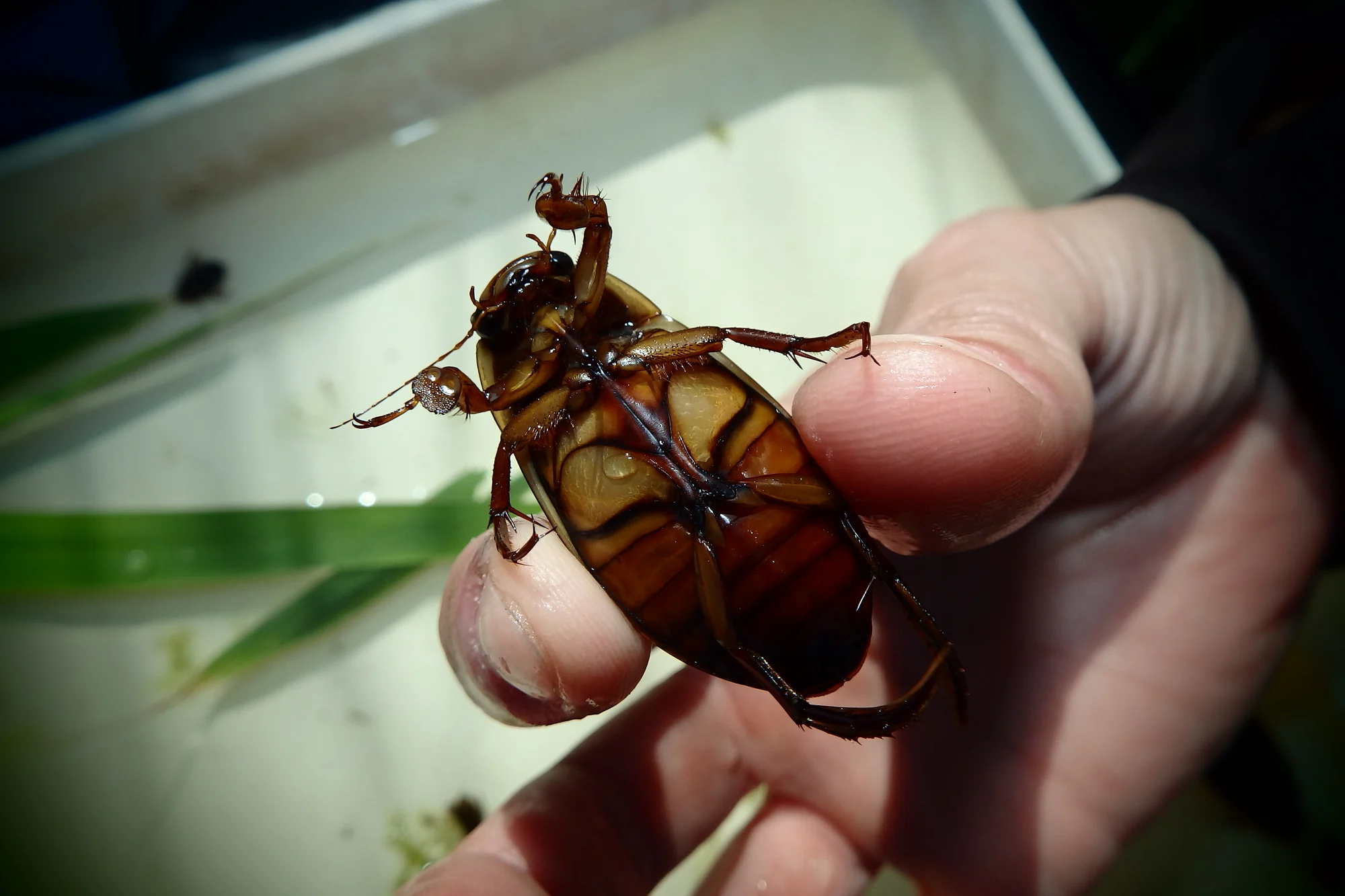
Specialists search vegetation, soil, dead wood and water and collect what they find – such as this diving beetle.
Finds: large or conspicuous species, and those hiding under stones, in wood or in water
Photo: Marie Kotasová Adámková
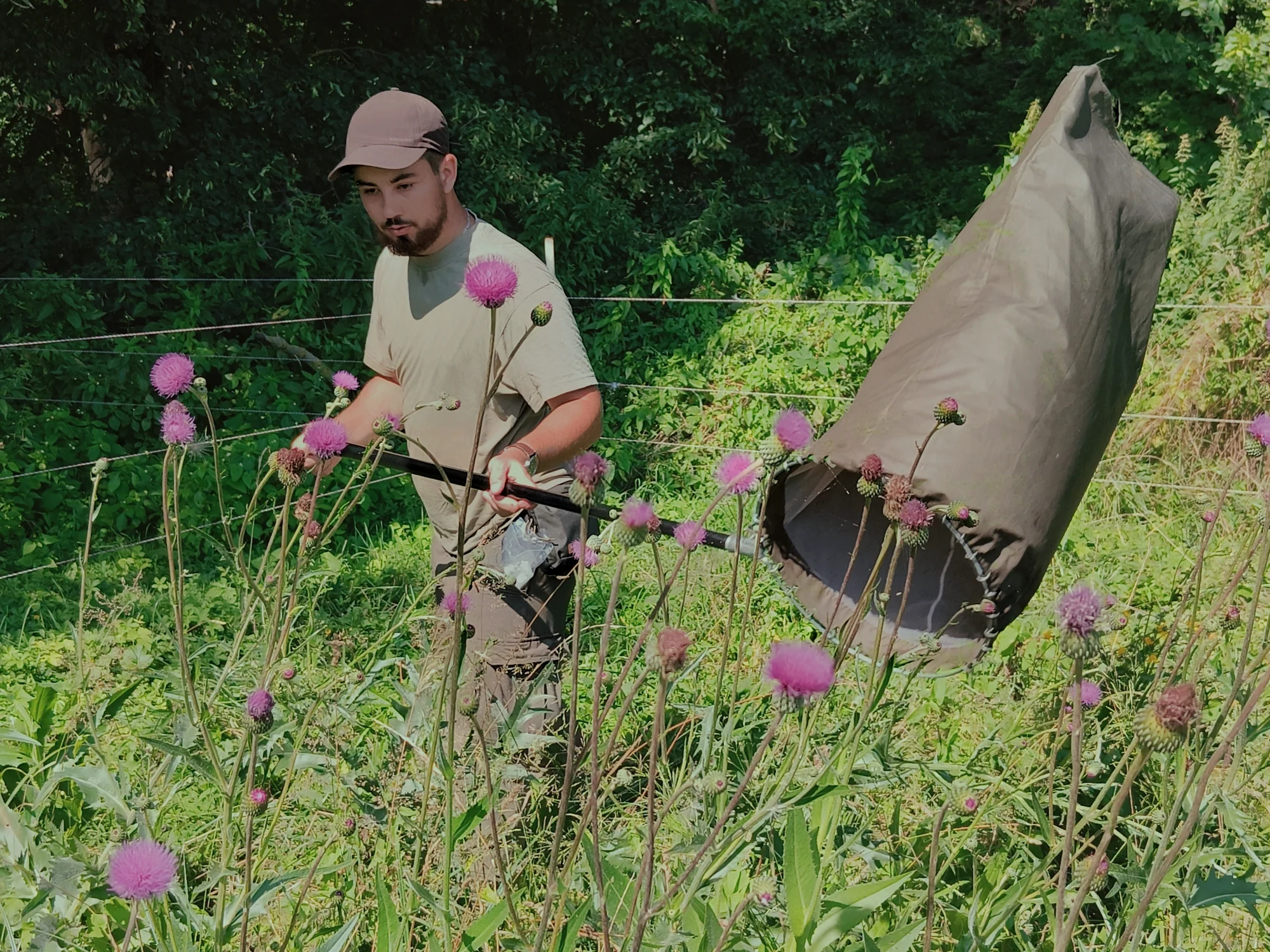
A strong net is swept through grass and flowers.
Finds: bugs, leafhoppers, grasshoppers, spiders
Photo: Zdenko Večerík
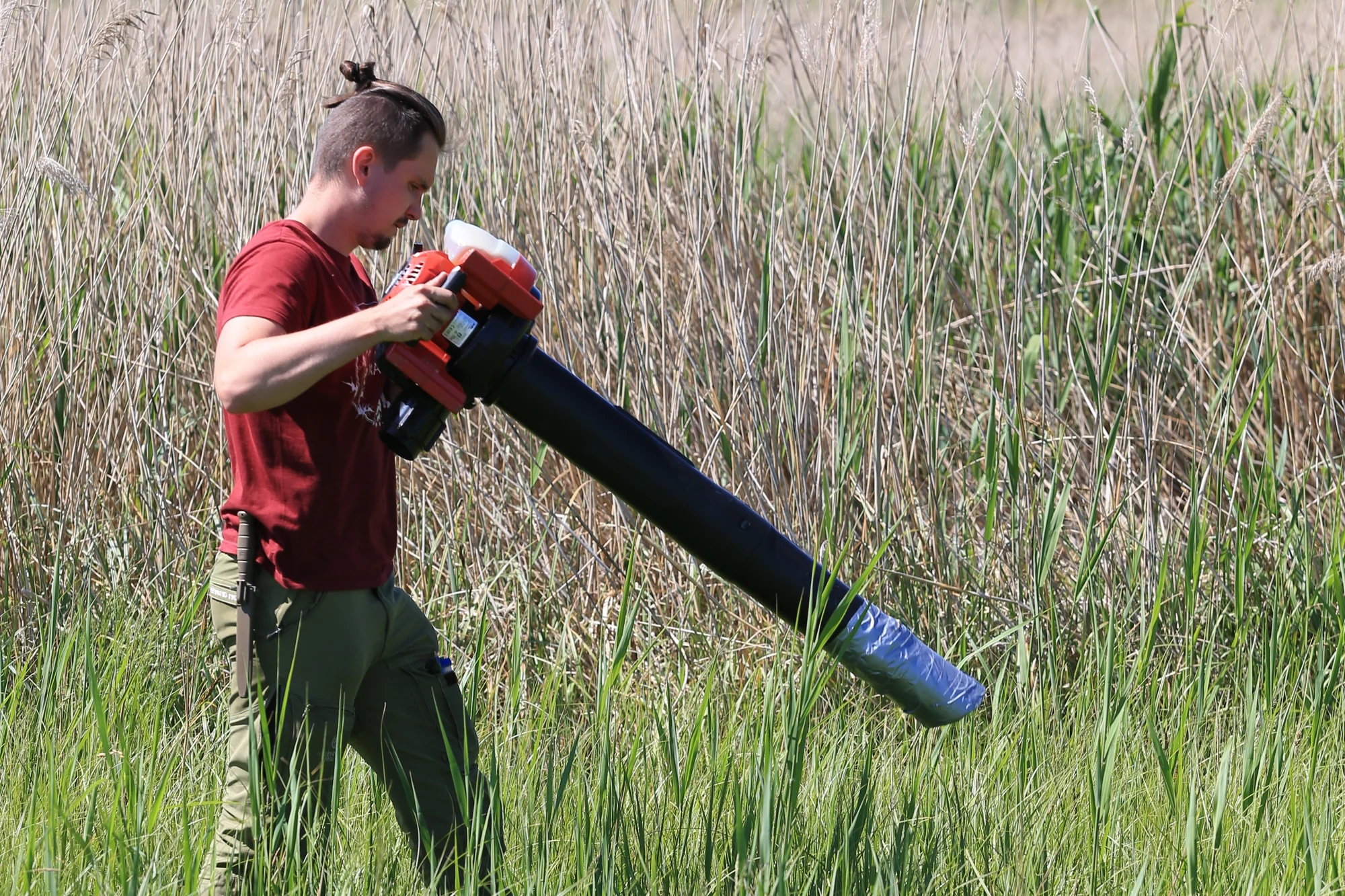
A modified leaf blower sucks small animals from plants and the ground.
Finds: small leafhoppers, spiders and beetles in short or dense grass
Photo: Marie Kotasová Adámková
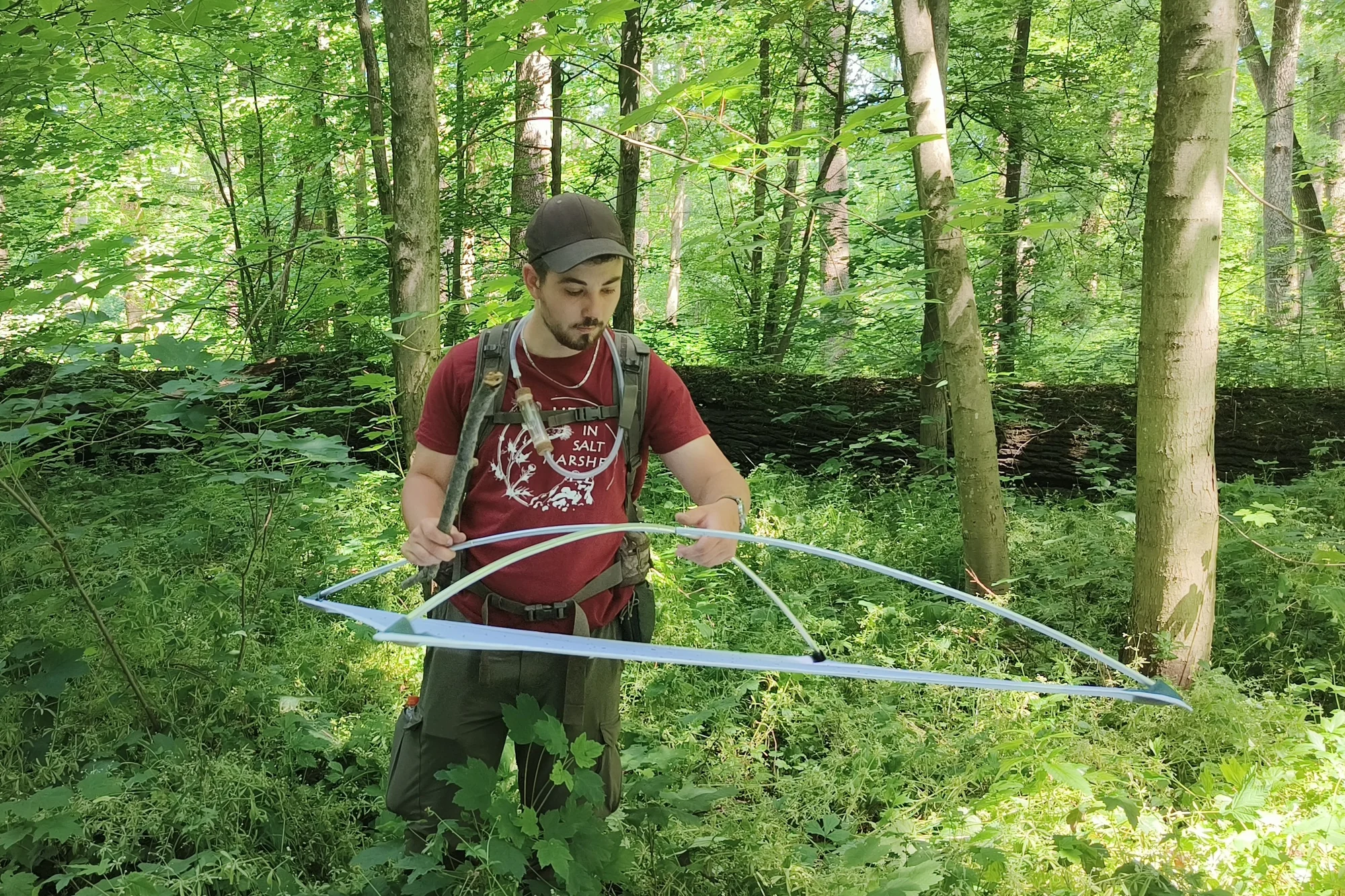
Branches are struck with a stick, and the animals drop onto a frame held underneath.
Finds: beetles, bugs and spiders on trees and shrubs
Photo: Zdenko Večerík
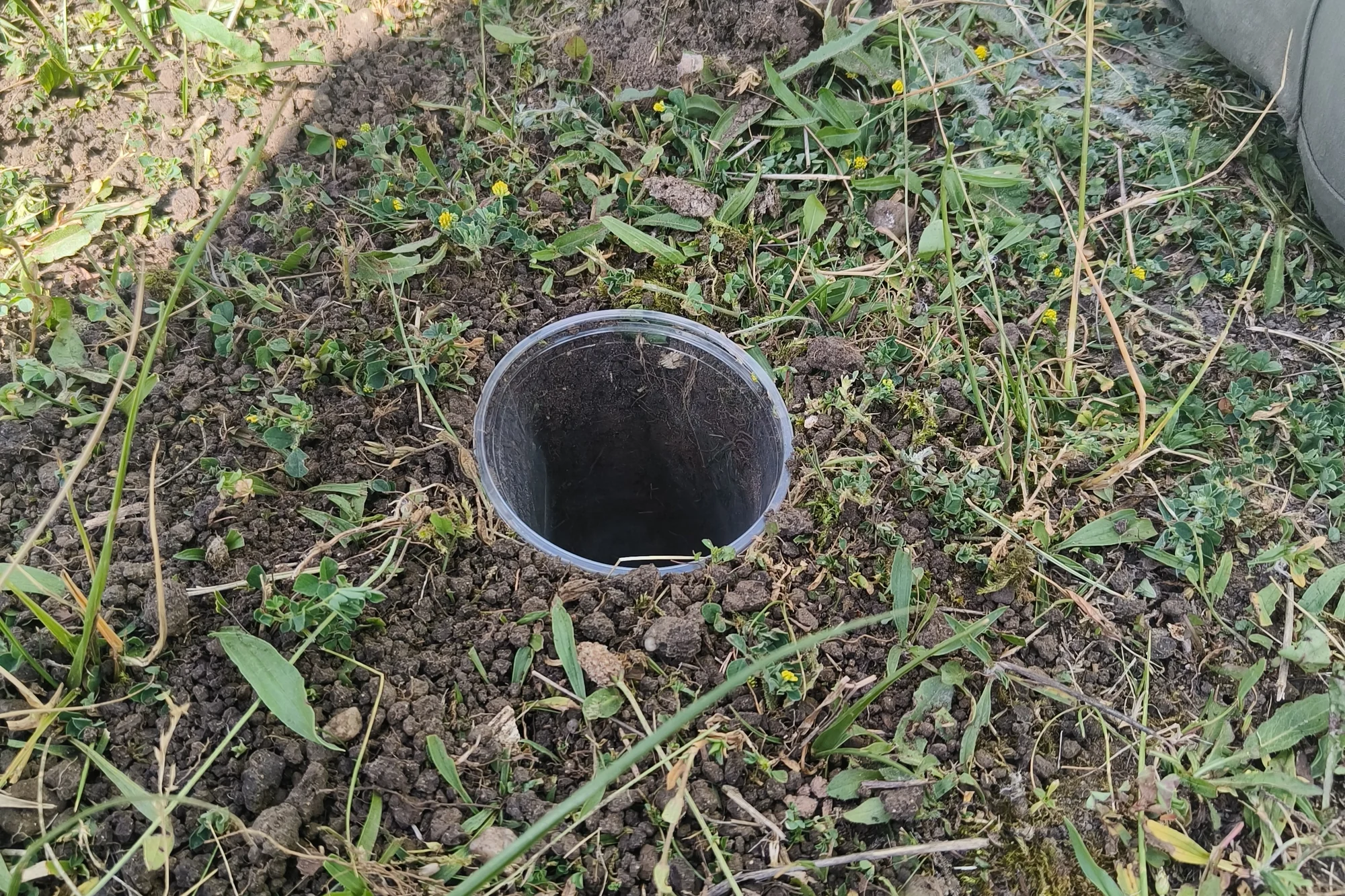
Cups sunk flush with the ground catch animals that walk into them.
Finds: ground beetles, spiders and other ground-dwellers
Photo: ENVIROP archive
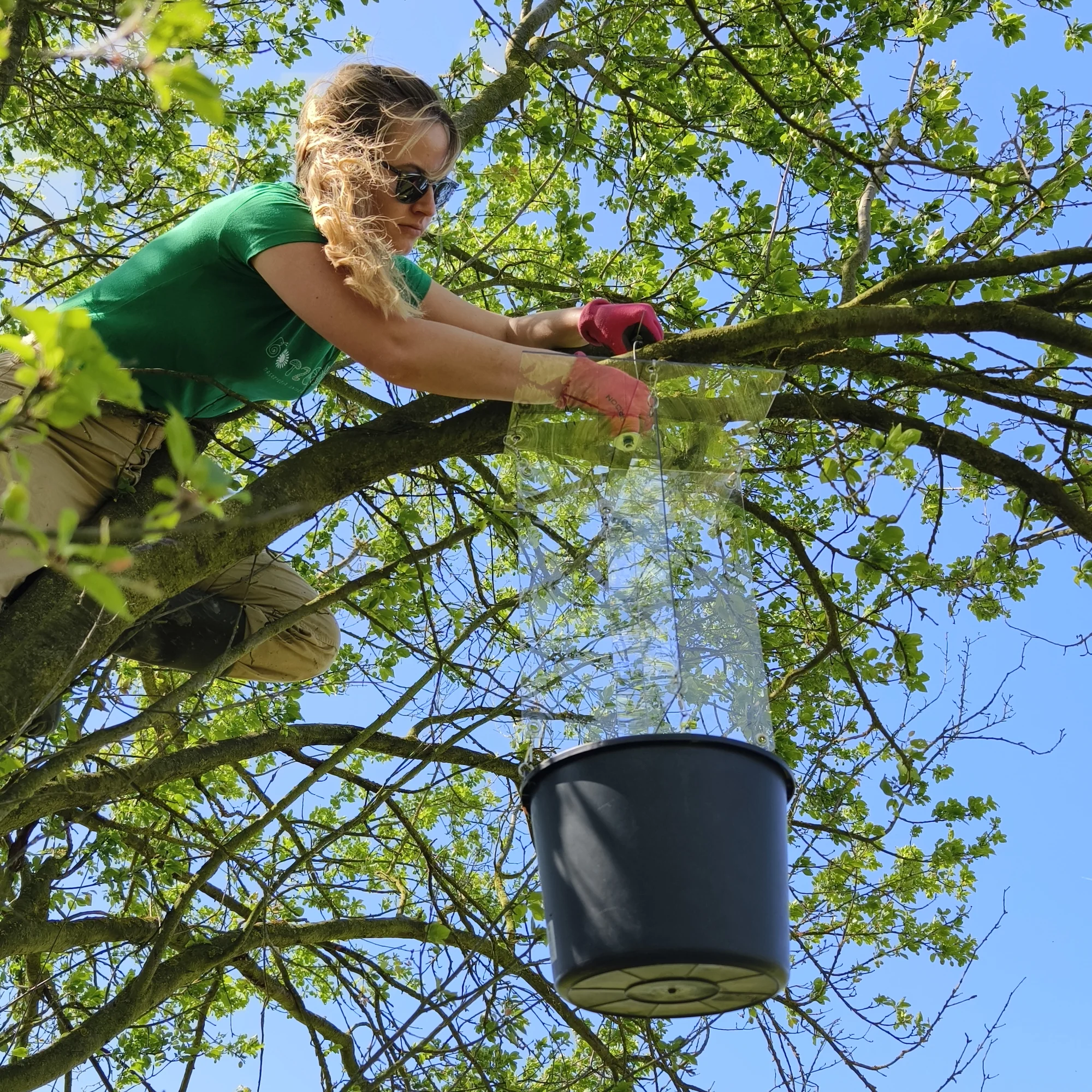
A transparent panel stops flying insects, which fall into a container below.
Finds: flying beetles, including those that live in old trees
Photo: Marie Kotasová Adámková
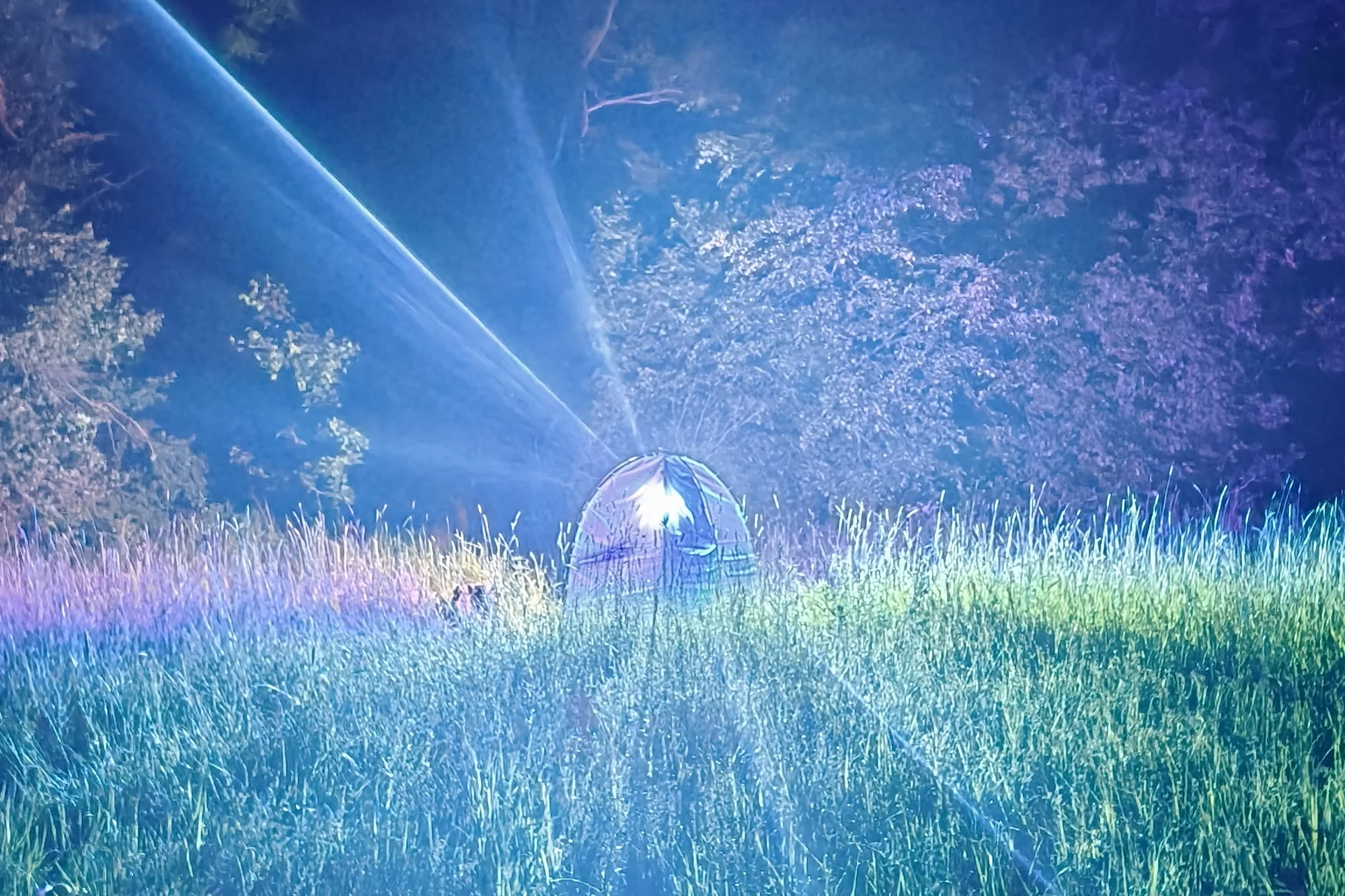
At night, a lamp and a white sheet attract insects that fly in the dark.
Finds: moths and other night-flying insects
Photo: Marie Kotasová Adámková
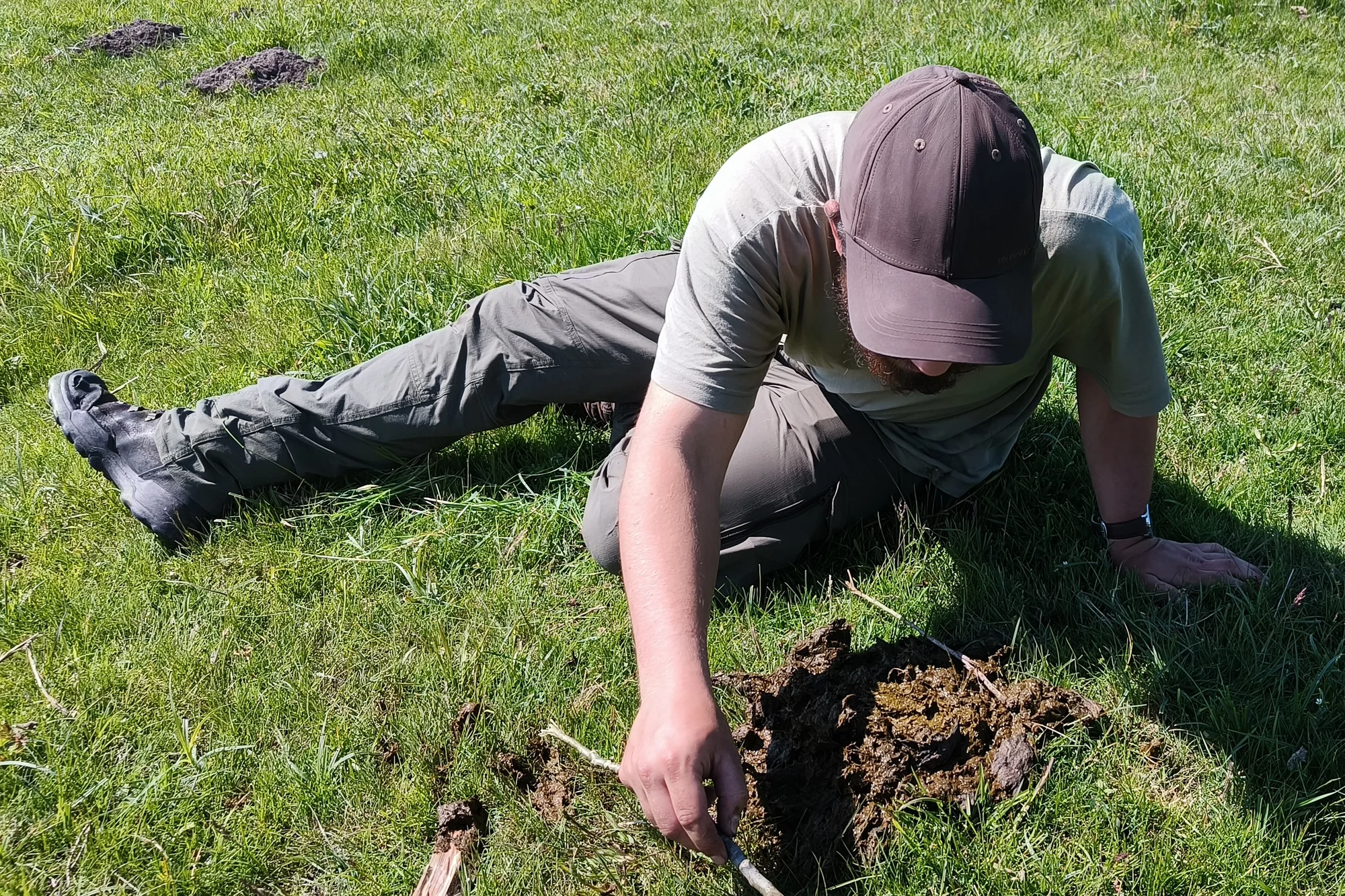
Dung pats are carefully taken apart.
Finds: dung beetles
Photo: Zdenko Večerík

Botanists survey the sites regularly, mapping where target species grow and where unwanted plants are spreading.
Photo: ENVIROP archive
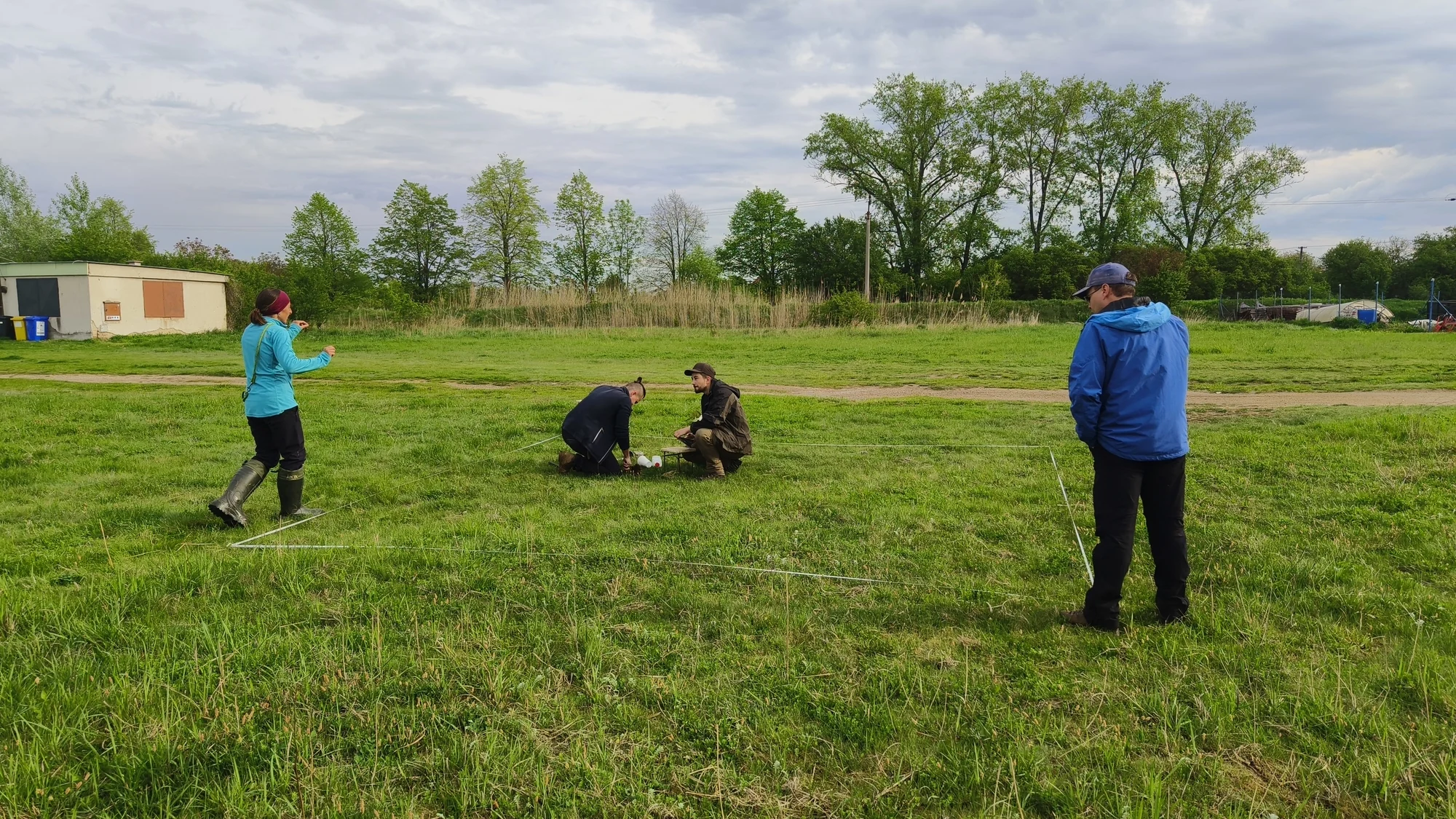
 5 × 5 m
70 permanent plots
Across the sites we have marked out 70 permanent plots of 5 × 5 m. Each plot in a managed area is paired with a nearby control plot left untouched, which lets us separate the effect of management from changes caused by weather or other factors.
On each plot, botanists record every plant species and the share of ground it covers (a vegetation relevé). The plots are also monitored from the air.
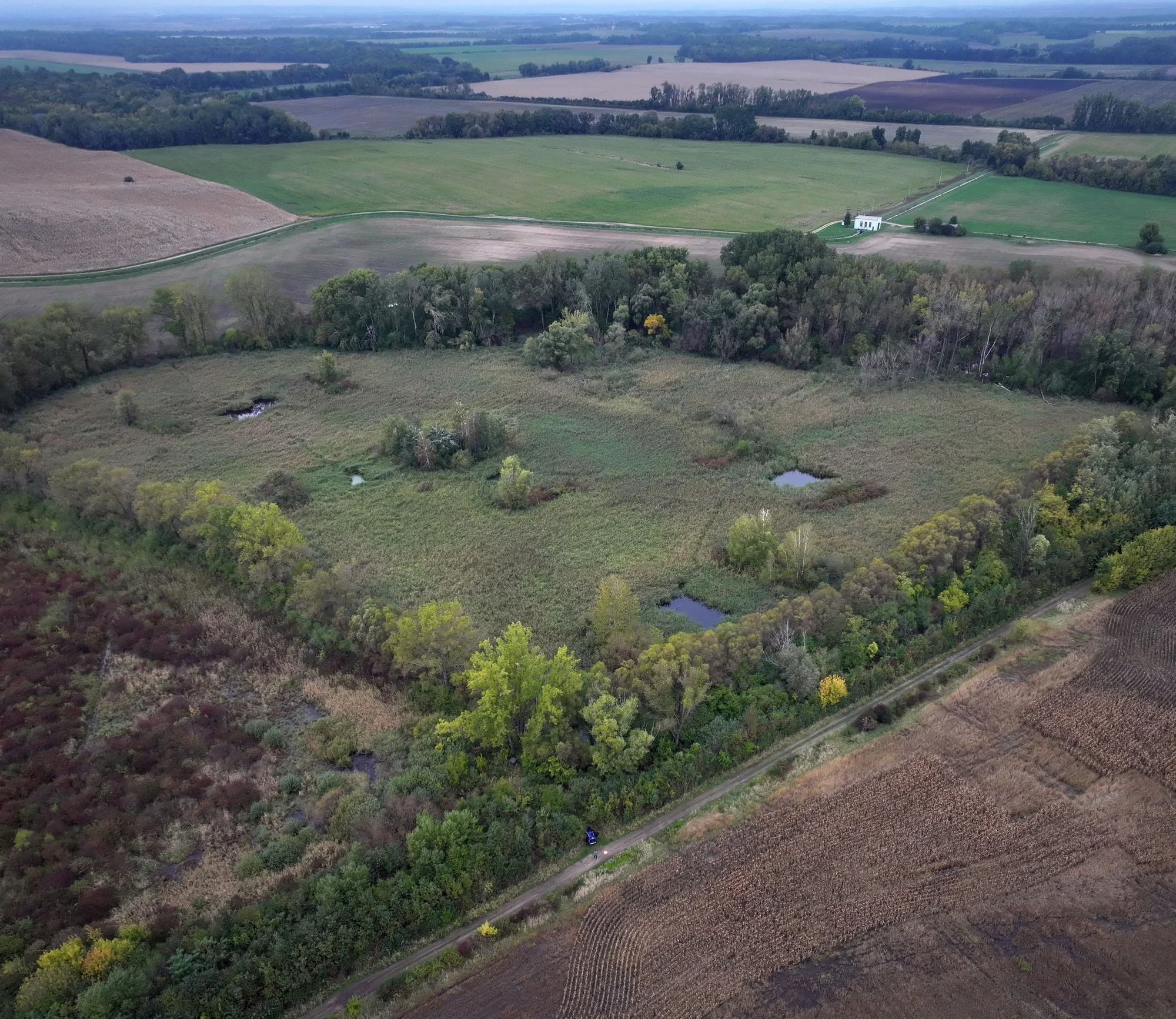
Some parts of the sites are hard to reach on foot. Drones, aircraft and satellites fill the gaps and capture an entire site at once. We use their images mainly to map habitats, how they change over time, and the spread of invasive and expansive plants.

DJI Mavic 3 Multispectral and Mavic 3 Pro
The Mavic 3 Multispectral maps the sites regularly: besides sharp orthophotos, it records light invisible to the human eye, which shows the condition of the vegetation. The Mavic 3 Pro documents the work from the air.

ČÚZK aerial survey
The Czech Office for Surveying, Mapping and Cadastre photographs the whole country from the air. We use its orthophotos, including archive imagery.

a fleet of small satellites
Frequent images track how biomass changes through the season, which helps distinguish invasive and expansive plants from other vegetation.

NASA / USGS
Four decades of imagery allow us to assess the long-term condition of the sites. We rely mainly on the thermal data to gauge the effects of climate change.
The same meadow at Trkmanské louky as the drone sees it, and as it would appear at satellite resolution.
Drone image from May 2026. The satellite views are simulated by enlarging the drone image’s pixels to 3 m and 30 m. Photo: Antonín Zajíček
Sources: ČÚZK – Ortofoto ČR; Planet Labs; NASA/USGS Landsat.
The project runs until 2029, but the first results are already visible.
Grazing is now under way at nine of the ten sites; only Trkmanské louky are mown instead.
128ha
grazed in 2026
15.1km
of fences around the pastures
188
grazing animals in 2026
9
long-term grazing partners: seven private farmers, a non-profit and a hunting association
Icons: OpenMoji (openmoji.org), CC BY-SA 4.0.
Choose a year and a site.
Photo: Antonín Zajíček
5.3 ha
≈ 0.7 t of vegetation eaten (estimate)
7.1 ha
≈ 8.1 t of vegetation eaten (estimate)
7.1 ha
Photo: Antonín Zajíček
No grazing recorded in 2024.
1.7 ha
≈ 1 t of vegetation eaten (estimate)
12.3 ha
Photo: Antonín Zajíček
Not in the grazing records yet.
Not in the grazing records yet.
10.6 ha
Photo: Antonín Zajíček
5 ha
≈ 7.2 t of vegetation eaten (estimate)
5 ha
≈ 8.5 t of vegetation eaten (estimate)
5 ha
Photo: Antonín Zajíček
2.5 ha
≈ 9.7 t of vegetation eaten (estimate)
2.6 ha
≈ 17.6 t of vegetation eaten (estimate)
2.6 ha
Photo: Antonín Zajíček
5.7 ha
≈ 4.7 t of vegetation eaten (estimate)
5.7 ha
≈ 5.6 t of vegetation eaten (estimate)
5.7 ha
Photo: Antonín Zajíček
Mown, not grazed
Mown, not grazed
Mown, not grazed
Photo: Antonín Zajíček
No grazing recorded in 2024.
29.1 ha
≈ 10.3 t of vegetation eaten (estimate)
40.7 ha
Photo: Antonín Zajíček
3.2 ha
≈ 2.5 t of vegetation eaten (estimate)
8.2 ha
≈ 17.3 t of vegetation eaten (estimate)
8.3 ha
Photo: Antonín Zajíček
No grazing recorded in 2024.
18 ha
≈ 19.1 t of vegetation eaten (estimate)
36 ha
Data: grazing records of the project partners and the current herds (September 2026). The overview of grazers is the sum of the 2026 figures on the map; animal numbers are the highest recorded at any one time. For 2024 and 2025, the amount of vegetation eaten (dry matter) is estimated from the number of animals, the length of the grazing season and the typical daily intake of each species. Fence length is the perimeter of the 2026 pastures.
183ha
of the planned 506 ha are already under management – grazing, mowing, clearing and other measures
Large-scale mowing covers 13.5 ha, at Trkmanské louky and Vypálenky.
7.5ha
less land covered by invasive plants than in 2023 (−17 %)
17.3ha
less land covered by expansive plants than in 2023 (−15 %)
3.4ha
largest decrease in invasive plants by area, at Trkmanec-Rybníčky (−54 %). The largest relative drop was at Slanisko Dobré Pole (−60 %), but on only 0.3 ha.
7.9ha
largest decrease in expansive plants, by area and by share, at Hevlínské jezero (−83 %)
Together, invasive and expansive plants covered 163 ha of the assessed area in 2023 and 137 ha in 2026 (−16 %), retreating at nine of the ten sites. Mapped from aerial, satellite and drone imagery and verified in the field.
Share of each mapped area covered by invasive or expansive plants. Switch between the two groups and between 2023 and 2026, and choose a site.
Cover of invasive plants
Cover of expansive plants
 20242026
Hold Ctrl (⌘ on Mac) and scroll to zoom · drag to move
Hold Ctrl (⌘ on Mac) and scroll to zoom · drag to move
Hold Ctrl (⌘ on Mac) and scroll to zoom · drag to move
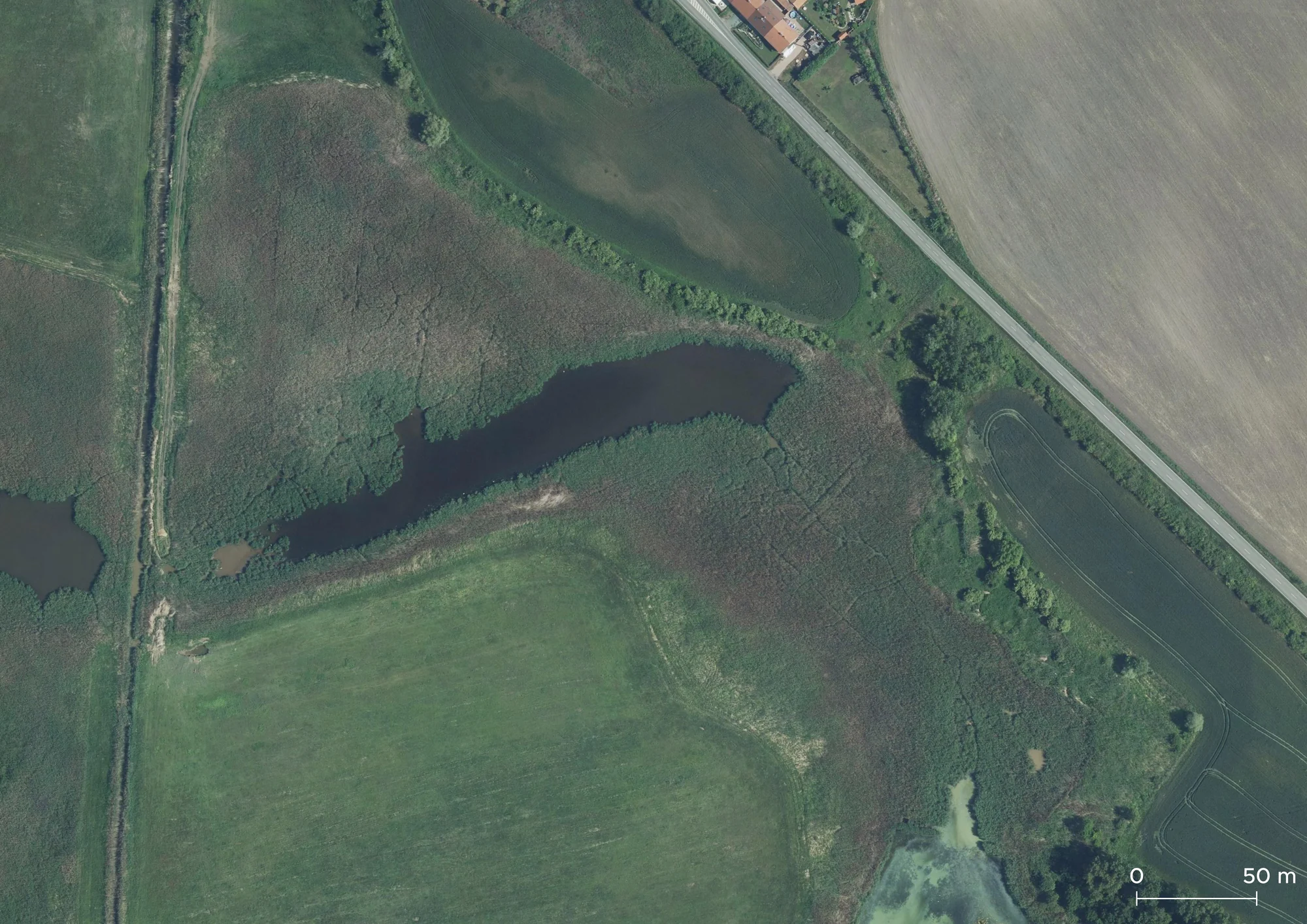
 20222025
 Without grazingGrazed
820
land invertebrate species recorded in 2026, up from 614 in 2023
31
dung beetle species, up from 6 in 2023 – they live on the dung of grazing animals
Success story
At Trkmanské louky, the critically endangered yellow-spined thistle (Cirsium brachycephalum) once grew in large numbers, until reed spread and the meadows were left undisturbed. Two years of mowing and breaking up the old turf were enough for it to return.
hundreds of plants grow there again
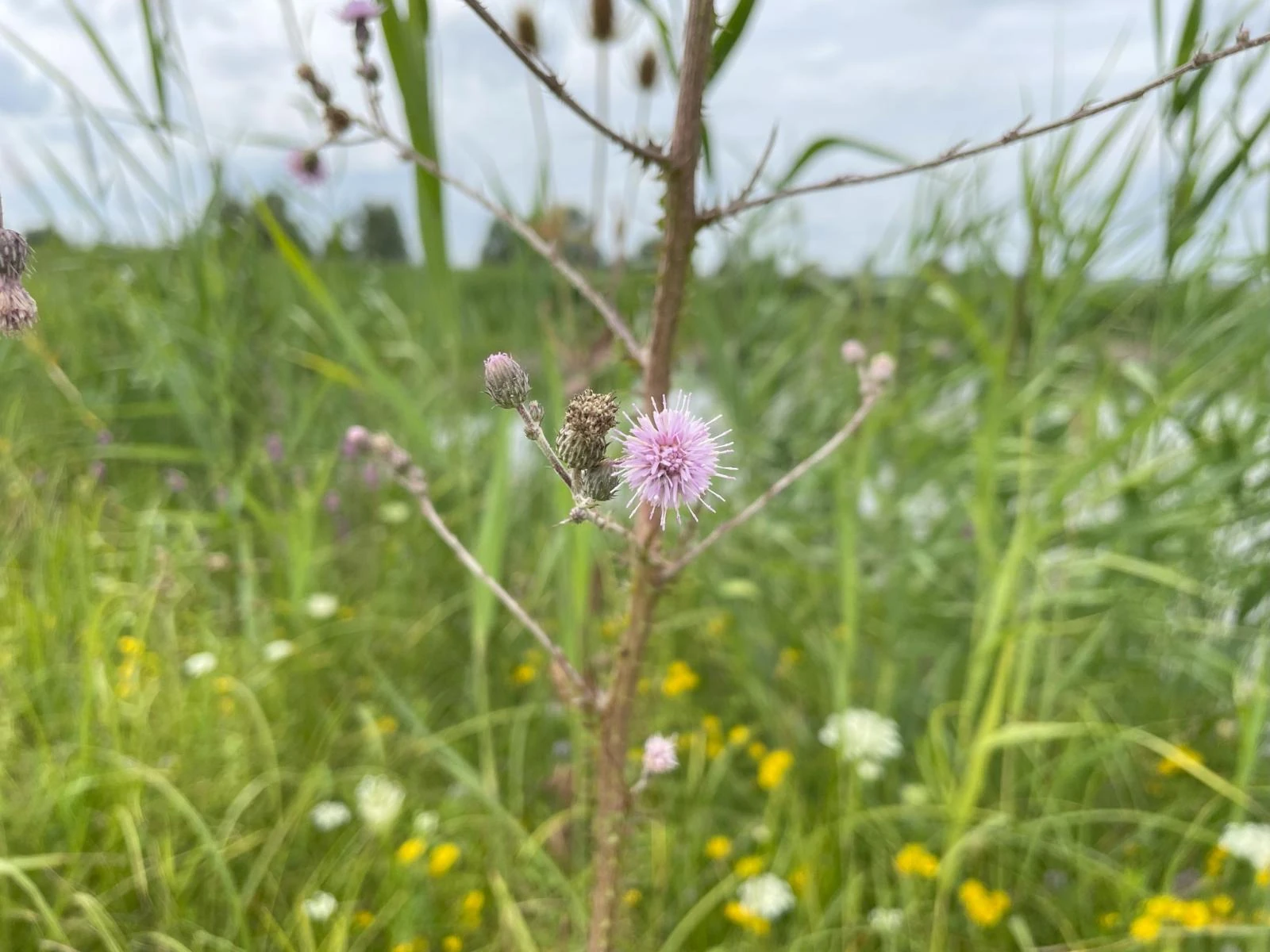
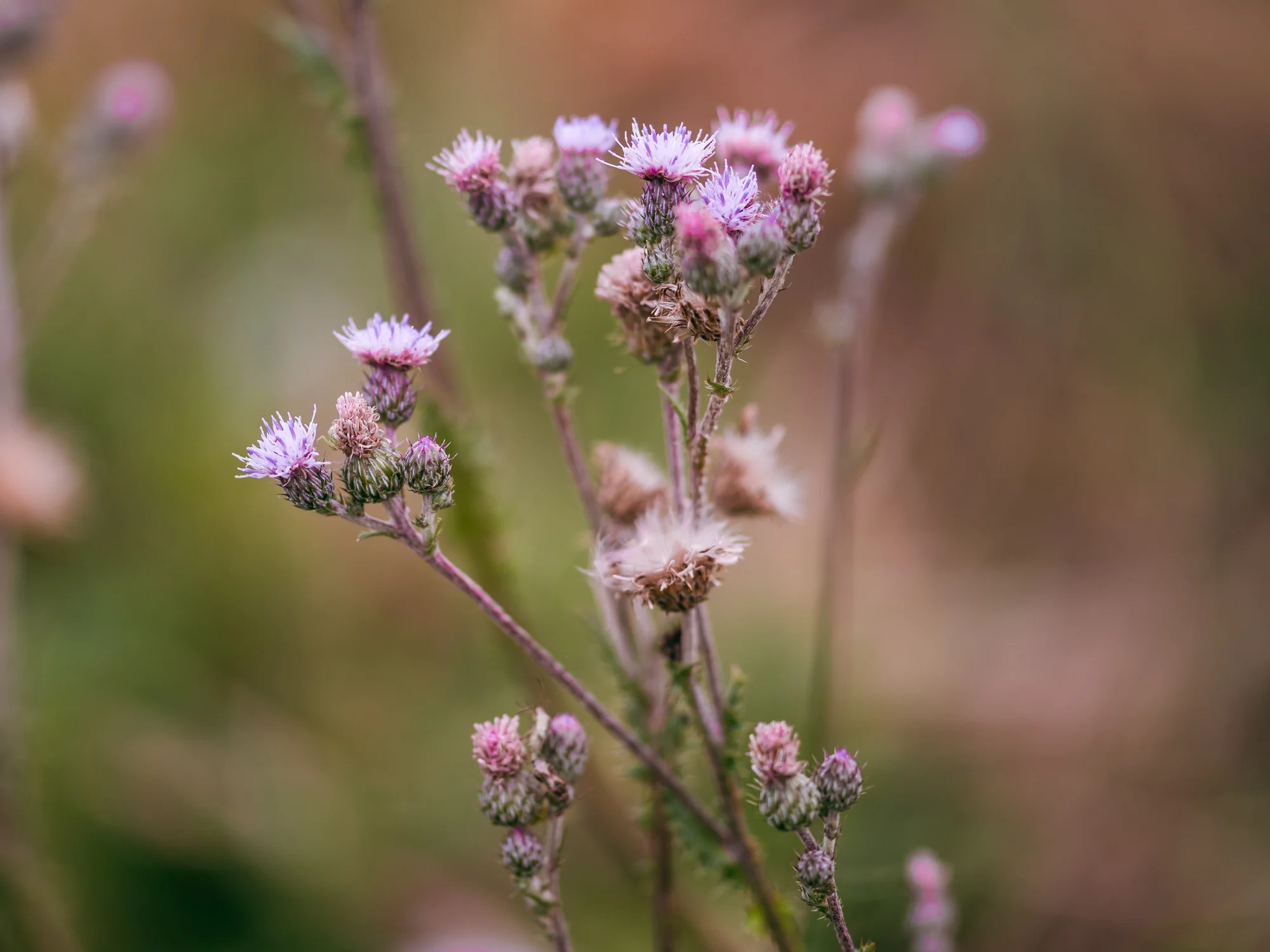
Photo: author not known yet, Nina Babicová
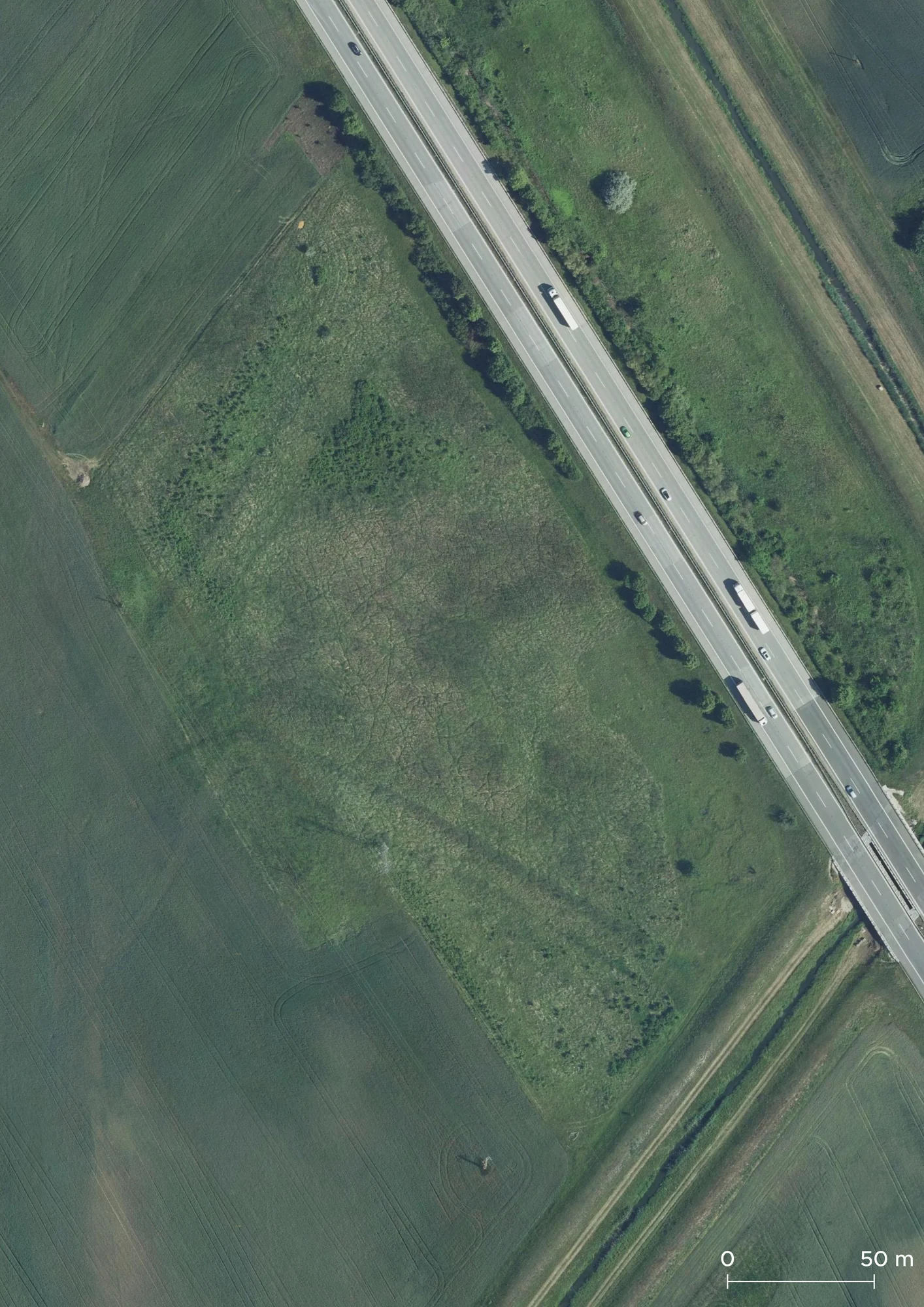
 20222026
Success story
The small salt marsh Slanisko Dobré Pole is flowering again and full of salt-loving plants.
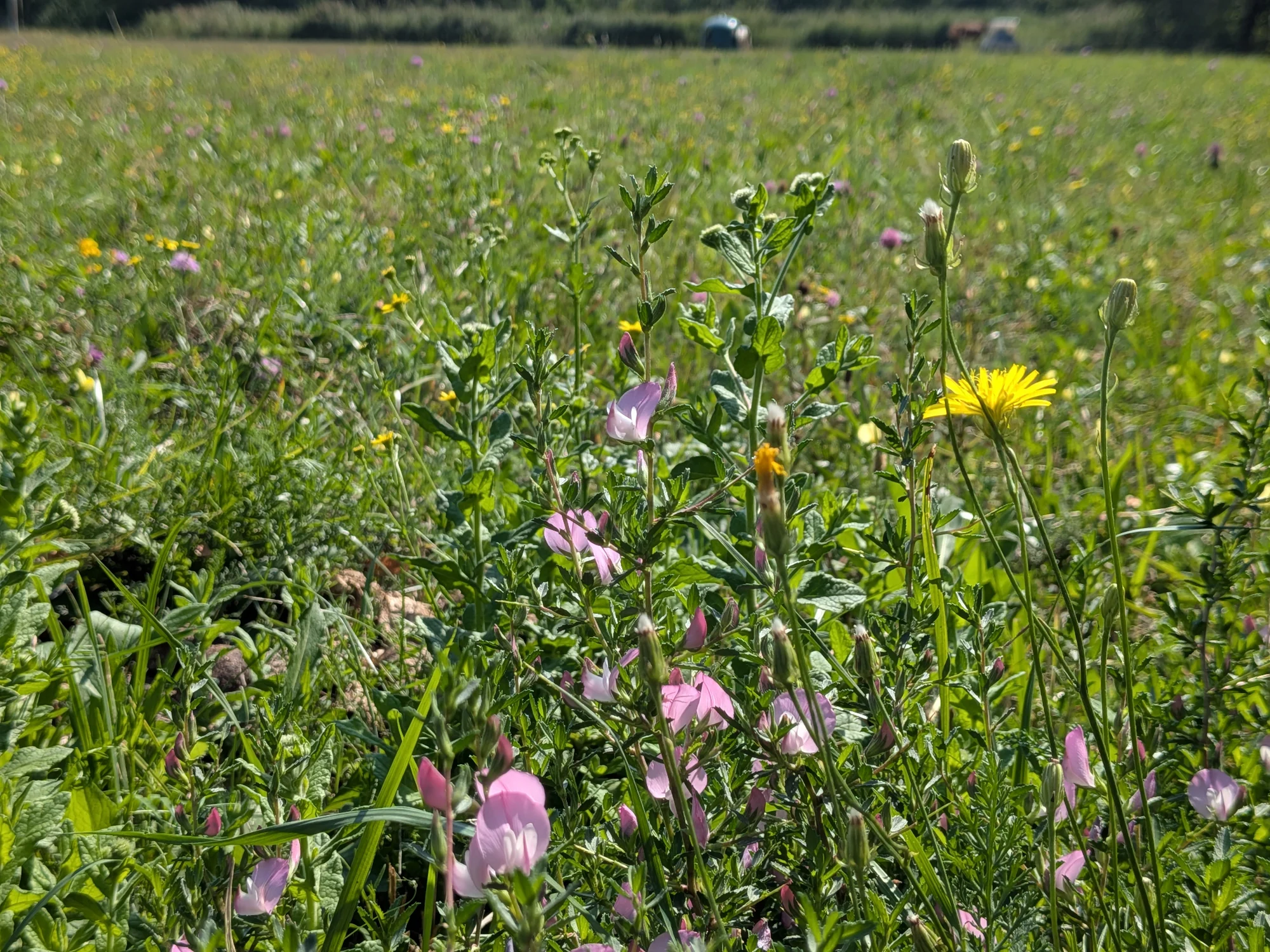
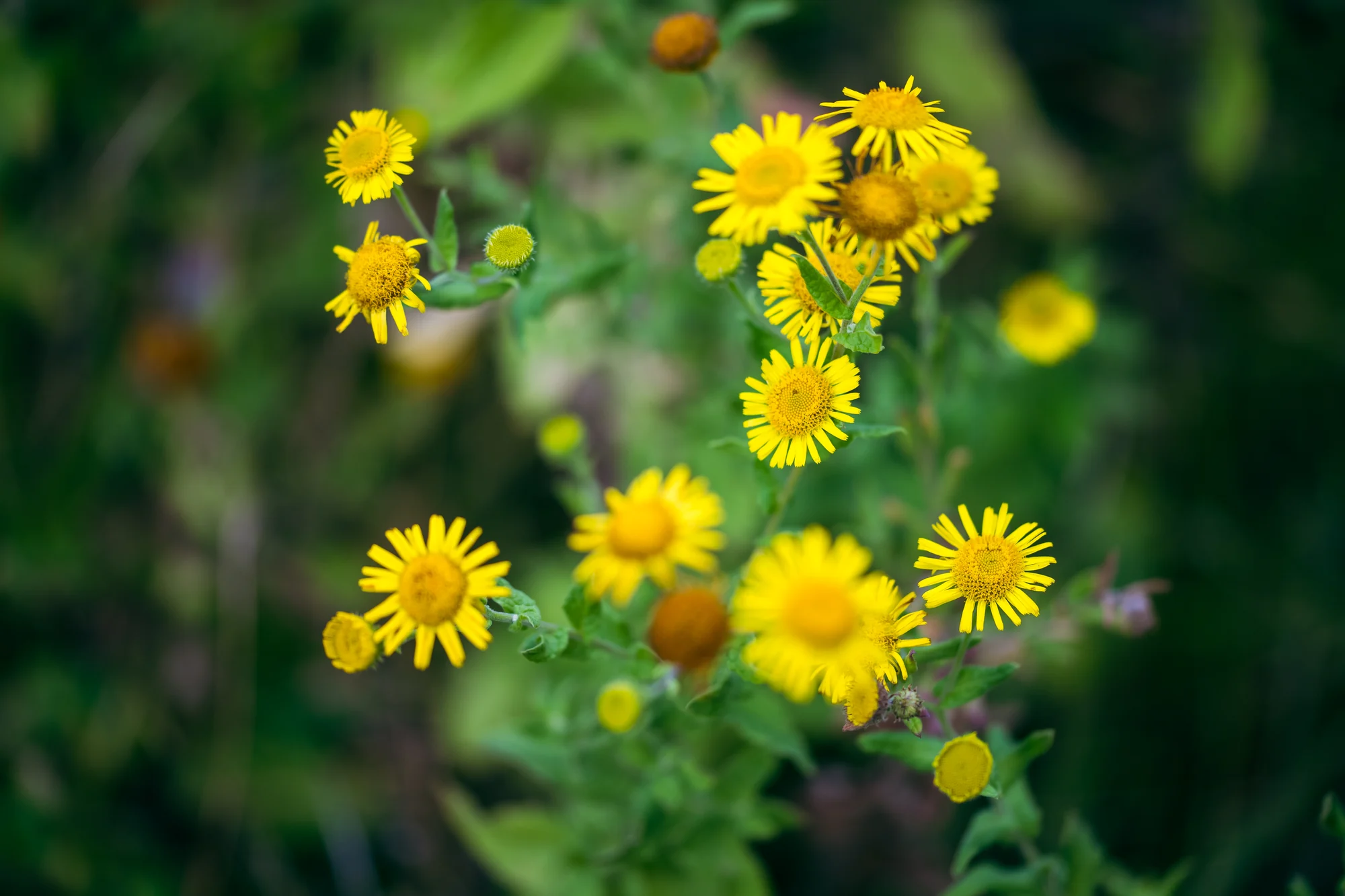
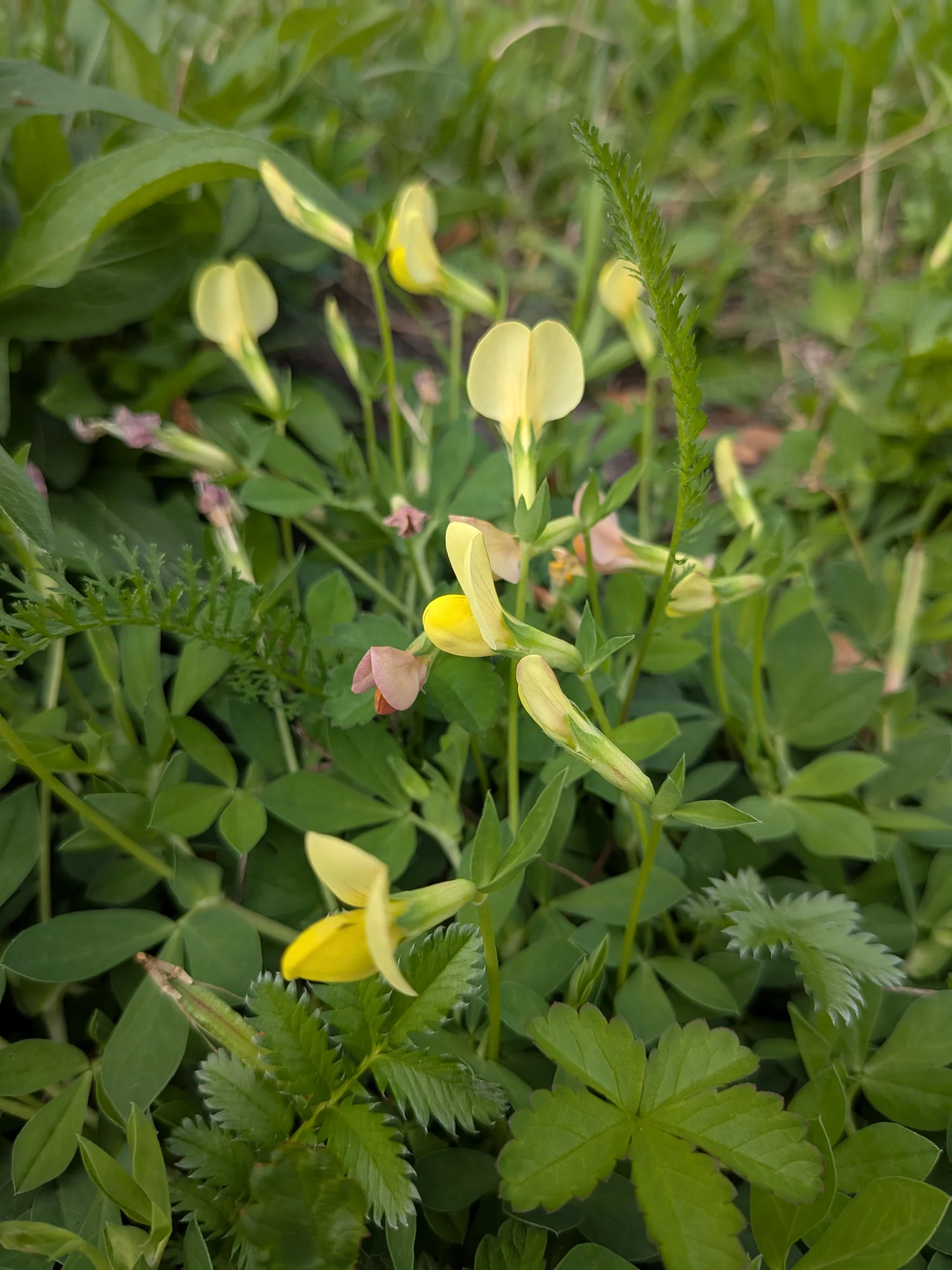
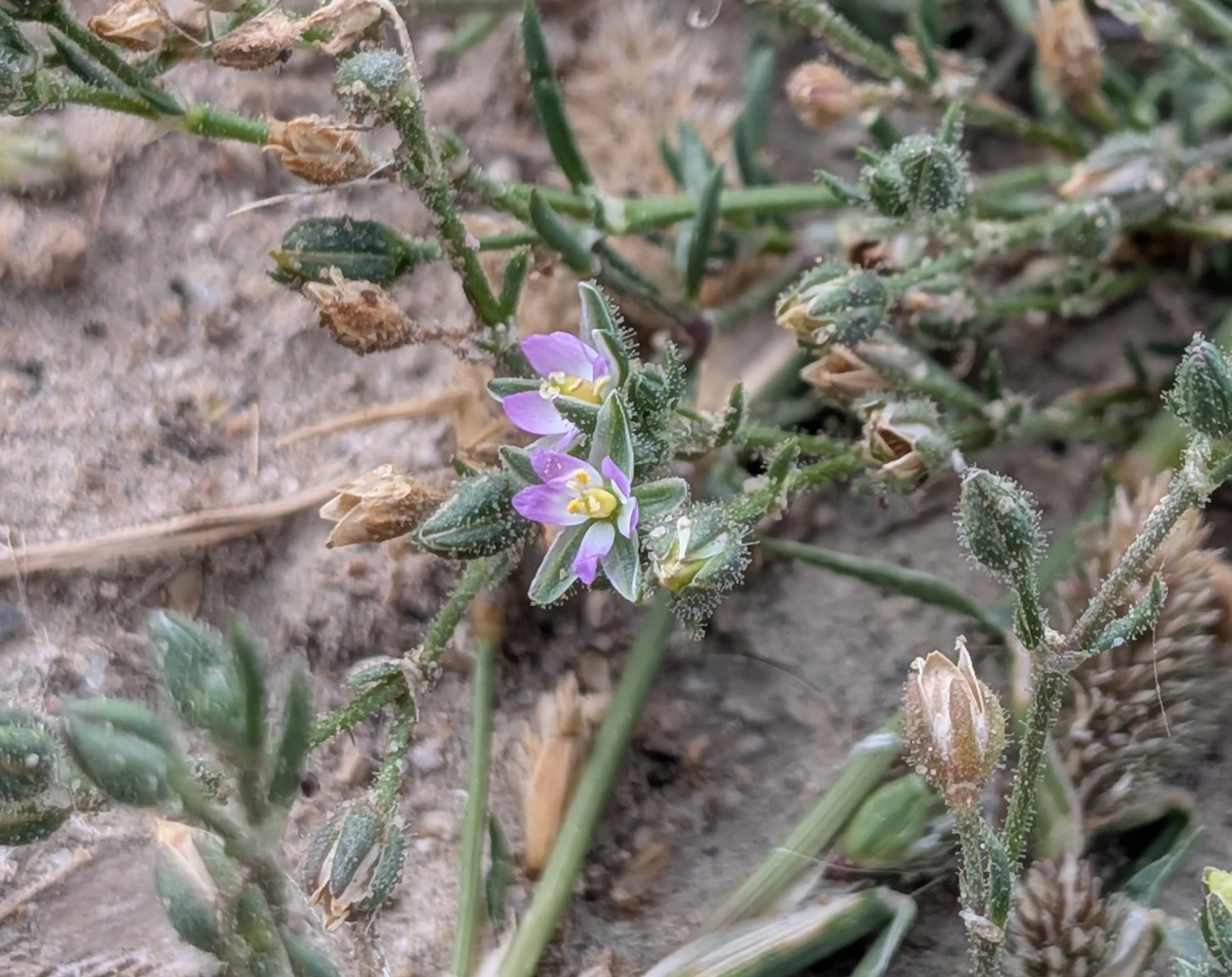
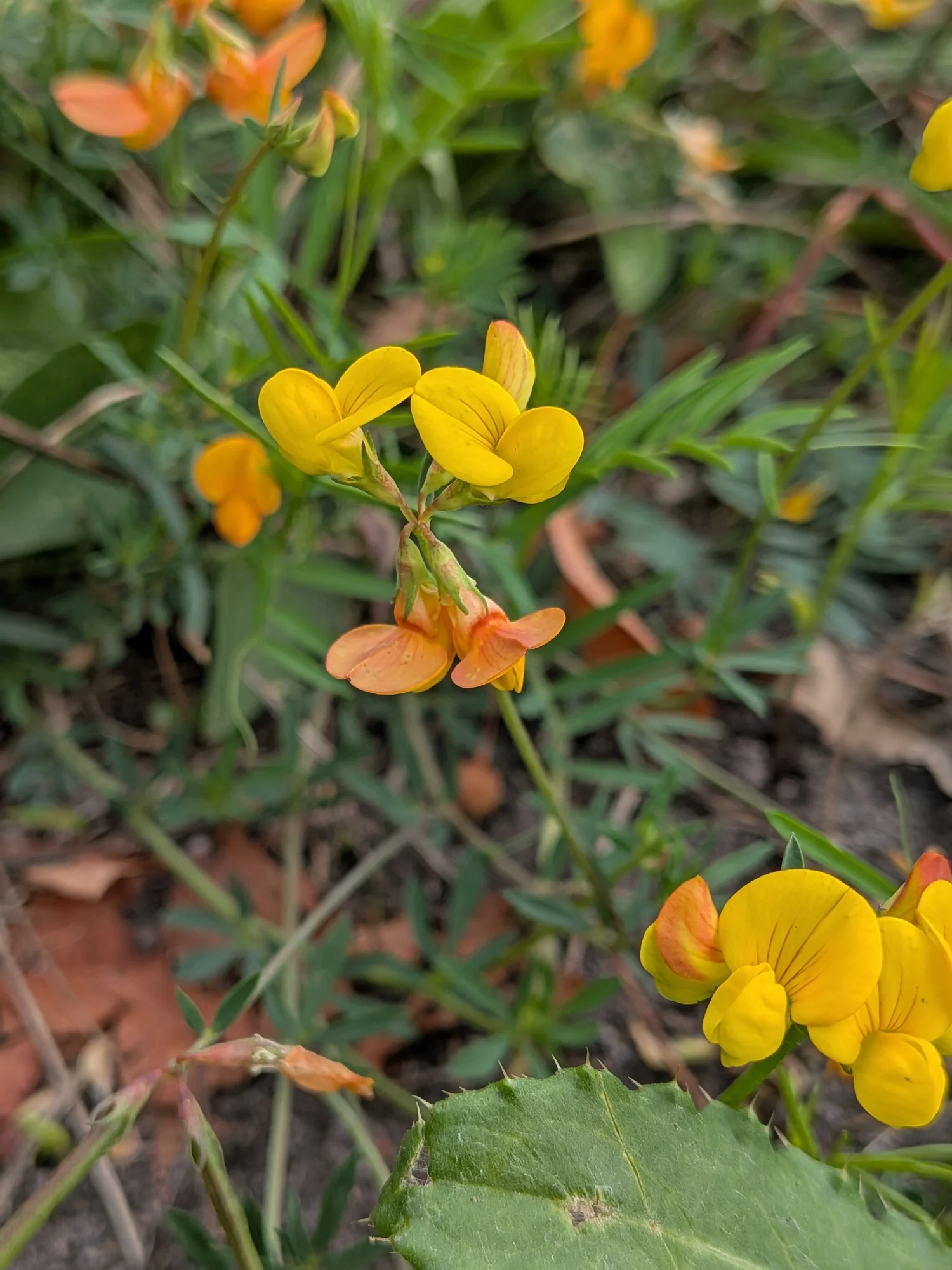
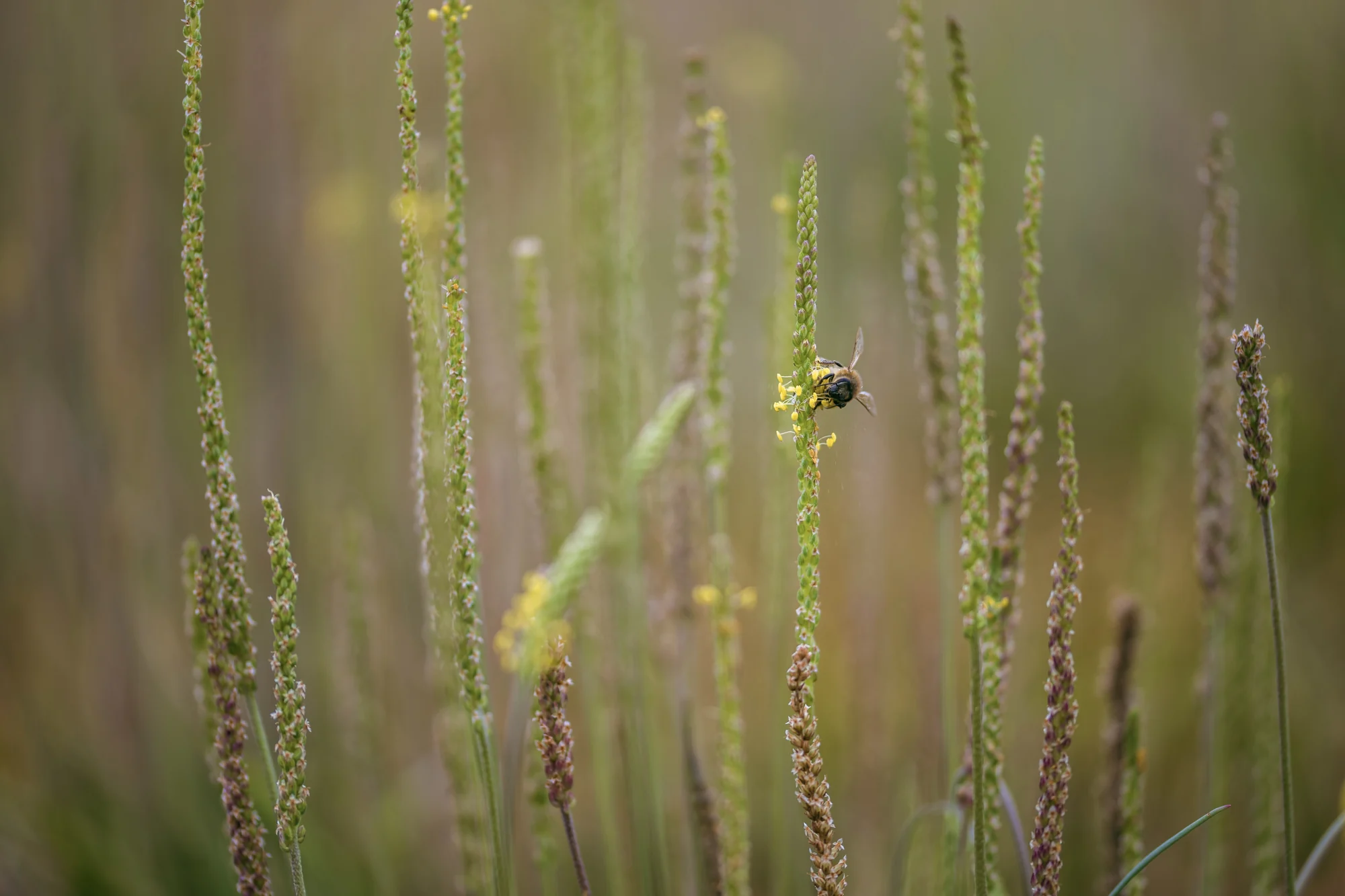
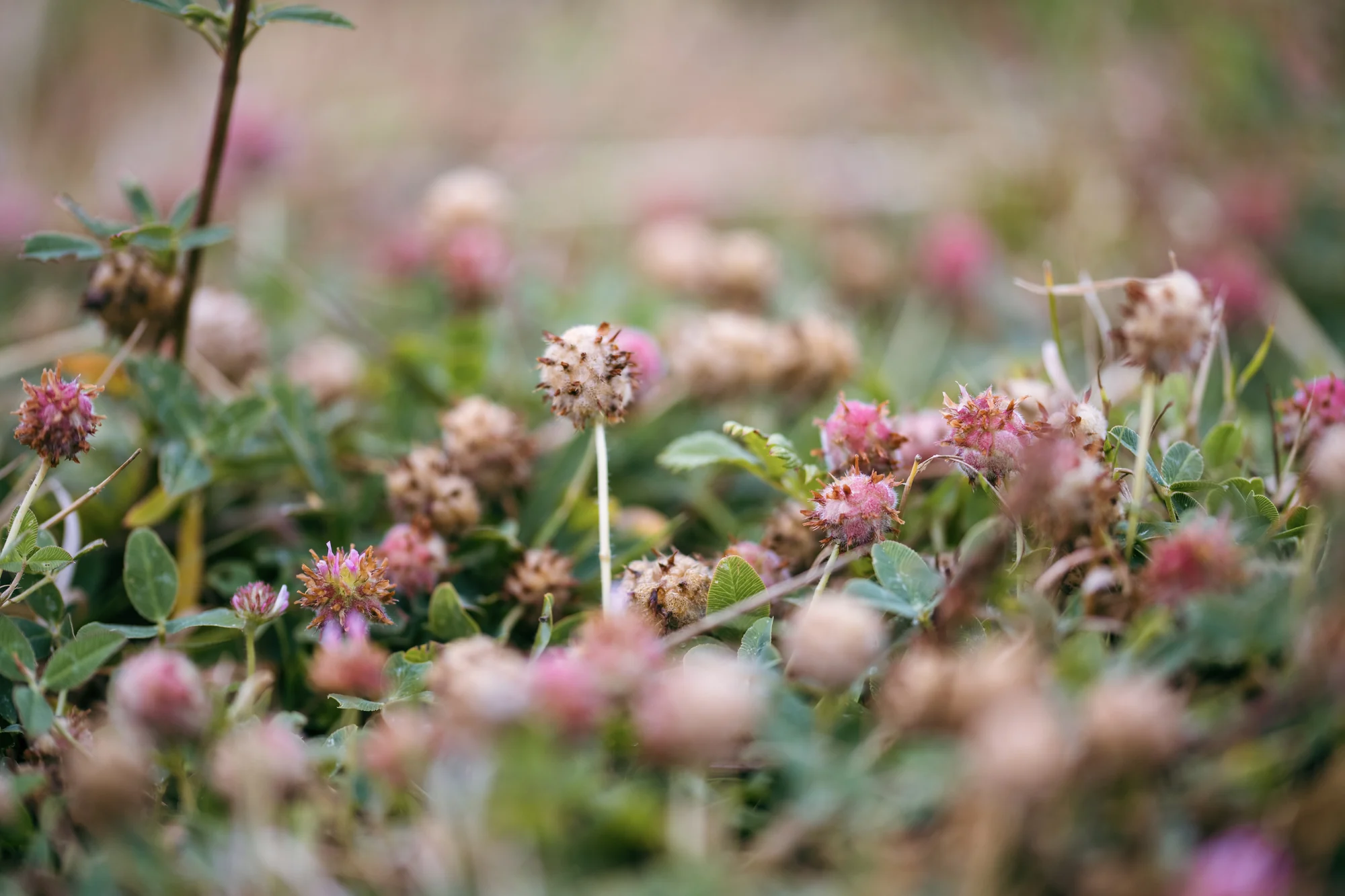
Photos: Martin Liška, Nina Babicová
53
educational events on and off the sites
32
excursions to the sites
628
people on the excursions
9
information banners
1
information board
Project records, 2023 to June 2026. Participant numbers are a minimum, as a few events have no head count. In addition, the project presented 12 talks and posters at conferences.
The project is well under way and the marshes are already responding. We will keep adding to this story as the monitoring continues and new results come in.
Last updated: September 2026